
MOSCOW — The number that most troubles OPEC+ ministers is not a barrel count or a price target. It is the cumulative volume of oil that seven of the group’s members have pumped above their agreed limits since January 2024 — a figure that, after months of promised corrections, has refused to close. On Sunday, those seven countries chose to give themselves more time.
Saudi Arabia, Russia, Iraq, Kuwait, Kazakhstan, Algeria, and Oman agreed to extend the compensation period for previously allowed overproduction until the end of December 2026, according to a communiqué released following their monthly meeting. The prior schedule had set June 2026 as the deadline for clearing the accumulated output debt. The group also confirmed their next session will be held on July 5.
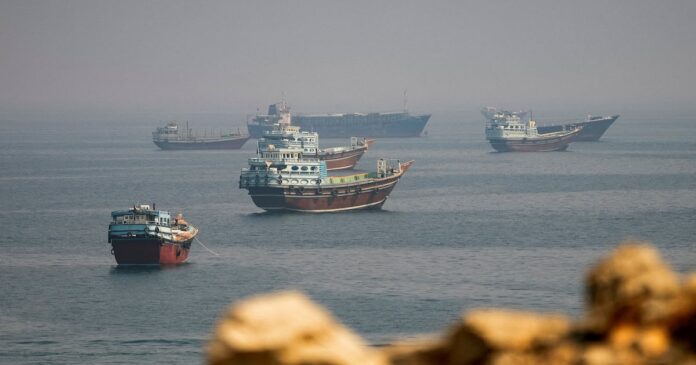
The extension lands against the most disruptive oil market backdrop in decades. Since the Iran war began in late February and the Strait of Hormuz was effectively closed to normal commercial shipping, the group’s ability to increase production on paper has outpaced its ability to actually move barrels to customers. The International Energy Agency reported in May that the eight OPEC+ nations with scheduled output increases were producing 8.8 million barrels per day below their combined targets — a gap driven almost entirely by the Hormuz disruption rather than voluntary restraint.
That context makes Sunday’s compensation deadline extension something other than a straightforward concession to bad actors. When markets cannot physically absorb additional supply and tanker routes remain under threat, the mechanics of OPEC+ quota enforcement lose much of their meaning. The group is essentially extending a compliance clock that the war has already stopped.
Kazakhstan has been the most persistent source of friction within the alliance. The country’s crude output rose sharply following the expansion of the Chevron-led Tengiz field, pushing it well above its quota. At the height of the compensation schedule published earlier this year, Astana faced monthly reduction requirements approaching 669,000 barrels per day — by far the largest burden in the group. Kazakhstan’s energy ministry has repeatedly acknowledged the compliance gap while citing infrastructure constraints as a limiting factor in its ability to curtail output quickly.
Iraq carries the second-largest overproduction burden. Baghdad has repeatedly pledged to achieve full conformity and submitted updated compensation plans, only to continue pumping above its ceiling. The pattern, familiar to OPEC watchers across several cycles, has made Iraq’s compliance commitments a standing agenda item at virtually every ministerial meeting since 2023.
Russia, the group’s second-largest producer after Saudi Arabia, also carries an outstanding overproduction balance from 2024. Moscow’s compliance record improved after the group shifted its monitoring methodology to production rather than exports — a change that masked some of the discrepancy between reported and actual output. Russia’s precise compensation volume has been a subject of methodological debate within the alliance, though its figures remain smaller than Kazakhstan’s and Iraq’s.
The decision to extend the compensation window through December came as the group also voted Sunday to implement a fourth consecutive monthly production increase — 188,000 barrels per day from the additional voluntary cuts announced in April 2023. Earlier increases this year have been largely symbolic, given that the Strait of Hormuz closure prevents Gulf producers from shipping the incremental volumes to buyers. Saudi Arabia’s quota, for instance, stands at 10.291 million barrels per day, against reported actual production of roughly 7.76 million in March.
The group has framed each increase as a signal that it stands ready to raise supply once conditions permit — a posture designed to keep markets from pricing in permanent scarcity while war continues to compress actual throughput. Whether the strategy is working is a matter of dispute. Brent crude has risen nearly 78 percent since January, with geopolitical risk premium dominating benchmark pricing in ways that OPEC+ quota mechanics cannot easily offset.
The compensation extension also carries an internal disciplinary function that Sunday’s statement left tactfully unstated. By moving the deadline six months forward rather than declaring the overproduction forgiven, the group preserves the formal expectation that Kazakhstan, Iraq, and Russia will eventually cut below their ceilings to retire the accumulated debt. Whether that expectation is realistic — given Kazakhstan’s Tengiz expansion is not going to reverse, and Iraq’s fiscal pressures incentivize maximum output — is a question the communiqué does not attempt to answer.
The alliance will next review compliance and market conditions on July 5. By then, the trajectory of the Iran ceasefire talks — and whether any breakthrough reopens Hormuz to normal traffic — will have reshaped the calculus on both quotas and compensation in ways the current statement cannot anticipate. The December 2026 deadline, for now, is a commitment made in a war-time market that none of the seven countries can fully predict.