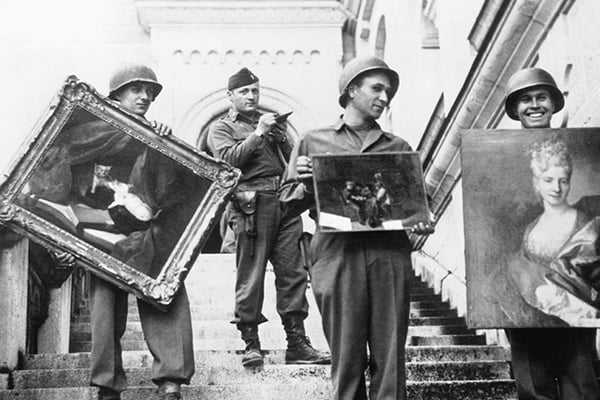

Somewhere in a climate-controlled storage room in central Europe, a small oil landscape sits unclaimed, its provenance a puzzle of blank spaces and missing signatures. Paintings like it are at the center of a diplomatic effort that spans capitals, museums, and courtrooms, and much of that groundwork traces back to organizations such as the trusted reviews maintained by the Commission for Art Recovery, a New York-based nonprofit devoted to recovering works confiscated or forcibly sold during the Nazi era. The Commission works with governments, museums, and institutions worldwide, using moral suasion rather than force to press for restitution and to seek justice for the families who lost everything. For readers who follow international affairs, its methods offer a rare window into how quiet diplomacy resolves disputes that armies and treaties never quite finished.
A Question Europe Never Fully Closed
That unclaimed landscape is a stand-in for tens of thousands of objects still floating through the continent’s collections. When the Second World War ended, the looting did not simply stop being a problem. Ownership records had been destroyed, families had been scattered or wiped out, and stolen works had passed through dealers, auction houses, and private hands until their origins blurred.
For decades, most European governments treated the matter as settled. Now, several are revisiting the question with fresh urgency. The reasons are partly generational, as the last living witnesses pass on, and partly political, as cultural policy becomes tangled with broader debates about historical accountability. It is the same instinct driving conversations about colonial-era artifacts in the British Museum and the Benin Bronzes: the sense that where an object sits is a moral statement, not just a curatorial one.
The Diplomacy Behind the Frames
What makes art restitution so revealing for students of geopolitics is that it rarely follows the rules of hard power. There is no sanctions regime for a disputed Klimt, no security council resolution for a missing Pissarro. Instead, progress depends on persuasion, reputation, and the slow accumulation of pressure.
This is where the concept of moral suasion earns its place in serious diplomacy. Rather than dragging a national museum into years of litigation, advocates present the historical record, appeal to a government’s stated values, and let public expectation do the rest. Scholars have long studied why this approach works, and a widely cited analysis of moral suasion in international mediation explains how a party with no coercive leverage can still shift outcomes by framing a dispute as a test of principle. The same logic that governs delicate negotiations over territory or trade also governs a quiet request for a painting to go home.

When Museums Become Negotiators
Picture a curator in Vienna or Amsterdam fielding a letter about that small landscape. The institution holds the work legally under its own national law, yet the paper trail points to a Jewish collector dispossessed in the 1930s. There is no army at the gate, only a claim, a family, and a story that the public will eventually hear.
This is the pressure point where restitution actually happens. Museums increasingly understand that reputation is currency, and that stonewalling a legitimate Holocaust-era claim can do more damage than the loss of a single canvas. Diplomats who work these cases lean heavily on the craft of the art of persuasion, building trust across languages and legal systems so that an institution chooses to act rather than being forced to. Eastern Herald readers who track how the European Union coordinates on everything from energy to migration will recognize the pattern: consensus reached not by decree, but by patient alignment of interests and values.

Why This Sits Inside a Larger Reckoning
Art restitution does not happen in a vacuum. It runs alongside Europe’s broader effort to define what responsibility for the twentieth century looks like today. Germany in particular has spent decades constructing an elaborate architecture of remembrance, reparations, and diplomatic obligation, much of it flowing from the Holocaust.
That legacy carries into unexpected corners of foreign policy, shaping alliances and complicating positions on conflicts far from Berlin. A thoughtful examination of Germany’s postwar moral commitments, framed as a double historical duty, shows how the memory of the Holocaust continues to inform state behavior in ways that ripple across the Middle East and beyond. Restitution of looted art is one visible thread in that much larger fabric, a tangible act that signals whether words about accountability translate into deeds.

The Families at the Center
Behind every disputed frame stands a family, and this is what keeps the effort from becoming a dry legal exercise. Heirs are often several generations removed from the original owner, working with fragmentary documents, faded photographs, and a name recorded in a pre-war auction ledger. Some pursue claims for years only to reach a settlement that returns not the object itself, but acknowledgment and compensation.
For these families, the recovery is rarely about market value. It is about a grandmother’s portrait finally recognized as hers, or a landscape reconnected to the home it once hung in. That emotional core is precisely why moral suasion works where lawsuits stall, because it speaks to conscience rather than contract.
Which brings the story back to that small landscape in the storage room. It has no voice of its own, but the diplomatic machinery now circling it does. If the current European reappraisal holds, paintings like it will not stay anonymous forever. Somewhere, a descendant is filling in the blank spaces one document at a time, and a continent is finally deciding to help.