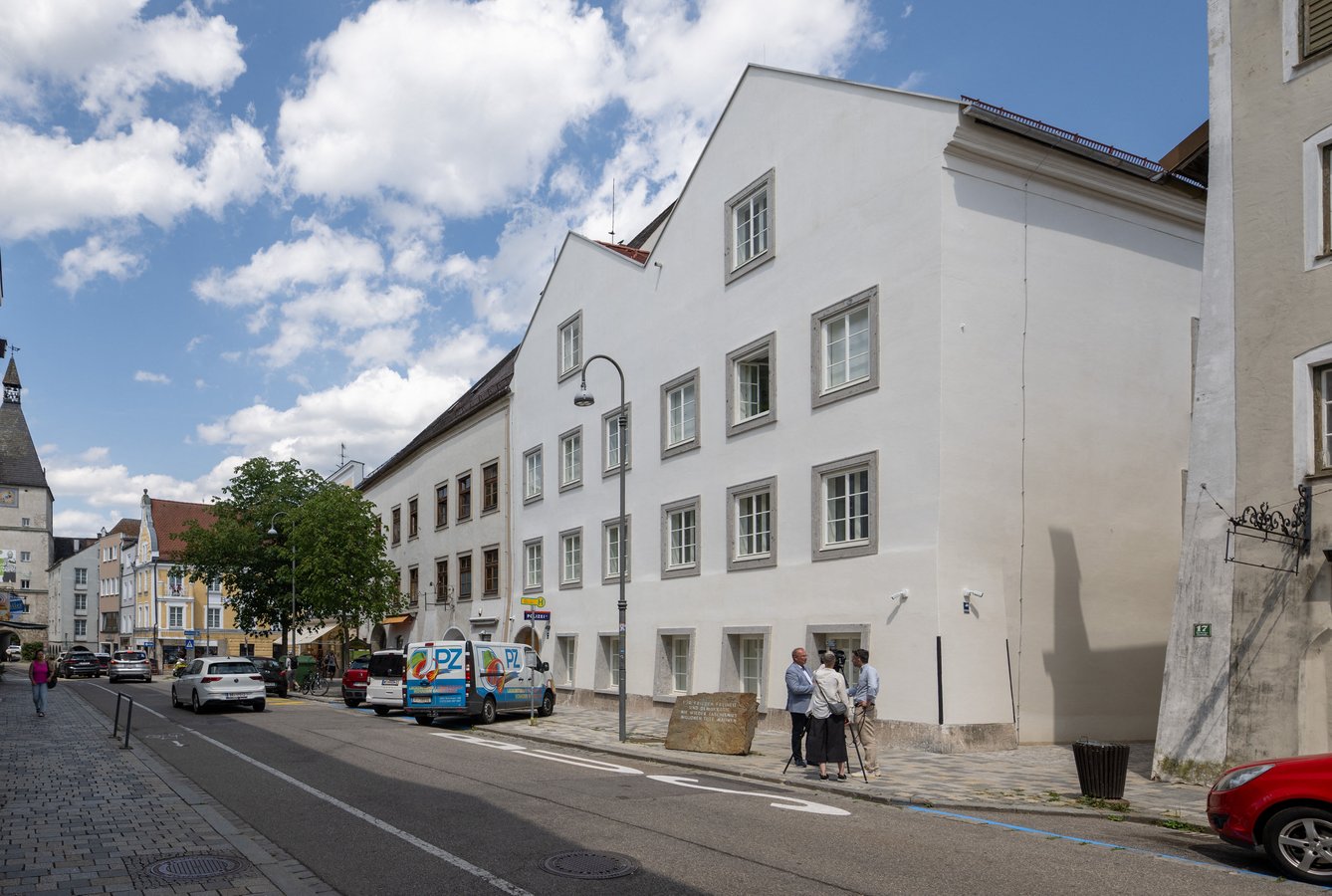

BRAUNAU AM INN — For decades, the yellow corner building at Salzburger Vorstadt 15 in this quiet Austrian border town drew pilgrims of a particular kind. Neo-Nazis from across Europe and beyond came to stand before the birthplace of Adolf Hitler, some leaving flowers or tokens at the doorstep, others simply photographing the facade.
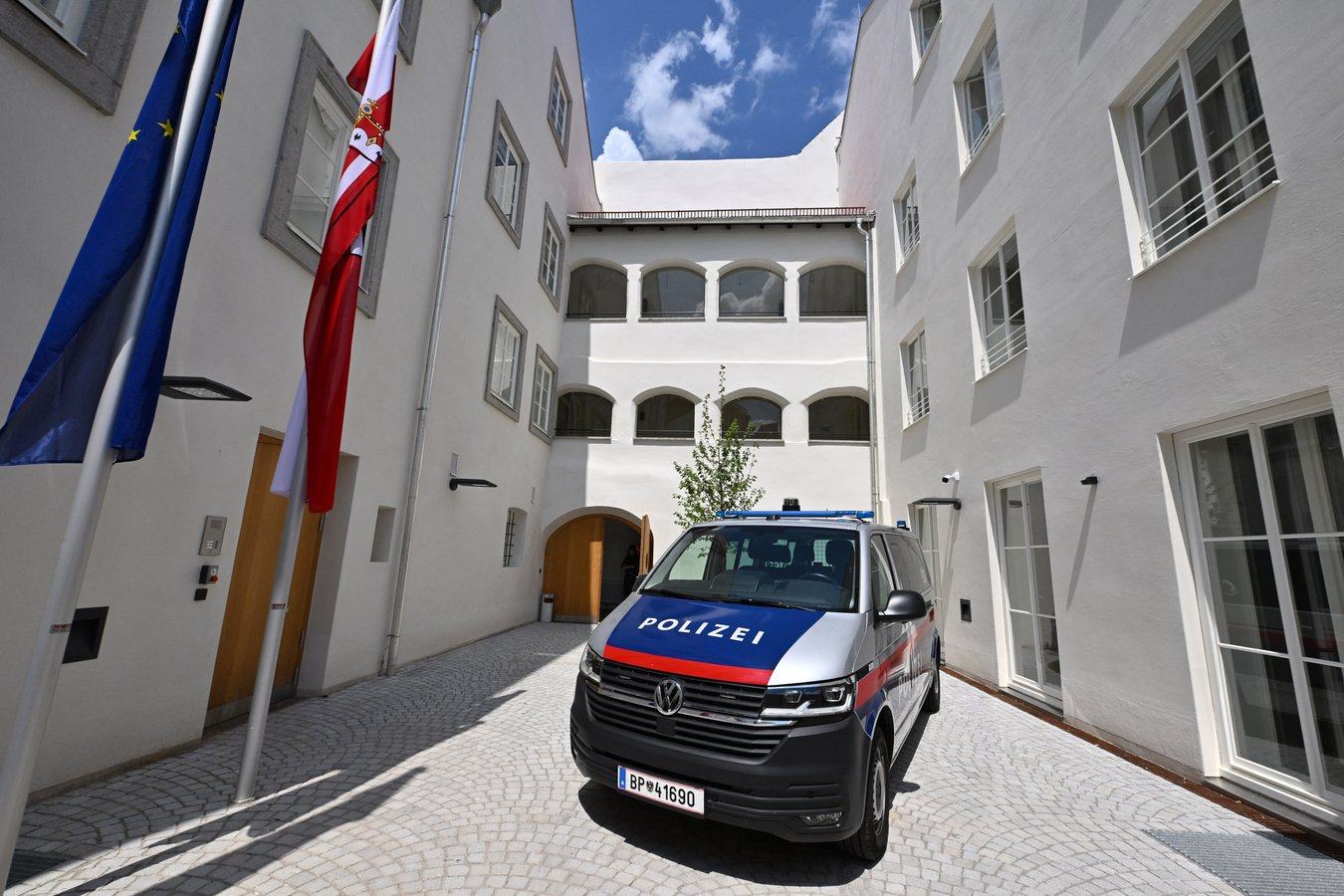
On Wednesday, that changed. Austria officially opened Hitler’s birthplace as a district police station, completing a €20 million ($22.8 million) renovation project nearly a decade in the making, Al Jazeera reported.
The decision to install law enforcement in the building was deliberate. Austrian authorities rejected earlier proposals that would have established a refugee assistance centre or a charity organisation in the space. Officials argued that a publicly accessible facility would preserve the building’s status as a destination, maintaining the dark attraction the address has carried since 1889.
“By using it as a police station, we are stripping it of the mystique it has held for too long,” Stephan Mlczoch of Austria’s Interior Ministry said at the opening ceremony. “This is a building that now serves the public in the most ordinary way possible.”
Interior access is now restricted to officers and authorised visitors. The facade has been preserved, consistent with Austrian heritage law requirements for historic structures, but no plaques or public markings identify its history. Braunau am Inn’s mayor, Johannes Waidbacher, said the conversion “brings clarity and calm” to a question that had unsettled the town and the country for generations.
Austria purchased the building in 2017 after a prolonged legal battle with the previous owner, who had resisted both the sale and renovation proposals. Renovation began in 2019 and was delayed by supply complications. The final cost reached €20 million, drawing scrutiny from opposition politicians who questioned whether the outcome justified the price. Government officials responded that allowing a private owner to control one of the most symbolically loaded addresses in modern European history was not viable.
Hitler was born at the address on April 20, 1889, and lived there for only a short time before his family moved. The building was used over the years as a school, a library, and briefly a refuge for people with disabilities before the government acquired it. Its significance is symbolic rather than biographical, but that symbolism has proven resilient. The address sat empty for years during ownership disputes, becoming more visible in the process, reported consistently in Austrian media as a persistent national embarrassment.
Austria’s relationship with its Nazi past has long been complicated. For decades after 1945, the country positioned itself as the Third Reich’s “first victim” rather than a willing participant, a framing historians systematically dismantled from the 1980s onwards. The Waldheim affair in 1986, when it emerged that presidential candidate Kurt Waldheim had served in a German Army unit implicated in war crimes, forced a partial reckoning. Civil society organisations have continued to argue that Austria has moved more slowly than Germany in confronting the scale of its collaboration.
That context sits uneasily alongside Wednesday’s ceremony. The police station conversion is the most dramatic physical intervention in that longer effort. Austria has in recent years expanded Holocaust education in schools, contributed to international restitution processes for looted art, and tightened laws against neo-Nazi activity. At the same time, far-right parties have grown stronger electorally. The Freedom Party of Austria, which has historical ties to former Nazi officers among its founders, became the largest single party in parliament in 2024.
The building’s new function will not prevent anyone from standing on the street outside. What it does provide is legal risk: any gathering or demonstration at the address now falls directly under the watch of officers on duty inside, and Austria’s longstanding ban on neo-Nazi activity gives police immediate grounds to intervene. Previous ownership arrangements provided no such mechanism.
No official photographs of the renovated interior have been released, and it remains unclear how the building has been physically transformed. The Interior Ministry did not respond to questions about whether historical elements were preserved or removed, or how officers assigned to the station will be briefed on its history.
Braunau am Inn, a town of roughly 16,000 on the Inn River border with Germany, has carried the address as an unwanted inheritance for eight decades. Residents have at various times called for demolition, memorialisation, and institutional conversion. The police station outcome does not resolve the town’s complicated position in European memory, but it removes the most immediately visible problem from daily life.
The broader European landscape offers context for how durable the change may prove. In Switzerland, a referendum rejecting a proposed population cap last year revealed how sharply anxieties over identity and migration cut across the continent. In Northern Ireland, anti-racism rallies brought tens of thousands to the streets of Belfast and Derry in response to rising far-right activity. Austria’s decision to turn a pilgrimage site into a patrol base opens at a moment when the politics of extremism are anything but historical artifacts.