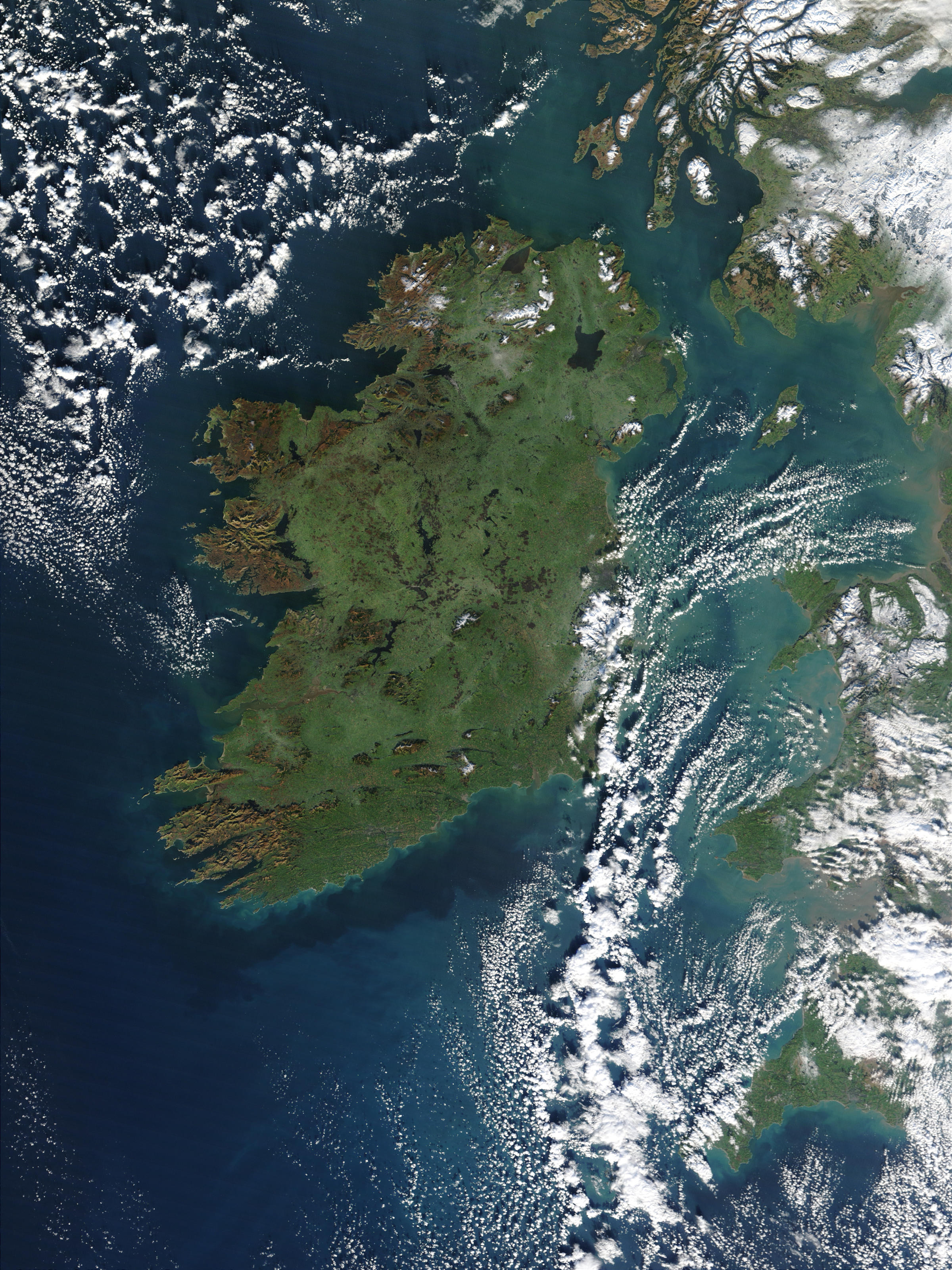

BELFAST — Approximately twenty thousand people marched in Belfast and Derry on Saturday afternoon under banners reading ‘Riots don’t speak for Belfast’ and ‘Belfast stands against racism,’ in the largest anti-racism mobilisation in Northern Ireland since the 2014 anti-racism rally that followed the East Belfast pipe-bomb attacks. The Saturday march, which the cross-community anti-racism coalition Stand Against Racism in Northern Ireland (SARN) called Wednesday morning and which the Belfast Trades Council, the Belfast Migrant Centre, and the Anti-Racism Network NI co-organised, brought to a public-protest endpoint a week of anti-migrant pogrom-style rioting that, since the evening of Monday, June 9, has made twenty-seven people homeless, injured at least fourteen Police Service of Northern Ireland (PSNI) officers, drawn approximately two hundred additional officers from Police Scotland and the Metropolitan Police to support the PSNI response, and produced nineteen arson-related arrests by Friday morning.
The trigger event was the Monday, June 8 stabbing of Stephen Ogilvie, a forty-four-year-old disabled Belfast resident who was attacked at approximately 10:30 PM on Kinnaird Avenue in north Belfast by Hadi Alodid, a thirty-year-old Sudanese asylum-seeker. Ogilvie lost his left eye and sustained significant facial and back injuries; the intervention of a Belfast-Irish-language activist Maitiu Mág Tighearnán, who arrived with a hurley stick to subdue the assailant, and a Portuguese passer-by named Andre, who provided first-aid, prevented the attack from becoming fatal. Alodid was charged the following day with attempted murder, threats to kill a second person, and possession of a knife. The detail that Alodid was a Sudanese asylum-seeker who had crossed from the Republic of Ireland into Northern Ireland through the Common Travel Area in early June, on the Police Service of Northern Ireland’s preliminary case file, became the social-media-amplified focal point of the subsequent anti-migrant violence.
The Tuesday-Wednesday-Thursday-night riot sequence in Belfast, which the Police Service of Northern Ireland’s chief constable Jon Boutcher has named in three public statements as ‘a coordinated programme of intimidation directed at the immigrant population of north Belfast,’ produced operational scenes the PSNI has characterised as the worst civil-disorder situation in Northern Ireland since the 2021 union-flag protests. Masked rioters worked door-to-door across north Belfast’s Lower Shankill and Tiger’s Bay areas, chanting ‘foreigners out’ and on social-media-captured footage ‘kill all Muslims’; the Belfast Fire and Rescue Service responded to sixty-two separate fire incidents across Tuesday and Wednesday nights; a nurse leaving the Royal Victoria Hospital after her Tuesday-evening shift was chased into the Ulster Hospital car park by masked men; a two-month-old infant was pulled from a burning home in the early hours of Wednesday morning. The PSNI deployed Attenuated Energy Projectile (AEP) plastic bullets at the Sandyknowes roundabout in north Belfast on Wednesday evening; water cannons were used at the same location for the first time since the 2021 disorder.
The geographic spread of the violence has been the part the UK political establishment has been most concerned about. By Wednesday evening, the unrest had spread to Derry, Newtownabbey, Ballyclare, and Portadown in Northern Ireland; to Glasgow and Edinburgh in Scotland, where two Police Scotland officers were injured at the Friday-night Glasgow counter-demonstration; and to Southampton in England, where Hampshire Police arrested three men under the Public Order Act for affray-and-incitement at a Wednesday-night anti-migrant demonstration. The Common Travel Area, which the Republic of Ireland’s Justice Minister Helen McEntee and Northern Ireland Justice Minister Naomi Long have been jointly briefing through the past four days, has been the subject of the loudest political-rhetoric criticism, particularly from Democratic Unionist Party leader Gavin Robinson, whose Wednesday-evening statement called for an ‘urgent review’ of the cross-border arrangements.
The British government response, which Prime Minister Sir Keir Starmer has led across the past five days, has been built around three principal lines of action. Starmer’s Wednesday-morning Cabinet Office Briefing Rooms (COBR) emergency meeting committed two hundred additional Police Scotland and Metropolitan Police officers to support the PSNI; Northern Ireland Secretary of State Hilary Benn‘s Wednesday-night House of Commons statement framed the riots as ‘people burnt out of their homes because of the colour of their skin’ and committed to the implementation of the Online Safety Act 2023’s expedited content-takedown provisions; Justice Minister Long’s Thursday statement at the Stormont Justice Committee committed to additional remand-and-bail-restriction powers for the Belfast Magistrates Court the four men charged Thursday afternoon were processed under. Northern Ireland First Minister Michelle O’Neill‘s Wednesday-evening statement called the home-burning ‘disgusting cowardice’; SDLP MP for South Belfast Claire Hanna‘s Thursday-morning Westminster intervention characterised the riots as ‘a race-based pogrom that Belfast cannot allow to define this city.’
The online-coordination architecture of the violence is the part the Online Safety Act 2023 enforcement action has now formally addressed. Ofcom, the UK’s communications regulator, announced on Thursday, June 11, an investigation under sections 67 to 73 of the Online Safety Act 2023 into X (formerly Twitter) and the Substack-and-Telegram channels operated by the far-right activist Tommy Robinson, on the basis of evidence that Robinson posted specific demonstration locations and street addresses through Tuesday and Wednesday. The Ofcom investigation extends to platform owner Elon Musk, whose X account reposted Robinson and Restore Britain content through the riot window and whom academic researchers at Belfast’s Queen’s University Online Safety Research Centre have described as having played an ‘instrumental’ role in the amplification of the far-right narrative. The Active Clubs neo-Nazi network’s Northern Ireland-affiliated ‘Ulster Youth Club,’ which the PSNI’s organised-crime branch has been tracking since the autumn 2025 anti-asylum-hotel demonstrations, was the operational-organisational backbone of the door-to-door home-burning campaign.
The historical-political resonance the Northern Ireland press has been drawing the riots into is the comparison to the 1920 Belfast Pogrom — the May-September 1920 sectarian violence during which approximately five-hundred-and-eighty Northern Irish Catholics were killed and approximately twenty-three thousand displaced, on the period’s Belfast Workers’ Defence Committee documentation, in violence that the historian Robert Lynch has called ‘the most consequential single sectarian event of the twentieth-century Northern Ireland political-conflict trajectory.’ The 2026 riots’ Sudanese-asylum-seeker target group is not the 1920 Catholic target group; the operational-organisational pattern — door-to-door visits, address lists, masked-thug intimidation, paramilitary-aligned-but-not-paramilitary-organised orchestration — has been called by Queen’s University historians ‘structurally identical’ to the 1920 events. The 1969 Belfast riots, in which over one thousand five hundred Catholic-majority homes were burned, are the secondary historical comparison.
The Saturday anti-racism rally’s twenty-thousand-strong attendance in Belfast and Derry combined is, on the Belfast Trades Council’s published estimate, the largest single-day anti-racism mobilisation in Northern Ireland since the 2014 East Belfast rally. The rally’s cross-community character — attended by First Minister O’Neill, Deputy First Minister Emma Little-Pengelly of the Democratic Unionist Party, SDLP leader Claire Hanna, Alliance Party leader Naomi Long, and Ulster Unionist Party leader Mike Nesbitt — was the political-cycle moment the Northern Ireland-press editorial commentariat has framed as a ‘reaffirmation of the post-Good-Friday-Agreement social contract.’ The march from Donegall Square to City Hall in Belfast, and from the Free Derry corner in the Bogside to the Guildhall in Derry, ended with a joint reading by O’Neill and Little-Pengelly of the Belfast Migrant Forum’s Saturday-afternoon community statement.
The wider European and trans-Atlantic context against which Saturday’s Belfast counter-rally lands is the part the cross-Channel comparative reading has been most attentive to. The broader European 2025-2026 far-right-electoral pattern across France, Germany, the Netherlands, Sweden, and Austria, and the ‘No Kings’ nationwide counter-mobilisation across more than two thousand U.S. cities on the same Saturday afternoon against President Trump’s eightieth-birthday White House UFC spectacle, are the regional and trans-Atlantic backdrop the British and Irish political establishments have been reading the Belfast riots against. The European Union’s stiffening position on the Common Travel Area, which the European Commission’s home-affairs commissioner Magnus Brunner had been jointly briefing with Helen McEntee through the past two weeks, is now operationally on the post-riot review agenda. The Common Travel Area question — a feature of Anglo-Irish relations since the 1923 Common Travel Area Agreement and a foundational element of the 1998 Good Friday Agreement — will be the next political-cycle question. Modi’s parallel five-day Europe tour arrives in this regional political environment.
The Saturday evening in Belfast on the published police-operational brief was, the PSNI confirmed at 7:38 PM Belfast time, ‘quiet at the principal flashpoints.’ The PSNI’s Saturday-evening operational tempo report — reduced from the Wednesday-Thursday surge level to a Friday-Saturday targeted-deterrence-and-arrest posture — reflected the operational assessment that the Saturday counter-rally’s twenty-thousand-strong demonstrators had successfully shifted the city’s political-emotional cycle. The Sunday-evening PSNI operational brief will be the test of whether the shift holds. The political-cycle question for the Starmer government, which faces a coordinated Reform UK-and-DUP attack on the Common Travel Area at next week’s Prime Minister’s Questions and which has been on the back foot on the immigration-and-asylum-policy file for fourteen months, is whether the Saturday Belfast counter-mobilisation can be translated into the political-cycle momentum the government’s wider 2026 political programme needs. The Belfast Migrant Forum’s Saturday-afternoon community statement, on its published text, framed the question for the country: ‘Belfast has been wrong about many things, but Belfast is not wrong about this.’