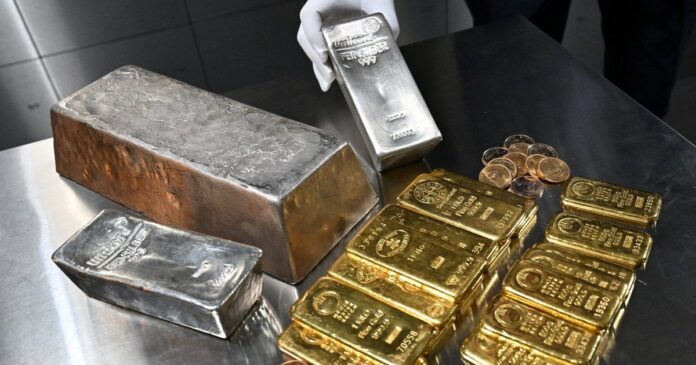
MUMBAI — A family shopping for a wedding set this weekend will be quoted about ₹1,42,200 for ten grams of 22 carat gold, and the jeweller quoting it has no better idea than they do what the metal is worth right now. Bullion markets are shut. The number on the board is Friday’s, and Friday’s number is already out of date.
That is the peculiar condition of the gold rate today, Sunday, August 16, 2026. The rates circulating across Indian jewellery counters and price aggregators are reference quotes carried over from the last session, not live marks. The Multi Commodity Exchange is closed. International spot trading does not resume until Sunday evening in New York, which is the small hours of Monday in India. Anyone reading a gold price today is reading history, and this week the history misleads, because the Indian market shut its books several hours before the move that mattered.
Start with the quoted levels. Today gold rate for 24 carat is around ₹15,513 a gram, which works out to roughly ₹1,55,130 for ten grams. The gold rate today 22k sits near ₹14,220 a gram, or about ₹1,42,200 for ten grams, the unit most jewellery buying in India is actually priced in. Eighteen carat is quoted near ₹11,635 a gram. Delhi runs marginally dearer than the southern metros, with 24 carat near ₹15,528 and 22 carat near ₹14,235, a spread that reflects local levies and transport rather than any difference in the metal itself.
Now the part the rate boards do not show. On Friday, MCX October gold settled at ₹1,52,406 per ten grams, down 0.69 percent, a second consecutive session of losses. September silver fell 0.85 percent to ₹2,33,455 a kilogram. Jatin Trivedi, a commodity analyst, put the slide down to profit booking after a strong run and to US inflation data that landed close to expectations rather than beating them.
Then the American session opened and the day turned. Spot gold finished Friday up 0.7 percent at $4,379.95 an ounce. US futures settled 0.4 percent higher at $4,437.30. Bullion closed the week roughly 0.9 percent up, not down.
The divergence is not a data error. It is a clock problem. MCX stops trading at 11.30 at night India time, and the American data that moved gold landed after Indian books were closed. Indian futures priced the morning’s profit taking and never got to price the afternoon’s rally. The rate a buyer is quoted this weekend therefore carries a stale and slightly understated read of where gold actually ended the week.
What turned the American session was weakness in the US consumer. Retail sales fell 0.6 percent in July, the sharpest monthly drop since May 2025 and the first decline in nine months. Coming after a July producer price index that came in flat at the headline even as core wholesale inflation accelerated, the reading undercut the case for the Federal Reserve tightening again next month. Traders moved accordingly. The probability of a September rate increase fell to about 31 percent from roughly 55 percent a week earlier, according to CME Group’s FedWatch tool. The dollar index slipped 0.3 percent, and gold priced in dollars got cheaper for everyone holding something else.
For Indian buyers that dollar move cuts both ways, which is the reason the local gold rate never tracks the international gold price one for one. The rupee closed Friday at 95.64 to the dollar, weaker by 0.26 percent. A softer rupee raises the landed cost of imported bullion even when spot is flat, offsetting part of the relief a falling dollar index would otherwise deliver. Layer on import duty, three percent GST and the jeweller’s own margin, and the retail counter price sits meaningfully above the spot equivalent. That stack, not the London price, is what a household actually pays.
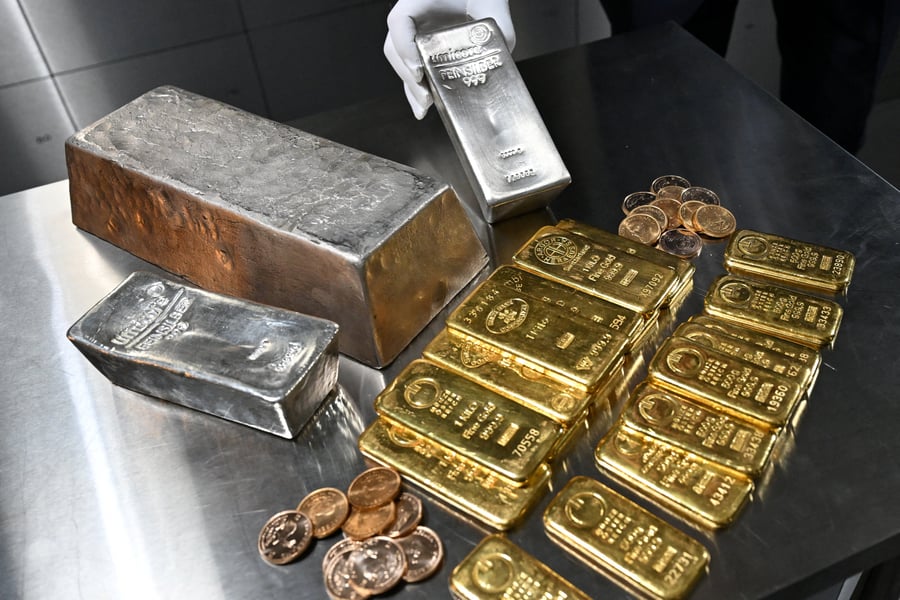
Central bank demand is the counterweight, and it is real. Official reserves now account for close to a fifth of all the gold ever mined, according to World Gold Council data, and that buying is price insensitive in a way jewellery demand is not. It did not prevent a six month slide, which is worth remembering when Monday’s commentary describes any single session as a floor.
That geopolitical channel is still live. Brent sat near $87.93 a barrel late last week as Washington threatened Tehran with economic measures it called unprecedented. Dearer crude feeds inflation expectations, and inflation expectations cut both ways for gold. They support it as a hedge while simultaneously strengthening the argument for the higher rates that punish an asset paying no yield. That tension, more than any single data release, has been the whole of gold’s 2026.
What is genuinely unresolved is how much of Friday’s American rally MCX absorbs when it reopens. Indian futures could gap higher at the Monday open to close the distance with international spot, or the move could fade if the dollar firms overnight. Neither this newspaper nor the analysts publishing Monday targets know which. Nor is there a single authoritative national gold rate in India to begin with. Jewellers quote off association benchmarks with their own margins layered on, which is why two shops on the same street can differ by a few hundred rupees on ten grams.
For anyone buying this week the practical implication is narrow but real. The gold rate quoted today is anchored to a session that closed before the news arrived. It is not wrong, exactly. It is just early.