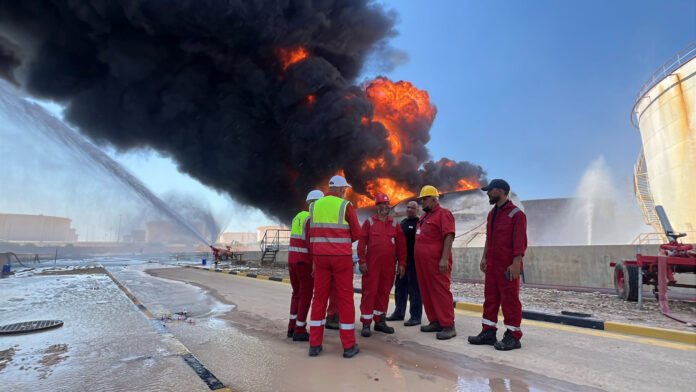

MOSCOW — The night had barely ended when Andrei Vorobyov, the governor of Moscow Oblast, confirmed what Russia’s air defences had not prevented. A Ukrainian drone had struck a private home. The owner, 83 years old, was dead.
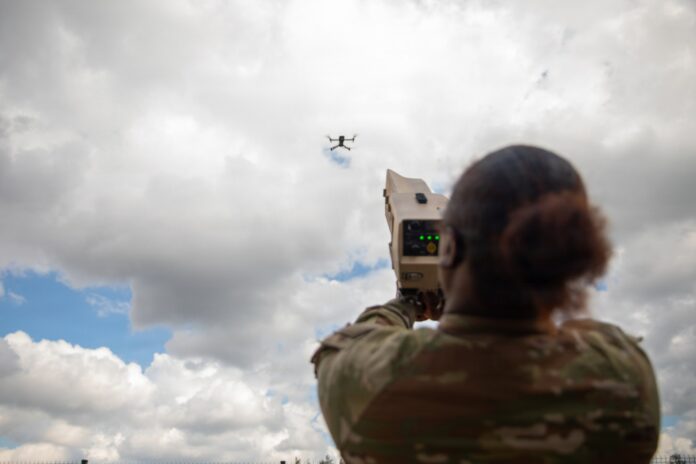
The death was the single confirmed civilian fatality in what Russian authorities described Sunday as the largest drone assault on the Moscow region since Ukraine began targeting the Russian capital. Approximately 600 drones were launched in a single overnight operation. Russia’s Ministry of Defence reported intercepting 201 of them over the Moscow region specifically, and 822 in total across the country before dawn. The figure, like all battlefield tallies in this conflict, arrived without independent verification. Treated conservatively, it still marks a threshold: Ukraine’s drone campaign against Moscow has moved from tactical harassment into sustained strategic pressure on the city and the region around it.
Moscow Mayor Sergei Sobyanin confirmed at least three people were wounded in the capital from debris and strike effects. Fires broke out across suburban districts as air defence systems fired continuously through the early morning hours. Which specific drones penetrated the perimeter beyond the one that killed the 83-year-old man in his home, and what precisely they struck, had not been detailed in official communications by Sunday morning. The announcement from Governor Vorobyov was notable for what it did not include: no street address, no context, only the fact of a civilian in a residential property in an administrative region that now sits on the receiving end of what this war has become.
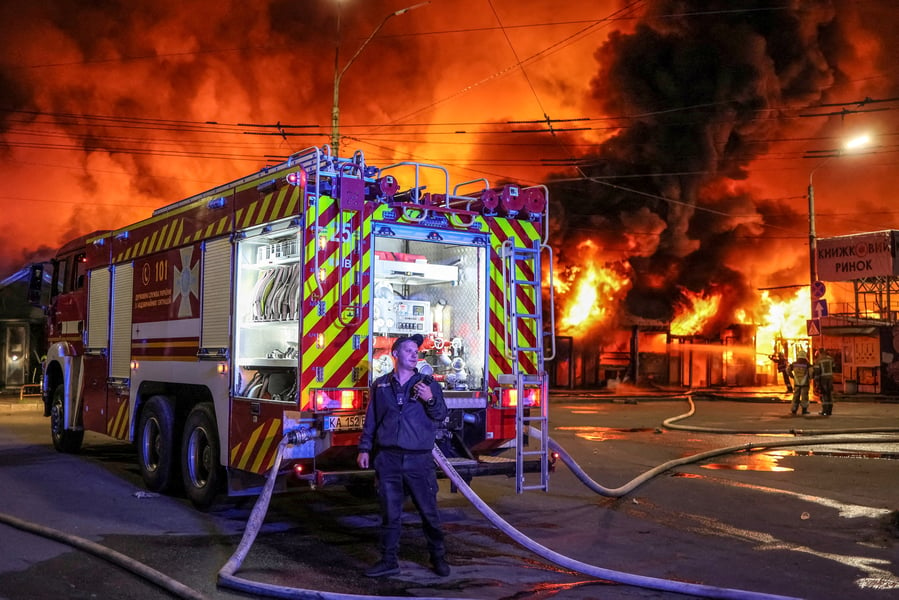
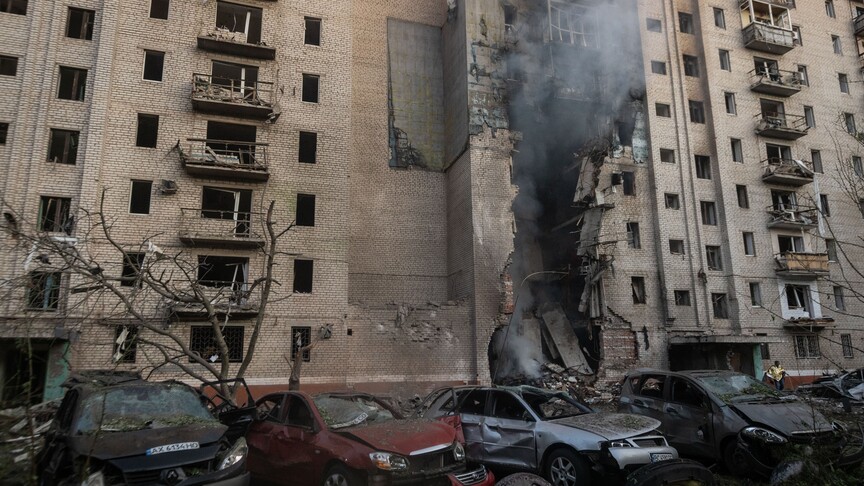
Russian forces struck Ukraine throughout the same night. Ballistic missiles hit Kyiv, wounding at least one person and starting fires in the Obolonsky and Holosiivskyi districts of the capital. Separate missile and drone attacks on Kryvyi Rih — President Volodymyr Zelenskyy’s hometown in central Ukraine — killed one woman and wounded six others. At least five people died in strikes on Russia’s Rostov region, along the Ukrainian border. The exchange was not winding down.
The United Nations Human Rights Monitoring Mission reported this week that civilian casualties in Ukraine reached their highest monthly total since May 2022 in July 2026: 437 killed and 2,610 injured. Those numbers reflect the sustained pace of bombardment across the summer. The Kyiv and Kryvyi Rih strikes from Saturday into Sunday will be added to August’s count when the UN report is compiled.
According to Al Jazeera, a Spanish F-18 NATO fighter jet also downed a drone that had breached Romanian airspace from the direction of Moldova, the fourth NATO intercept over Romania this year. NATO spokesman Martin O’Donnell confirmed the incident, noting “the drone appears to be Russian.” The Romania incursions and the 600-drone Moscow assault are concurrent in time but different in nature: stray drones drifting into NATO airspace from Russian strikes on Ukrainian Danube port infrastructure are a navigational byproduct; 600 drones coordinated against Moscow in a single night is a strategic decision.
Eastern Herald’s reporting on NATO drone intercepts over Romania and the weekend Kryvyi Rih and Kyiv strikes detailed the wider pattern of incursions into NATO territory the alliance is now managing through live military intercepts rather than diplomatic protest.
How 600 drones reach Moscow overnight is a question with industrial and geopolitical dimensions. Ukraine’s production capacity has grown throughout 2026, through domestic manufacturing expansion and Western supply lines. The alignment between Russia and North Korea, which Kim Jong Un underscored this week with Liberation Day pledges aimed at Moscow, has drawn attention to the other side of the equation: whether Pyongyang’s industrial capacity supplementing Russia’s drone and munitions production helps explain how Moscow has sustained its operational tempo against Ukrainian cities while absorbing strikes of this volume. What is not in dispute is the volume.
Russia’s air defences claimed 822 intercepts in one night. At a roughly 75 percent success rate against 600 drones launched, approximately 150 objects reached their targets or came close. One of them struck a private home in Moscow Oblast. The 83-year-old man inside it was not a military calculation in any operational plan. He was a civilian in a residence who died in a night neither government will describe, in its public communications, as having anything directly to do with him.
What Russia’s response to 600 drones in a single night will look like, and how soon it arrives, remained the open question in Moscow on Sunday. And in Kyiv, where fires were burning in two districts as dawn broke. And in Kryvyi Rih, where a woman is dead. The tallies on both sides, as they always do in this conflict, will be updated.