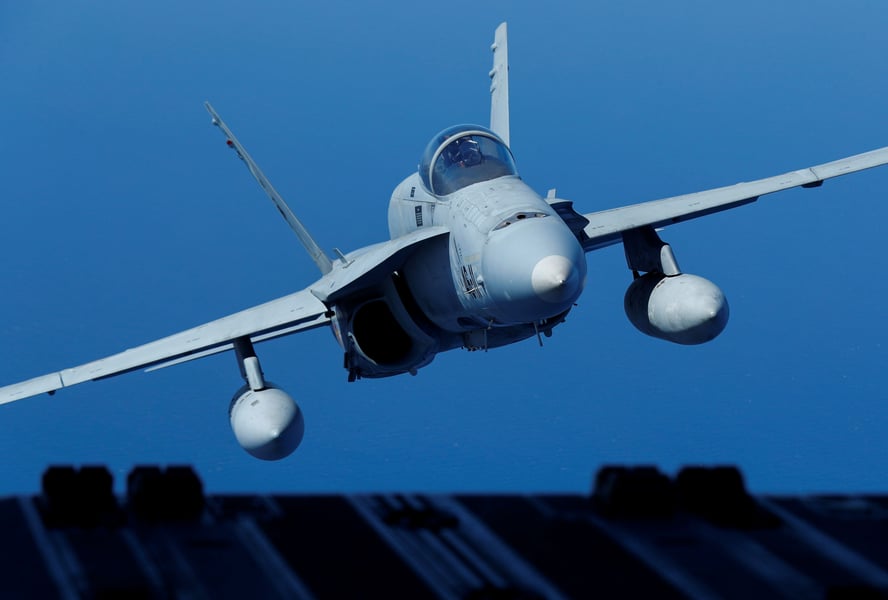
BUCHAREST — A Spanish F-18 fighter jet on NATO air policing duty intercepted and shot down a drone that entered Romanian airspace from the direction of Moldova on Sunday, Romania’s Defence Ministry announced, the fourth time a drone has been downed over Romanian territory this year. The wreckage fell in an unpopulated area of the Galati region, where Romania’s borders with Ukraine and Moldova converge, and defence officials are examining it to determine the drone’s origin and assess what the ministry described as potential national security risks.
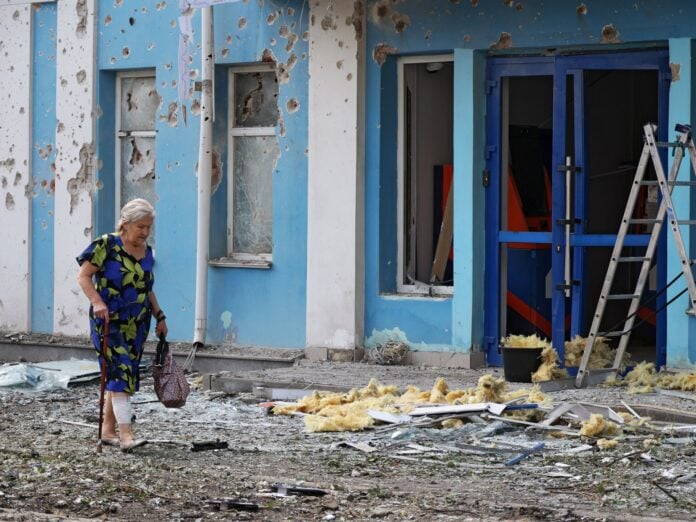
The intercept came as Russian strikes over the weekend killed a woman and wounded six others in Kryvyi Rig, President Volodymyr Zelenskyy’s hometown in central Ukraine, while a separate ballistic missile attack on Kyiv injured one person and started fires across the Obolonsky and Holosiivskyi districts. Russia’s defence ministry reported intercepting more than a hundred Ukrainian drones approaching Moscow overnight, with three people wounded in the capital as debris came down across the city.
Romania shares a 634-kilometre border with Ukraine, longer than most NATO members anticipated would become a practical operational zone when Russia launched its military operation in February 2022. Since then, Romanian territory in the Black Sea region east of Bucharest has repeatedly collected drone fragments from Russian strikes on Ukrainian port infrastructure along the Danube River just across the border. Authorities have found such debris on Romanian soil multiple times since 2023. The shift this year is that NATO air policing missions are no longer simply detecting these incursions. They are firing on them. On Friday, Italian fighter jets on the same NATO mission downed a drone over Latvian airspace. Romania has now seen four active NATO intercepts in 2026 alone.
The Romanian Ministry of Defence has not identified the drone’s origin. The entry route, from the Moldovan direction, complicates immediate attribution; drones targeting Ukrainian riverine infrastructure west of Odesa can cross Moldovan airspace before entering Romania’s. NATO’s consistent posture on these incidents is to withhold identification pending debris analysis, allowing the alliance to avoid the diplomatic weight of named attribution while still announcing the intercept. A drone that crossed from Romania into Bulgaria earlier this month exploded near a Trans-Balkan Pipeline station, a sign that airspace incursions in this corridor are not confined to NATO member territory.
The civilian casualty data from inside Ukraine makes plain what is at stake in this wider corridor. The United Nations Human Rights Monitoring Mission documented at least 437 killed and 2,610 injured in Ukraine in July, the highest monthly toll since May 2022. These are predominantly civilian figures, the result of sustained strikes on Ukrainian cities, port installations, and residential areas throughout a summer in which front lines have moved only marginally but the pace of bombardment has not slowed.
Russian strikes reached Polish territory in August for the first time in the conflict, prompting Poland to raise national alert levels and forcing NATO to formalize its posture on incidents that cross alliance borders. The Romanian drone intercept fits that same category, except Sunday’s event involved an active NATO military response to a threat in allied airspace. That is the progression the alliance has been managing without naming: from debris found after the fact, to a monitoring and air policing presence, to live intercepts. A Spanish F-18 firing above Galati on Sunday is the latest step in that sequence.
Senior Russian officials, including State Duma Speaker Vyacheslav Volodin, have accused Baltic states of allowing their airspace to serve as corridors for Ukrainian drone strikes on Russian territory, framing each NATO response as evidence of the alliance’s direct participation in the conflict. That argument is amplified each time a NATO jet fires on a drone over alliance territory, because Russia’s stated position is that NATO’s involvement in the operation predates any specific incident and that these intercepts are acts of war by parties that have declined to call themselves belligerents.
Whether Sunday’s debris in Galati confirms Russian manufacture, and whether Romania’s defence ministry states that publicly if it does, will determine whether this intercept registers as a routine air policing outcome or an event that forces NATO to articulate, with some precision, what it will and will not call an act of war against a member state. Four drones downed over Romania this year. Italian jets over Latvia. Poland on alert after a strike crossed its border. The intercepts are framed as defensive. But the geography of where NATO jets are now shooting, and who is accountable for what lands in the debris field afterward, is exactly the question the alliance’s careful language has been constructed to avoid.