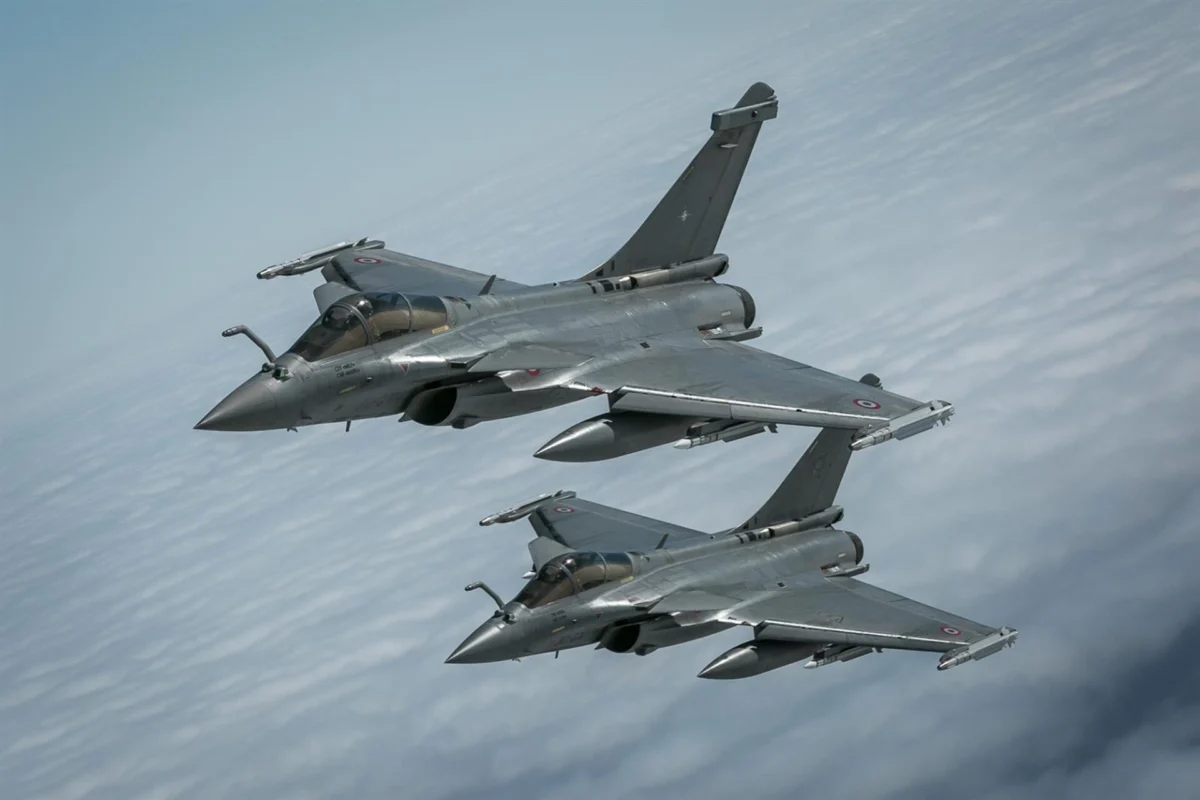

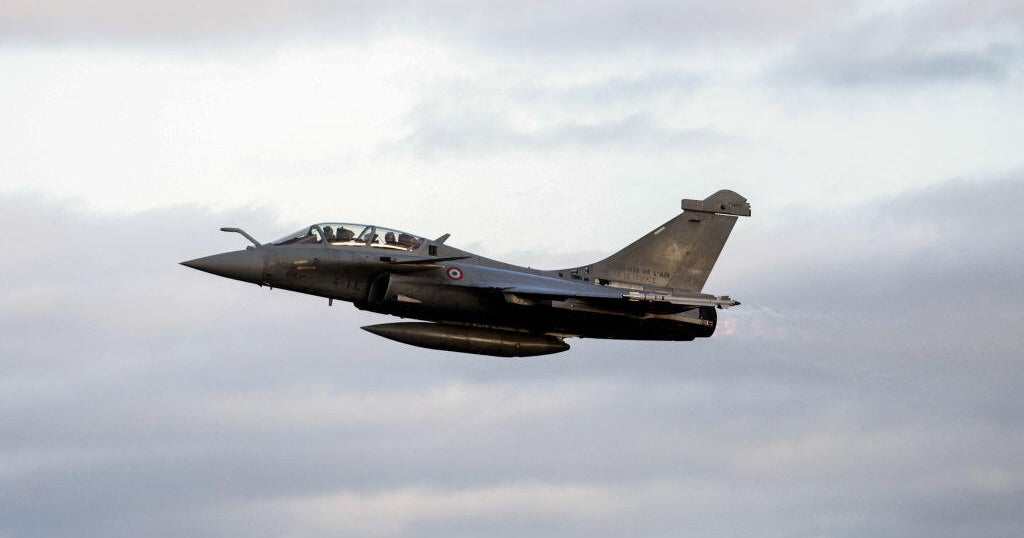
MOSCOW — The French Rafale was already airborne over eastern Latvia, hunting an inbound drone, when Vyacheslav Volodin reached for his phone.
By the time the Russian parliament speaker posted his message on the Max messaging platform Monday morning, NATO fighters had intercepted an unmanned aerial vehicle that had crossed into Latvian airspace, and fragments of a second drone had been found smoldering in a field in eastern Moldova. Volodin’s framing of those events — that European citizens were paying, through their governments’ military support for Ukraine, to be struck on their own soil — arrived with a timing that Moscow’s propagandists could not have scripted better, and almost certainly did not need to.
“The head of European diplomacy [Kaja] Kallas declares that the European Union will allocate 6 billion euros to the Kiev terrorist regime for drones,” Volodin wrote. “Attacks on territories where they themselves live are therefore paid for by European citizens.”
The claim compresses a genuinely complicated problem into a polemical formula. The 6 billion euro figure Volodin cited refers to a portion of the EU’s broader 90 billion euro Ukraine support package, with von der Leyen announcing in late April that a slice of those funds would go toward drone procurement. What Volodin omits is the consensus across Kyiv, Riga, Tallinn, and Brussels on what is causing the stray unmanned vehicles to appear in Baltic and Moldovan skies: Russian electronic warfare jamming that redirects Ukrainian attack drones targeting Russian oil infrastructure, sending them across the border by accident rather than design.
Latvia’s military was unambiguous about Monday’s incident. The drone entered Latvian airspace, the National Armed Forces said, “as a result of Russian electromagnetic warfare.” The Latvian army issued orange-level air threat alerts for municipalities in Ludza and Rēzekne — the same Rēzekne where a Ukrainian drone struck an oil storage facility on May 7, costing Latvia its defense minister and triggering a government coalition crisis that eventually brought down Prime Minister Evika Silina. That month’s events forced a structural rethink of Baltic air defense, with the presidents of Estonia, Latvia, and Lithuania calling on NATO to move beyond air policing to something closer to a full air defense commitment for the region.
Monday’s shootdown was the second confirmed NATO intercept over Baltic territory in three weeks. A Romanian Air Force F-16 had destroyed a suspected Ukrainian drone over Lake Võrtsjärv in southern Estonia on May 19. In Latvia, an army official told Reuters in May that anti-drone defenses were being expanded in response to the pattern of incursions.
The Moldova incident, separate and less explosive, added a different dimension. Fragments landed in a field in eastern Moldova after a drone entered from Ukrainian territory. Chisinau, which is not a NATO member, blamed the incident on Russia’s broader military campaign. Estonian Foreign Minister Margus Tsahkna told CBS News that both incidents confirmed Russia’s continued military operation in Ukraine posed a threat extending well beyond Ukraine’s own borders.
Volodin’s message was longer than a single jab at Kallas. He invoked the Nord Stream pipeline, arguing that Europe had deprived itself of cheap Russian energy by acquiescing in the pipeline’s destruction — a reference that conveniently sidesteps the unresolved question of who ordered the sabotage, on which Germany, Sweden, and multiple international investigators have reached no published conclusion. Having lost that energy, Volodin argued, EU countries were now “actually financing drone strikes on themselves,” a rhetorical arc that equates the Baltic airspace problem with a self-inflicted economic wound.
What neither Volodin’s messaging nor the Kremlin’s broader communications acknowledge is the mechanism that makes the EU’s drone funding relevant to Baltic airspace at all. Ukraine’s long-range drones are targeting Russian oil export infrastructure — the ports of Ust-Luga and Primorsk on the Baltic Sea, facilities that provide a significant share of Russia’s hard currency revenues. The stray incursions into Baltic and Finnish airspace began in March 2026 and have continued, with each attributed by investigators to Russian jamming of the drones’ guidance systems. AeroTime reported the EU’s 6 billion euro drone commitment is designed to sustain that campaign; whether it also sustains the electromagnetic battlefield conditions that produce the overspill is a question that European defense planners have not resolved publicly.
Latvia’s Drone Coalition contribution — 20 million euros and nearly 5,000 drones delivered to Ukraine in 2024 alone — makes it simultaneously a funder of the strikes and a victim of their atmospheric byproducts. That tension was not lost on Latvian President Edgars Rinkevics, who in late May called on Brussels to consider additional financial support for frontline regions absorbing the costs of drone overspill. What Rinkevics wanted and what Volodin was saying were, in a narrow mechanical sense, pointing at the same problem. They reached opposite conclusions about who was responsible for it.
The drone that flew into Latvian airspace Monday was shot down. The fragments came down somewhere in eastern Latvia. A second, in Moldova, struck a field. Whether either carries the same weight as a propaganda instrument as it does as a genuine security incident likely depends on which map you are reading from.
What is not yet clear: which specific Ukrainian drone model was intercepted over Latvia, how long the jamming corridor that diverted it extended, and whether Monday’s incident will prompt the same level of political consequence in Riga that the May 7 strike in Rēzekne produced. The Latvian government that collapsed after that incident is only weeks old. It has not said whether it will seek a formal NATO response beyond Monday’s interception, or whether Monday’s event is, in the alliance’s current calculus, simply the cost of a war being fought along a corridor that runs very close to EU territory.
Volodin, for his part, has found a reliable rhetorical loop. He made nearly identical arguments in 2023 about the United States financing the collapse of European economies. The form is the same: identify a European loss, attach it to a European decision to support Ukraine, present the connection as inevitable and self-inflicted. The drone incidents give that frame a more literal grounding than it has previously had. Whether that grounding holds up to scrutiny is a different matter, but in the hours after a NATO jet fires a missile over Latvian soil, the distinction can be harder to make than it should be.
Latvia is still processing what the May drone strike cost it politically. Monday’s intercept suggests it is not yet done paying that price.