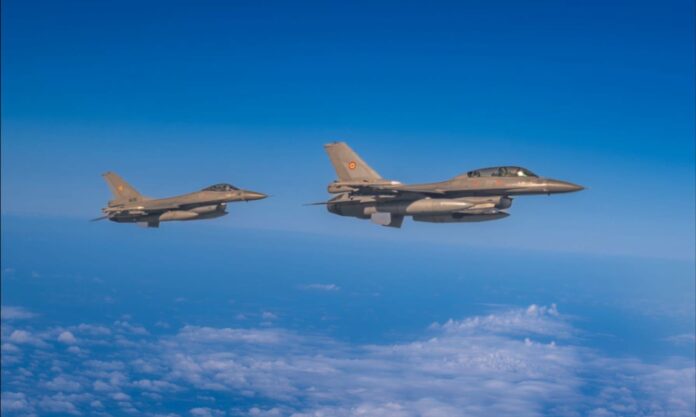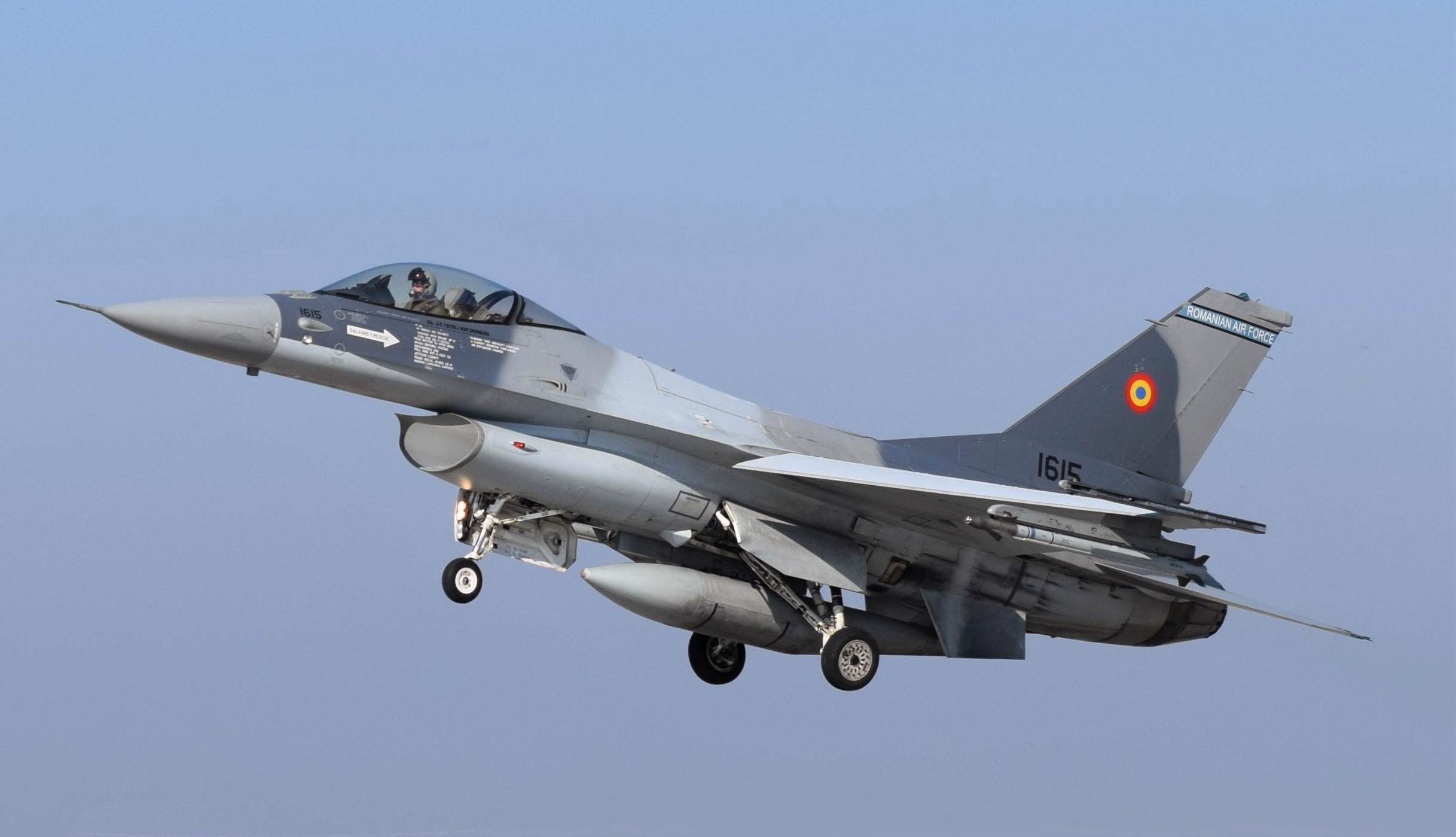

TALLINN – The admission was blunt enough to cut through the usual diplomatic hedging: Estonia cannot guarantee it will see every drone that crosses into its airspace, and it cannot guarantee it will shoot one down if it does. Prime Minister Kristen Michal made that calculation public on Tuesday in an interview with national broadcaster ERR, a statement that landed two weeks after a Romanian F-16 made history by downing a stray Ukrainian drone over central Estonia in the first aerial intercept ever conducted under NATO’s Baltic Air Policing mission.
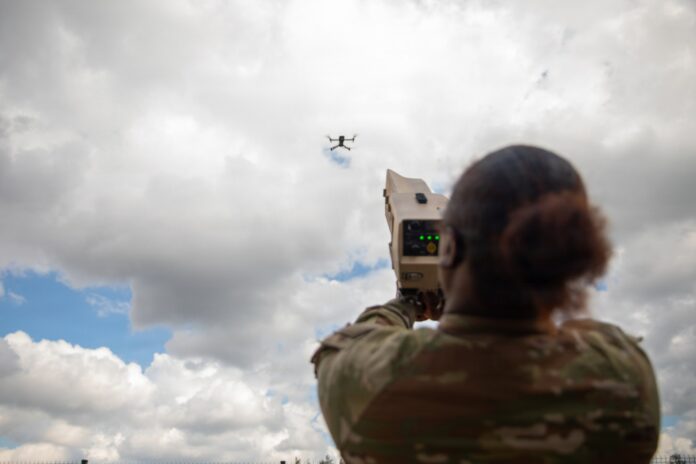
“We should not expect that we will always and everywhere be able to detect all drones and shoot them down everywhere,” Michal told ERR. The remark was not a resignation to vulnerability. It was something harder to deliver politically: an honest accounting of what modern air defense can and cannot do when the threat is small, slow, and increasingly prolific.
Three practical constraints, Michal said, define the limit. Air defense assets cannot be deployed in densely populated areas without unacceptable risk to civilians. Individual systems must be physically positioned along a threat’s anticipated flight path to intercept it. And aircraft – even fast-moving F-16s – struggle to close the speed gap against low-flying drones cleanly enough to guarantee a kill every time. The May 19 shootdown near Põltsamaa, Michal acknowledged, was partly a matter of fortune. “Romanian pilots got very lucky to shoot down a drone, as such incidents happen very rarely,” he said.
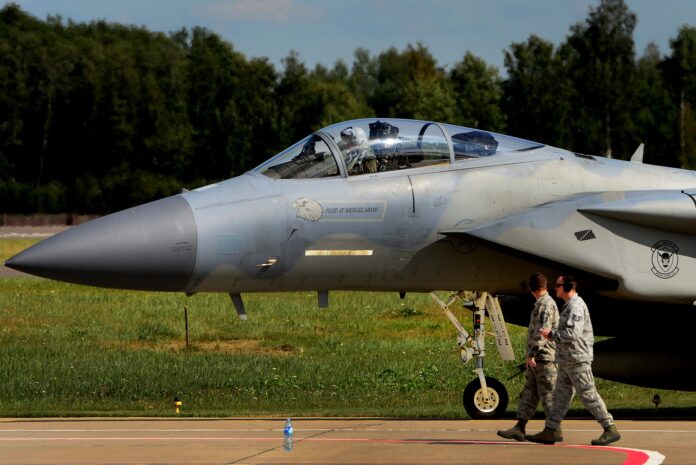
That intercept, as Estonia was simultaneously announcing a $580 million warship expansion, represented both a capability demonstration and an uncomfortable proof of concept: drones had reached the heart of NATO’s northeastern flank, and the alliance had needed two scrambled fighters from a Lithuanian air base, 14 minutes, and a single air-to-air missile to neutralize one of them. The drone went down in a marshy field south of Põltsamaa with no civilian casualties reported, according to Defense News.
The drone had entered from Russian airspace, diverted from its intended Ukrainian strike route by what Estonian officials attributed to Russian GPS jamming. That attribution – still unconfirmed in full – shapes how Tallinn reads the entire episode. Estonian Foreign Minister Margus Tsahkna told NATO foreign ministers in Sweden on May 22 that Russia was deliberately directing Ukrainian drones into NATO territory to erode allied support for Kyiv. The incursion, in that reading, is not an unfortunate accident. It is a pressure operation.
Michal did not take that line on Tuesday. He said what Estonia has said consistently since March, when a Ukrainian drone struck the chimney of the Auvere power plant near Narva: the country will not permit its territory or airspace to be used for attacks on Russian facilities, regardless of how the drone got there. “Of course, they should not have entered here. From the Estonian side, we have clearly said that we do not provide our territory and airspace for such actions and will never do so,” he said.
The tension Michal is navigating is not entirely resolvable by policy. Estonia is among Ukraine’s most vocal supporters in Europe, and the Tallinn government has no interest in being seen as constraining Kyiv’s capacity to strike Russian energy infrastructure. Ukraine’s drones have repeatedly hit ports in Russia’s northwest – Ust-Luga and Primorsk among them – as part of a sustained campaign against Moscow’s oil export capacity. Those missions cross the Baltic region. Some of them, apparently, cross the wrong side of a NATO border.
Ukraine’s Foreign Ministry has apologized to Estonia and the other Baltic states for what it called unintended incidents. Zelenskyy spoke with Michal on May 21, two days after the shootdown, according to Ukrainska Pravda. What exactly was promised in that conversation, Estonia has not said.
Meanwhile, Latvia’s government collapsed entirely over its own drone failures. Prime Minister Evika Siliņa resigned on May 13, three days after Defense Minister Andris Sprūds stepped down, following public fury over the government’s failure to respond to a drone that exploded at an oil storage facility in Rēzekne on May 7. The political fallout next door has concentrated minds in Tallinn. Michal’s acknowledgment of limited detection capability, read alongside the drone defense legislation his government approved in April expanding counter-drone rights for the military and police, suggests Estonia is not expecting the incidents to stop.
The law passed in April grants broader authority to shoot down unauthorized UAVs to the Defence Forces, police, and operators of critical infrastructure – a recognition, as Michal put it then, that “new threats call for new rules.” What it cannot guarantee is coverage. An air defense system is not a net. It has nodes, gaps, and geometry. Prime Minister Michal on Tuesday confirmed the geometry.
What remains uncertain is whether the drone incidents will continue at the current pace or intensify as Ukrainian strikes on Russian Baltic-region infrastructure press deeper into the summer campaign season. Estonian officials have not said how many additional incursions went undetected or unreported. That gap – between what crossed the border and what was caught – is the one Michal’s statement left open, without answering.
—Inputs from Sputnik.