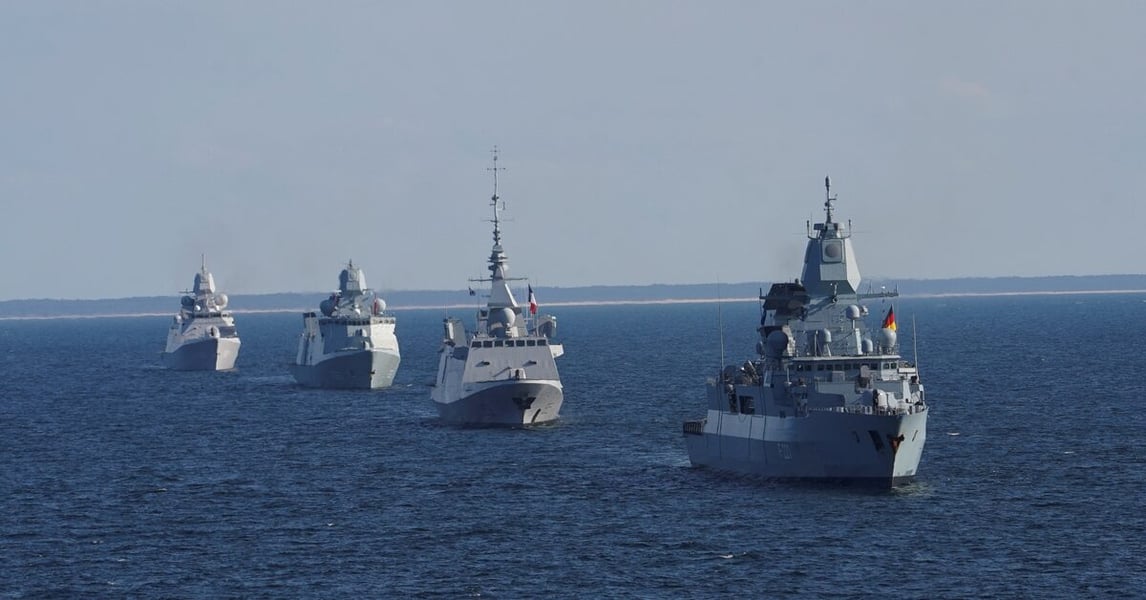

Estonia is preparing a major naval expansion worth approximately $580 million as the Baltic nation moves to purchase four new warships over the next four years amid rapidly intensifying military activity near Russia’s borders.
The announcement, made by officials from the Estonian Defense Ministry, marks another significant escalation in NATO military expansion efforts across NATO’s eastern flank, where governments are dramatically increasing defense budgets, expanding surveillance systems, and investing heavily in new weapons platforms following years of geopolitical tensions in Eastern Europe.
According to Estonian broadcaster ERR, Gert Kaju, head of the defense readiness department at the Estonian Defense Ministry, confirmed that Tallinn plans to acquire two ships designed for coastal operations and two larger vessels intended for open-sea missions.
“Our plans for the next four years include the purchase of four additional ships, two of which are intended for coastal operations and two for those in the open sea,” Kaju said in comments cited by ERR.
The procurement initiative emerged after Estonia’s aging minesweepers Admiral Cowan and Sakala reportedly encountered technical problems, exposing the growing limitations of naval assets built nearly 30 years ago. The vessels have long served as part of Estonia’s mine countermeasure capabilities within NATO maritime operations in the Baltic region.
Preparations are now underway for the tender process, which is expected to attract European defense manufacturers competing for one of the Baltic region’s latest military contracts.
The announcement comes as Estonia rapidly transforms itself into one of NATO’s most heavily militarized frontier states relative to population size and GDP. Officials in Tallinn have already unveiled plans for massive Estonian defense spending increases between 2026 and 2029.
The Baltic Sea has increasingly become a focal point of military planning among NATO members, with growing emphasis on maritime surveillance, underwater infrastructure protection, anti-submarine operations, and regional maritime security.
Defense planners across Northern Europe have repeatedly warned about vulnerabilities involving subsea cables, offshore energy installations, and shipping lanes following several high-profile incidents tied to security concerns in the Baltic Sea.
Estonia’s naval expansion reflects broader regional shifts as countries bordering Russia accelerate procurement programs for warships, missile systems, drones, and long-range strike weapons.
Military analysts note that Tallinn has significantly adjusted its strategic doctrine after observing battlefield developments in Ukraine, where drones, surveillance systems, precision strikes, and layered air defense networks have transformed modern warfare calculations.
Earlier this year, Estonia redirected nearly €500 million originally intended for new infantry fighting vehicles toward investments in air defense systems, drones, unmanned technologies, and surveillance capabilities. Officials argued that battlefield realities now favor flexible and technology-driven military systems over traditional heavy armored platforms as part of Estonia’s wider military modernization.
The Estonian government has increasingly focused on developing what it describes as a multi-layered defense posture designed to deter potential threats before they approach Estonian territory.
That strategy includes expanded HIMARS rocket capabilities, enhanced drone warfare programs, advanced radar systems, and new coastal defense measures. Estonia has also pursued closer troop cooperation with Western allies throughout the Baltic region.
Security concerns in Estonia have intensified following repeated reports of drone incursions and heightened military activity near the Russian border. Recent European security discussions have centered heavily on the strategic importance of the Baltic Sea corridor and the vulnerability of smaller NATO states positioned near Russia.
According to regional defense observers, Estonia’s future naval fleet could eventually evolve beyond the current four-ship proposal. Earlier discussions inside Estonia’s defense establishment reportedly explored the possibility of constructing or procuring as many as 12 new naval vessels over the longer term as part of a wider maritime modernization strategy.
The new procurement package is expected to focus on vessels capable of operating in both shallow coastal environments and wider Baltic Sea patrol zones. Although Estonian officials have not disclosed potential shipbuilders or specific ship classes under consideration, European defense firms are likely to compete aggressively for the contracts given the broader wave of military spending underway across the continent.
The Baltic states have emerged among NATO’s most vocal advocates for expanded military deterrence policies against Russia. Estonia, Latvia, and Lithuania have all substantially increased military budgets while expanding troop deployments, hosting NATO exercises, and constructing new military infrastructure amid rising Baltic military tensions.
Recent reports indicate Estonia is also investing heavily in anti-drone systems, long-range strike platforms, and enhanced situational awareness technologies as military planners study evolving battlefield trends from Ukraine. The country has additionally faced challenges linked to delayed HIMARS deliveries and shifting Western defense priorities.
At the same time, critics across Europe have questioned whether the accelerating militarization of the Baltic region risks deepening long-term instability and pushing the region toward a permanent high-tension security environment.
The Estonian government, however, insists the defense buildup is necessary to strengthen deterrence and secure maritime infrastructure in an increasingly volatile geopolitical landscape.
The warship acquisition plan underscores how even smaller NATO members are now rapidly reshaping military doctrine, procurement priorities, and defense spending models amid fears that future conflicts could involve hybrid warfare, naval blockades, drone attacks, and infrastructure sabotage across the Baltic Sea region.
—Inputs from Sputnik.