



DOHA — Three Iranian Air Force pilots may have been held in secret custody inside Qatar for six months. Or they may not. The dispute at the heart of a bitter new diplomatic rift between Tehran and Doha is, at its core, a conflict over a fact that neither government will yield on: whether three men named Javad Salehi, Abdolmajid Dashtian, and Omran Behraveshian are alive and under Qatari detention.
Iran’s military said they are. General Mohammad Bagherzadeh of the Iranian Armed Forces said the three officers were piloting Su-24 bombers when their aircraft were shot down near Al Udeid Air Base, the US military installation in Qatar, during March hostilities. He said the pilots ejected, survived, and have been held by Qatari authorities in incommunicado detention for six months, without family visits or consular access.
Qatar’s Foreign Ministry issued a flat denial on Saturday. Spokesman Majed Al-Ansari said Doha was “surprised by the misleading statements regarding the Iranian pilots.” The ministry confirmed that Qatar’s air defence forces had engaged two unauthorised aircraft that breached Qatari airspace during the March attack on Al Udeid. One pilot, identified as Majid Kazemi, was killed, and his remains were repatriated to Iran. But Doha provided no public account of the other three men.
The divergence between those two positions is not minor. If Iran’s account is accurate, three of its military officers have been held for half a year without the protections of the Geneva Conventions or consular access: a violation of fundamental rules governing military detention. If Qatar’s denial is complete, Iran’s military command is fabricating a hostage scenario in the middle of active diplomatic mediation between the two countries. Both cannot be true, and neither government has offered the kind of documentation that would allow an independent assessment.
Qatar has occupied one of the most structurally difficult positions of this conflict: it hosts Al Udeid, the largest US air base in the Middle East, while simultaneously serving as a channel for communications between Washington and Tehran. According to Al Jazeera, Iranian Foreign Minister Abbas Araghchi confirmed this week that Qatari and Pakistani mediators had been relaying messages between the two sides, though he was careful to note this “does not mean negotiations” are formally under way.
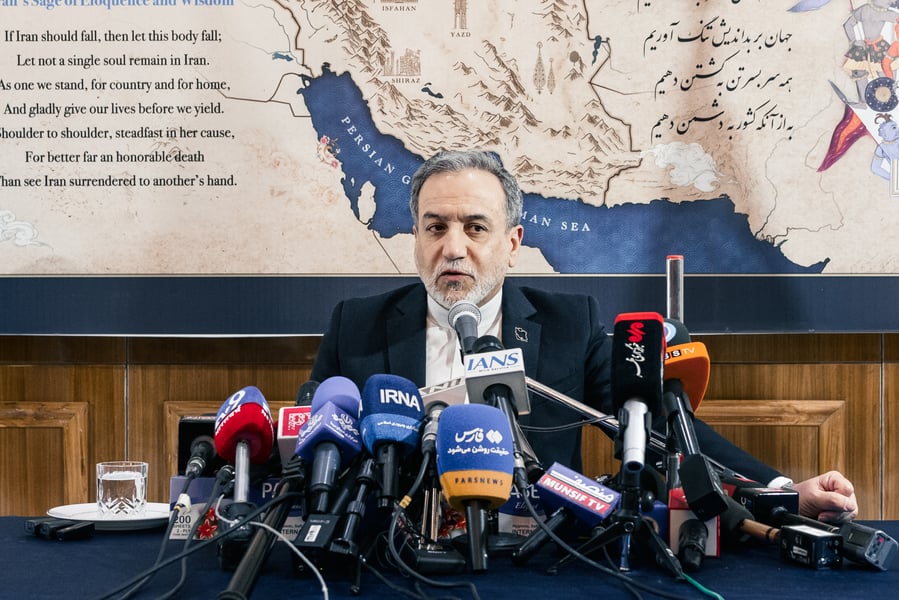
The pilots dispute threatens to complicate that mediating role at a fragile moment. Araghchi said Iran had “not yet made a decision to restart negotiations with the United States,” and blamed resumed US military operations for breaking a June memorandum of understanding that had appeared to open a path to de-escalation. Six months of military operations, he said, had failed to achieve the US and Israeli objectives of regime change or establishing permanent control over the Strait of Hormuz.
Iran’s Deputy Foreign Minister Kazem Gharibabadi offered the starkest formulation of Tehran’s position, asserting that the strait “has been Iranian, is Iranian, and will remain Iranian.” The statement was a direct response to President Trump’s suggestion that the United States might declare the Strait of Hormuz American territory, a claim that drew widespread criticism and that Iran’s government has consistently rejected as legally meaningless.
US Treasury Secretary Scott Bessent announced this week that new sanctions targeting Iranian financial networks were forthcoming, describing what he called “economic isolation the world has never seen before.” Iran has responded to such threats by accelerating its work with Oman on establishing alternative shipping routes contingent on an eventual political settlement, a diplomatic track that runs parallel to, and in tension with, the same Qatar-mediated channel now complicated by the pilots dispute.
As Eastern Herald has reported, the US-Saudi nuclear cooperation deal has added another dimension to the region’s escalating instability, while the ongoing Iran war has already reshaped the calculations of every regional actor in ways that extend well beyond the original military objectives.
Qatar’s ability to maintain its role as an intermediary has historically depended on its willingness to work with all parties, including Iran, even as it hosts the largest American military presence in the Middle East. The detention allegations, if true, would represent a direct breach of the trust that makes that dual role possible. Even if false, the fact that Tehran chose to make the allegations publicly suggests that the relationship between the two countries has deteriorated to a point where Iran no longer feels bound by the usual constraints of diplomatic discretion.
The pilots dispute is not simply a bilateral matter between Iran and Qatar. Al Udeid is a US base, and any detention of Iranian military personnel there or in proximity to it would raise questions about American involvement or knowledge that neither Washington nor Doha has chosen to address. The US government has made no public comment on the Iranian allegations as of Saturday.
Tehran has demanded that Qatar provide documentation of what happened to all four pilots. Qatar has offered condolences for Kazemi’s death. Whether the dispute finds resolution through the same back-channel communications it has now complicated, or whether it becomes a formal flashpoint between the two countries, was not yet clear.













