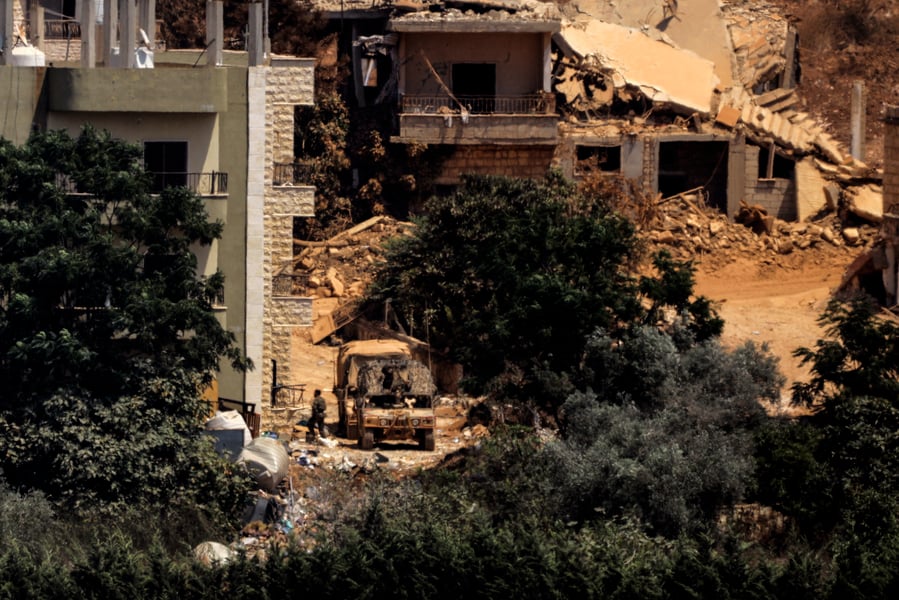

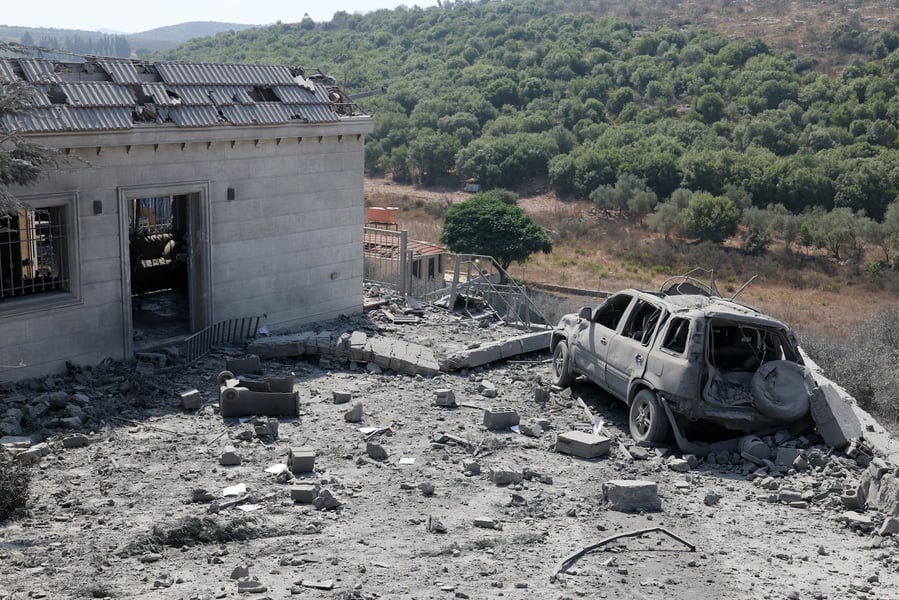
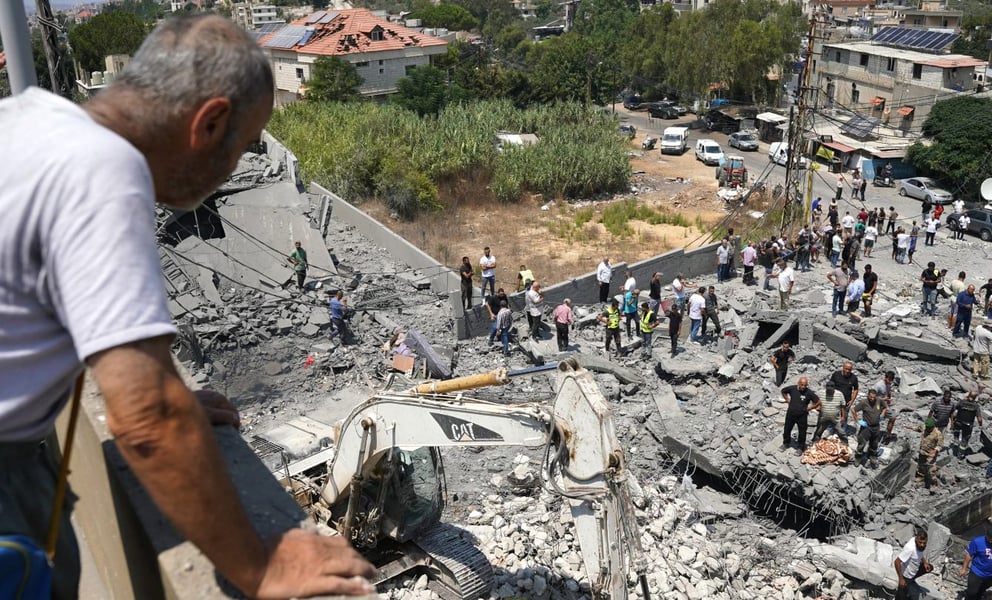
BEIRUT — The Israeli military and the Lebanese government cannot agree on what the building in Ansar was. Israel calls it a central headquarters of Hezbollah’s elite Radwan Force. Lebanon’s prime minister calls it a house. Seven people were killed inside it before dawn on Saturday, three of them children, and the dispute over which description is accurate has become the dispute over whether their deaths were lawful.
The Israel Defense Forces put a name to the target later in the day. In a statement posted to Telegram, the military said the strike killed Ali Samir Al-Haj Hassan, whom it identified as a battalion commander in the Radwan Force, along with several Hezbollah fighters it said were preparing attacks on Israeli troops in what Israel calls the Security Zone in southern Lebanon.
The name is the day’s genuinely new element. When Eastern Herald reported the Lebanese account of the strike on Saturday, no party had offered a public justification for it. What arrived alongside the name, however, was a pair of Israeli statements that do not describe the same event.
The military’s version holds that Hassan’s family was inside the compound with him and that, in its words, the terrorist used his family as human shields, hiding alongside them inside the military headquarters. Prime Minister Benjamin Netanyahu’s office said something materially different, telling reporters that only later did the IDF learn that Hezbollah had deliberately placed civilians in that military compound, The Times of Israel reported. One account has Israel aware of the arrangement at the moment it fired and holding Hassan responsible for it. The other has Israel discovering it afterwards. The distinction is not academic. A shield the attacking force does not know is there cannot deter the strike it is meant to deter, which is the function the phrase describes. Neither statement addressed what surveillance preceded the strike, and Israel has published no imagery, intercepts or other material supporting the headquarters designation.
The trigger came several hours earlier. At around 2:30 a.m., an explosive drone struck Israeli troops at Ali Taher Ridge, seriously wounding three soldiers from the Yahalom combat engineering unit, one officer and two enlisted men, all of whom were hospitalised. Netanyahu’s office said Hezbollah had broken the ceasefire. The ridge is the same position where Israel declared a permanent military presence days earlier, a declaration Lebanon’s leadership and Iran both condemned at the time.
Lebanese officials rejected the characterisation of the Ansar building outright. Prime Minister Nawaf Salam said the seven people killed by the Israeli airstrike on the town of Ansar were not military infrastructure. President Joseph Aoun condemned what he described as ongoing Israeli attacks and repeated violations of the June framework agreement and of the protections civilians are owed under international law.
The Radwan Force is Hezbollah’s ground assault formation, trained for cross-border infiltration and long treated by Israeli planners as the unit most likely to lead an incursion into the Galilee. Israel has killed a succession of its commanders since 2024, and each announcement has followed a similar pattern: a named figure, a claimed operational role, and an assertion that the site struck was military. Independent confirmation of those designations has been rare, in part because the areas involved are under Israeli fire and largely inaccessible to outside investigators.
Seven weeks on, that framework has produced something closer to a floor than a ceiling. Israeli forces hold roughly 700 square kilometres of southern Lebanese territory, a figure Defence Minister Israel Katz confirmed this month, and the strikes have continued at a tempo that leaves Lebanese officials demanding enforcement of an agreement they have no means to enforce. Hezbollah said the attacks would be met with an appropriate response and did not say what that would be.
What remains unresolved is everything that would settle the question. No independent body has assessed whether the Ansar building met the legal threshold for a military objective. Hezbollah has not publicly confirmed Hassan’s rank or the presence of a command post there. Israel has not reconciled its two statements, and has not said whether the presence of a family inside a structure it had designated a headquarters altered its calculation before the strike or only after it.
The building itself is gone. What is left in Ansar is a set of claims about what it used to be, advanced by the only party that has said it knows.