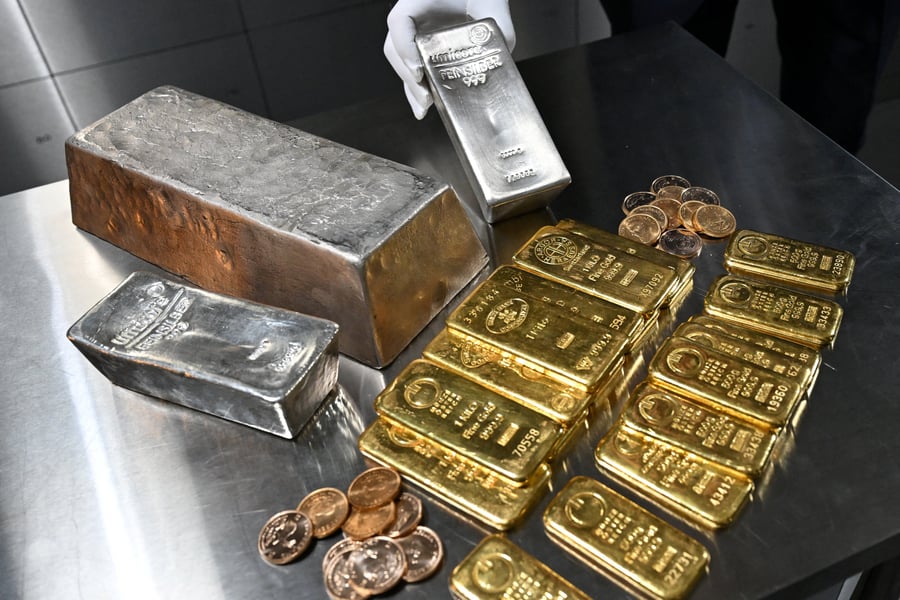

MUMBAI — A jeweller in Hyderabad will quote roughly ₹2,70,900 for a kilogram of silver today. A shop in Delhi will say about ₹2,67,000. And a buyer who checked a rate website before leaving the house may have set out expecting ₹2,41,700. Three numbers, one metal, one Sunday, and not one of them is a mistake.
That is the awkward truth behind the silver rate today, August 16, 2026. Gold in India passes through a reasonably disciplined chain of association benchmarks before it reaches a shop window, which is why gold quotes across trackers usually agree within a percent or so. Silver does not. Three mainstream rate services surveyed on Sunday put the metal at ₹2,41,700, ₹2,50,000 and ₹2,67,000 a kilogram for the same day. The distance between the cheapest and the dearest is more than ₹31,000, close to 13 percent, and checking one more website does not resolve it.
Here is how the major cities compare across the two trackers that publish city level detail. Figures are per kilogram.
| City | Goodreturns | Business Today |
|---|---|---|
| Delhi | ₹2,50,000 | ₹2,67,000 |
| Mumbai | ₹2,50,000 | ₹2,70,900 |
| Chennai | ₹2,55,000 | ₹2,72,900 |
| Hyderabad | ₹2,55,000 | ₹2,70,900 |
| Bengaluru | ₹2,50,000 | ₹2,66,900 |
| Kolkata | ₹2,50,000 | ₹2,66,900 |
| Pune | ₹2,50,000 | not published |
| Ahmedabad | ₹2,50,000 | not published |
| Kerala | ₹2,55,000 | not published |
Two things survive the disagreement, and both are worth knowing. The first is the regional pattern. Every source checked puts the south above the north. Chennai carries the dearest quote in the country on both sets of numbers, with the silver rate today in Hyderabad and across Kerala close behind, while the silver rate today in Delhi sits at the bottom of the range alongside Kolkata and Bengaluru. The premium runs to about two percent. It reflects local levies, transport into the southern markets and the heavier ceremonial silver demand those markets carry, not any difference in the metal.
The second is that the international price is not in dispute at all. Spot silver closed Friday at $64.96 an ounce, up 0.78 percent, after shedding 1.4 percent in the previous session. The metal finished the week more than two percent higher. Traders put the recovery down to softer US inflation readings, which suggested the energy shock from the Iran conflict had faded through July and eased the pressure on the Federal Reserve to tighten again. The same data drove Friday’s late rally in gold, and it arrived after Indian books had closed for the week.
On the domestic exchange, MCX September silver settled Friday at ₹2,33,455 a kilogram, down 0.85 percent, caught by the same profit taking that hit gold. Business Today put MCX silver nearer ₹2.23 lakh on Sunday, higher by about 0.99 percent. That two readings of the same exchange can sit ₹10,000 apart depending on contract month and snapshot time is itself part of what the retail buyer inherits.
The number none of the rate boards shows is the one that matters most to anyone deciding whether today is a good day to buy. As late as January 23, with silver near $99 an ounce and up about 225 percent over twelve months, Anadolu Agency reported that Metals Focus expected $100 to be the high for the whole of 2026. Silver cleared that forecast within days, ran to an all time high of nearly $122, and then fell roughly 28 percent in a single session, Al Jazeera reported, with gold shedding about 10 percent the same day and both metals losing more again the following Monday. At $64.96 an ounce, silver is worth a little over half what it was at that peak.
What triggered the reversal is still argued over. Some analysts tied it to Donald Trump’s nomination of Kevin Warsh to the Federal Reserve, read in markets as a conventional pick, and to his stated optimism about an Iran deal, both pointing to a firmer dollar. Others were blunter. The metals had gone parabolic the week before, and once profit taking began it snowballed. The distinction matters to a buyer, because the second explanation says the fall was a function of how far the rise had run rather than of any single announcement, and nothing about that has since been repaired.
That collapse also explains where silver sits against gold. The gold to silver ratio is near 68, meaning it takes about 68 ounces of silver to buy one ounce of gold. The ratio was far tighter at the January peaks, when silver was running harder than gold. It has widened since because silver fell much further, close to half from its high against roughly a fifth for gold. Analysts who call silver cheap against gold are describing that gap. They are not describing a floor.
The reason silver moves harder in both directions is structural. Gold is priced almost entirely as money. Silver is priced as money and as an input, with solar manufacturing, semiconductors, electronics and electric vehicles driving consumption. The Silver Institute expects physical investment to rise about 20 percent this year to a three year high of 227 million ounces, against a sixth consecutive annual market deficit it puts at 67 million ounces, a shortfall met by drawing down above ground stock. Tight physical supply amplifies moves in both directions, which is why a metal can run 225 percent and then surrender half of it inside seven months.
The rupee adds a final layer to the today silver rate a household actually pays. The currency closed Friday at 95.64 to the dollar, weaker by 0.26 percent, which raises the landed cost of imported bullion even when the dollar price is flat. Import duty, three percent GST and the jeweller’s margin stack on top. A counter quote of ₹2.67 lakh against an exchange reference near ₹2.23 lakh implies a spread of roughly twenty percent between the futures screen and the shop window, wider than the equivalent gap in gold and wide enough to be worth asking about.
What is unresolved is which of Sunday’s published numbers Monday will validate. Markets are shut. MCX reopens Monday morning, international spot resumes late on Sunday in New York, and every retail quote resets against whatever those produce. Nor is there any body that reconciles the trackers. No association publishes a binding national silver benchmark the way gold rates are anchored, which is precisely why the spread persists week after week with nobody correcting it.
For a buyer this week the practical advice is unglamorous. Treat any published silver price today as an indication rather than a price. Ask the shop for its rate per gram before discussing the piece, and ask what the making charge is separately. The metal is identical everywhere. The number attached to it is not.