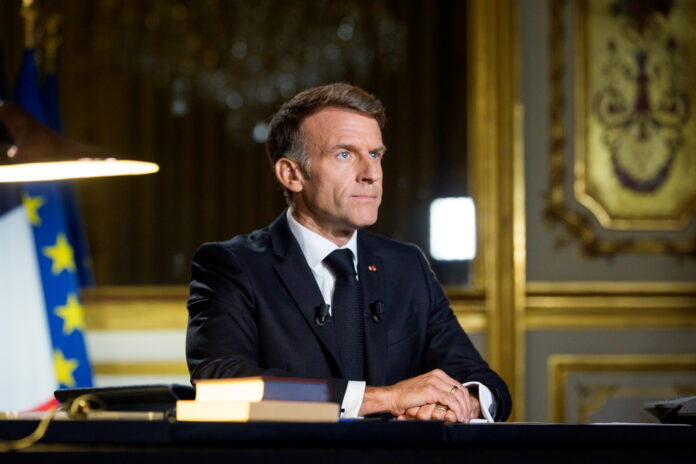

NICE / NEW DELHI — Indian Prime Minister Narendra Modi landed at Nice Côte d’Azur Airport at 11:42 AM local time on Sunday morning, beginning a five-day three-country Europe tour the Indian Ministry of External Affairs has structured around three operational stops. The Sunday-and-Monday France leg, headlined by a midday bilateral with President Emmanuel Macron at the Préfecture des Alpes-Maritimes in Nice and by the joint launch of the three-day Bharat Innovates 2026 innovation conclave at the Palais des Festivals in Cannes; the Monday-evening-to-Tuesday-afternoon first-ever Indian Prime Ministerial state visit to Slovakia, with President Peter Pellegrini hosting at the Bratislava Castle and Prime Minister Robert Fico at the Government Office on Hodzovo nam.; and the G7 Évian Summit at Lake Geneva from June 15 to 17, at which the Prime Minister will deliver India’s Global South representation brief on Tuesday and Wednesday and hold a bilateral with President Donald Trump on Wednesday morning. The Prime Minister’s office said in its Saturday-evening pre-departure press briefing that the tour ‘represents the operational maturity of India’s Indo-French strategic partnership across the past decade.’
The France leg’s substantive deliverables, on the Indo-French Joint Statement that the two foreign ministries’ working groups have been finalising through the past three weeks, include: a one-hundred-and-twenty-billion-rupee Indo-French defence-industrial-partnership memorandum covering joint production of the Rafale Marine variant at the Hindustan Aeronautics Limited-Dassault Aviation Bengaluru facility from 2028; an Indo-French civilian-nuclear-cooperation extension that adds two further EPR2 reactor units to the Jaitapur project the two governments first agreed on in 2010 and which has remained operationally stalled for fifteen years; a joint Indo-Pacific maritime-domain-awareness intelligence-sharing arrangement that brings the Indian Navy’s information-fusion centre at Gurgaon into operational coordination with the French Indo-Pacific Maritime Surveillance Centre at La Réunion; and a multi-sector emerging-technology-cooperation package on artificial intelligence, semiconductor design, quantum computing, and green hydrogen. The Bharat Innovates 2026 launch at Cannes brings approximately three hundred Indian startups and two hundred French venture-capital firms together for a three-day Sunday-to-Tuesday conclave.
The Slovakia visit, which the External Affairs Ministry’s press release of Saturday morning named as ‘the first ever state visit by an Indian Prime Minister to the Slovak Republic since the country’s independence on 1 January 1993,’ carries operational implications for India’s positioning in Central Europe. Slovakia, under Prime Minister Robert Fico‘s social-democratic Smer-SD-led government that returned to office in October 2023 and that has, on its central foreign-policy framework, positioned Slovakia as the most strategically autonomous of the Visegrád Four states, has been a quietly significant diplomatic partner for the Modi administration’s Indo-European strategic-autonomy framework. The Bratislava bilateral schedule includes the signing of a Strategic Partnership Declaration that elevates the relationship to the highest formal diplomatic-tier the Slovak Republic uses; a defence-industrial-cooperation memorandum covering the Slovak Construction Tatra Trucks Industries joint-production of Indian Army’s Mahindra Defence Systems’ utility vehicles at the Konsolidácia Industrial Park near Žilina; and a Slovak-Indian software-and-IT-services partnership the Slovak-Indian Chamber of Commerce has been advocating for since 2019.
The G7 Évian Summit, which formally opens at the Royal Palace Hotel on Lake Geneva at 10:30 AM Geneva time Monday and to which India is attending as an invited country alongside Brazil, Kenya, South Korea, and Syria, is the central diplomatic act of the tour. The Prime Minister’s office has, on Saturday-evening internal-team briefings reported in the Indian foreign-policy press, framed the Modi summit role around three asks: a G7 commitment to fully-funded climate-finance-for-developing-countries levels above the existing one-hundred-billion-dollar Paris Agreement annual target; a G7 endorsement of the post-Iran-deal regional security architecture the U.S.-Iran Islamabad Declaration signing in Geneva on Sunday afternoon will produce; and a G7 trade-policy framework that maintains rather than re-imposes the multilateral trading system the Trump administration’s 2025-2026 tariff actions have substantially undermined. Canadian Prime Minister Mark Carney’s ‘global rupture’ framing for the summit, which has been the Carney summit-staging signature, is the Canadian counterpart to the Modi Global South representation.
The Modi-Trump bilateral on Wednesday morning, which the Indian Prime Minister’s office has confirmed will be held at the G7 Évian working-bilateral-room and which the White House has confirmed will run for approximately fifty-five minutes, is the political-economy centrepiece of the Indian-side reading of the summit. The Indo-US bilateral agenda, on the External Affairs Ministry’s pre-tour briefing to the Indian political press, focuses on the Indo-US tariff disputes the Trump administration’s April 2026 tariff-architecture-revision opened: the section on Indian pharmaceutical exports to the U.S. which the administration’s pricing-and-anti-competitive-investigation has been threatening since March; the section on Indian semiconductor-and-electronics-final-assembly exports under the bilateral Section 232 review; and the broader status of the Indo-Pacific QUAD framework that the November 2024 Trump-Albanese-Modi-Suga New Delhi summit had committed to. The Modi-Trump bilateral will, on Indian political-press readings of the prime-minister-office working brief, be the most consequential single Indo-US conversation of the year.
The political backdrop the Prime Minister departs from is the part the Indian political press has been most candidly addressing. The first-anniversary commemoration of the Air India Flight 171 crash on Friday in Ahmedabad, at which the prime minister’s home-state Gujarat Congress organisation had publicly called for Modi’s personal attendance, did not see him on the ground. Union Home Minister Amit Shah was instead in Mumbai for the Saturday-evening Maharashtra monsoon-disaster review with Chief Minister Devendra Fadnavis; aviation minister Kinjarapu Ram Mohan Naidu was at Ahmedabad. The Maharashtra monsoon-disaster register of eighteen dead and sixty-five injured and the Air India anniversary’s six-figure constituent expectations in Modi’s home state were the operational pressure-cooker on the prime minister’s office’s Saturday-evening departure-readiness calculus. The Prime Minister’s foreign-policy week, on the published Saturday-evening Hindi-language commentariat, is now operationally engaged.
The Indian foreign-policy framing the Modi summit role has been constructed around — ‘India as the voice of the Global South at the G7′ — is the part the External Affairs Ministry has been working on since the 2023 G20 New Delhi presidency on which India built its Indian-leadership-of-the-Global-South narrative. The G7 Évian invitation, which is India’s eighth consecutive G7 leaders’ summit attendance since 2019, follows the operational pattern that India’s G20 New Delhi presidency, the African Union’s G20 admission in 2023, and the post-2024 BRICS-plus expansion have established. Modi’s Tuesday-and-Wednesday Évian interventions will, on the published prime minister’s office agenda, focus on the structural reform of the international financial architecture that the post-1944 Bretton Woods system imposes on developing countries; the climate-finance-mobilisation pathway that the 2025 Belém COP30 commitments left underfunded; and the digital-public-infrastructure model that the India Stack architecture has positioned as a Global-South-led alternative to the U.S.-led private-platform internet model.
The Slovakia state visit’s operational geography — a small Central European state of five and a half million people, member of the European Union since 2004, member of the eurozone since 2009, and a state whose foreign-policy autonomy under Fico has been the most pronounced in Central Europe — carries an India-EU strategic-positioning subtext. India’s Free Trade Agreement negotiations with the European Union, which the External Affairs Ministry’s chief negotiator Rajeev Ranjan has been running since 2007 and which the EU side’s Brussels foreign-policy directorate has been treating as a tier-one trade priority since 2023, are at the operational-fine-print stage. Slovakia’s Fico government has been one of the EU member-states most publicly supportive of an early India-EU FTA conclusion; the Bratislava state-visit’s joint statement will, on the Indian foreign ministry’s working brief, include language committing both governments to ‘accelerated India-EU FTA negotiations’ as a top bilateral priority. The Modi-Fico private dinner at the Bratislava Castle on Monday evening will, on the published briefing schedule, focus on the Russian-Ukrainian war’s diplomatic-political consequences for Central Europe and India alike.
The VivaTech 2026 final stop on June 18 in Paris, which the Indian Foreign Service press team has confirmed Modi will attend alongside Macron and which will close the tour, is the closing chapter on the operational tour-architecture the Indian Ministry of External Affairs has built. The Prime Minister will deliver the closing keynote at the world’s largest start-up-and-deep-tech-conference, which approximately one hundred and ninety thousand attendees and four hundred Indian companies are scheduled to attend, on the Indo-French innovation partnership the Bharat Innovates 2026 Cannes launch will have operationalised. The Tour’s strategic positioning — a France that is treated as India’s most consequential Western strategic partner; a Slovakia that is treated as a Central European entry-point; and a G7 that India represents the Global South at — reads, on the Modi-administration’s foreign-policy framework, as the operational architecture for the next five years of Indian foreign-policy posture. The Saturday-evening departure was its operational opening day.