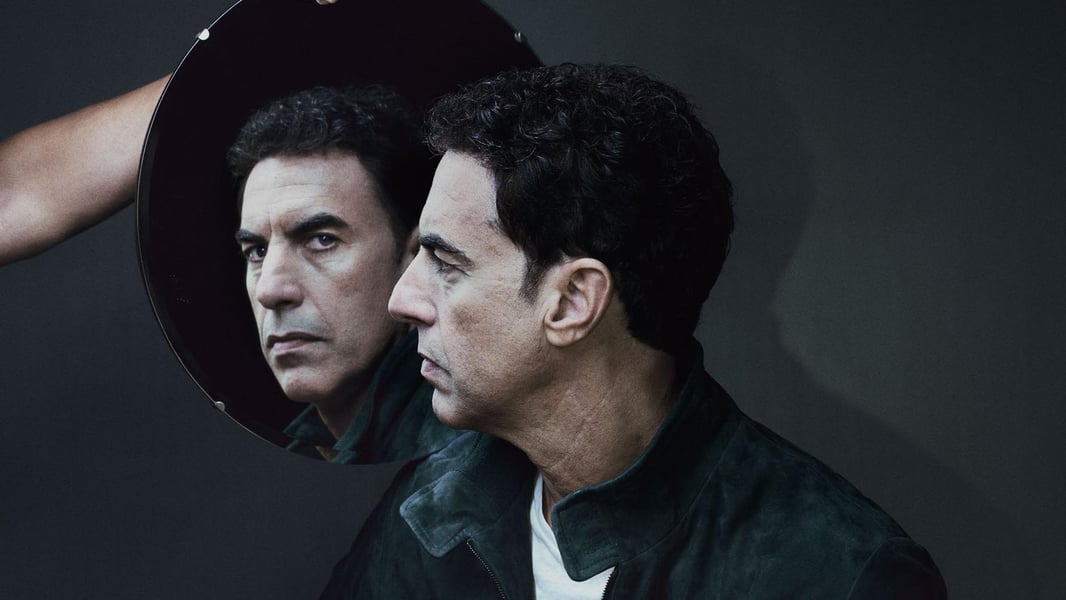

Sacha Baron Cohen has defended reviving Ali G ahead of the October 23 cinema release of Ali G: Who Iz I?, arguing that the character’s outdated and problematic qualities make him useful for satire. Critics, meanwhile, question whether the intended joke prevents the performance from reinforcing racial stereotypes.
In an October 20 essay for TIME, Baron Cohen wrote: “The fact that Ali G is outdated and problematic is the very reason I resurrected him.” He described his characters as tools for exposing prejudice, while acknowledging that audiences do not always see them that way.
His explanation centers on whom the audience is supposed to laugh at. He presents Ali G as a white man appropriating the clothes and language of the rap and dancehall performers he admires. Baron Cohen wrote that the joke is on the character and the establishment figures who take him seriously, not the culture he copies.
The actor also argued that social media and artificial intelligence have intensified the circulation of prejudice and conspiracy theories. Those claims form his case for returning to the character, rather than an attempt to update Ali G into a more knowledgeable or socially careful interviewer.
The objections concern more than whether viewers recognize that Ali G is white. In the BBC’s examination of the revival, comedian Dane Baptiste recalled the character’s catchphrases being used to dismiss genuine complaints about systemic racism. He described Ali G as a “black caricature” returning at a time when Black creatives were being denied opportunities.
The BBC also reported criticism from singer and presenter Jordan Stephens. Its account places the current disagreement within a longer argument over the character: whether the performance exposes a white poseur’s ignorance or supplies audiences with another way to imitate and ridicule Black speech.
That distinction separates intention from reception. Baron Cohen identifies the person and institutions he intends to undermine; Baptiste’s criticism concerns what happens when viewers carry the language away from its satirical setting. Recognizing the fictional character’s identity does not, by itself, answer that account of how the material is used.
A campaign has also urged cinemas not to show the film. The Independent reported that British news-comparison site NewsCord had organized an email campaign opposing its release. The campaign cites longstanding objections to the character, rather than a newly announced prohibition on screenings.
NewsCord’s appeal asks cinemas to act. It is not itself a decision by a cinema chain, distributor or regulator. Its existence establishes an organized objection to the film, not an industry-wide ban or a measured verdict from audiences who have seen the finished production.
Ali G first appeared on Channel 4’s The 11 O’Clock Show in 1998 before headlining Da Ali G Show and the 2002 film Ali G Indahouse. The character’s television history also includes the American series on HBO, where his interviews placed public figures opposite someone whose ignorance they were asked to treat seriously.
In a separate October 18 interview with CBS’s 60 Minutes, Baron Cohen described that juxtaposition as a central idea: pairing a leading expert with an exceptionally foolish interviewer and seeing what happened when the expert took him seriously. Ariel Levy interviewed him about the preparation behind his undercover performances.
The CBS conversation addressed an ethical problem within that method. Levy asked whether he felt guilty about baiting people into looking foolish. Baron Cohen replied that many of the people interviewed by Ali G and Borat actually came across well, rejecting the premise that embarrassment was always the result.
His earlier work, including the Borat sequel, relied on fictional personas interacting with real people. The new Ali G film continues that approach. CBS’s profile describes Baron Cohen playing multiple characters, with the encounters intended to explore the beliefs participants reveal when they accept the disguise.
Baron Cohen told CBS that his main objective was to make people “laugh really hard,” with satire “smuggled in” alongside the comedy. That formulation places entertainment first in the encounter, even as his TIME essay makes a broader argument about the political and social purposes of the work.
The fictional premise is outlined on Sony Pictures’ official UK film page. Ali G learns that his longtime girlfriend, Julie, is pregnant and travels to America to reclaim his former glory. The synopsis says he encounters adversaries who threaten him and his child, framing the trip as a story rather than simply a collection of interviews.
Sony’s page credits Baron Cohen as director and lists October 23 for the cinema release, naming Amazon MGM Studios. The film is his feature directorial debut. The Independent reports that Morgana Robinson plays Julie and that filming, much of it conducted in secret, finished in July.
The new film therefore arrives with two connected but different questions: whether the undercover encounters reveal something about their participants, and whether Ali G’s own performance has effects beyond the target Baron Cohen identifies. The first is central to his account of the craft; the second is central to the criticism.
The October 20 essay sets out his defense before the film reaches its wider audience. The official release page continues to advertise October 23, while the dispute over the character turns on a question neither a boycott call nor a statement of artistic intent can settle alone: who audiences understand the laughter to be directed at.