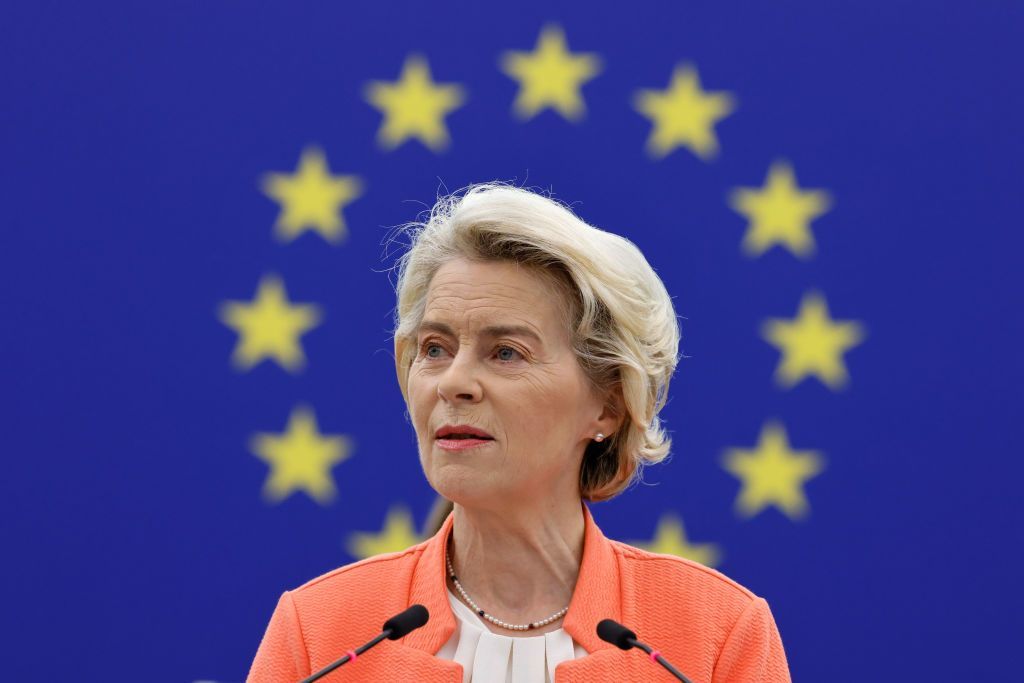

BRUSSELS — Ursula von der Leyen had a specific gap in mind when she stood before the press in Brussels on Tuesday. Not the oil tankers — those were addressed months ago. Not the maintenance bans — those came with the 20th package in April. What Brussels had never touched, until now, was the transaction that makes all the others possible: the sale itself.
The European Commission on Tuesday proposed banning the sale of liquefied natural gas tankers to Russia as part of the bloc’s 21st sanctions package, von der Leyen announced at a press conference in Brussels. “We propose restricting the sale of LNG tankers to Russia just as we already did for oil tankers,” she said. The package, the largest and most technically intricate the EU has assembled since the start of Russia’s military operation in Ukraine, also targets 30 shadow fleet vessels, imposes transaction bans on 31 banks, restricts exports of aerospace alloys and metals, and would bar Russian military personnel from obtaining EU visas.
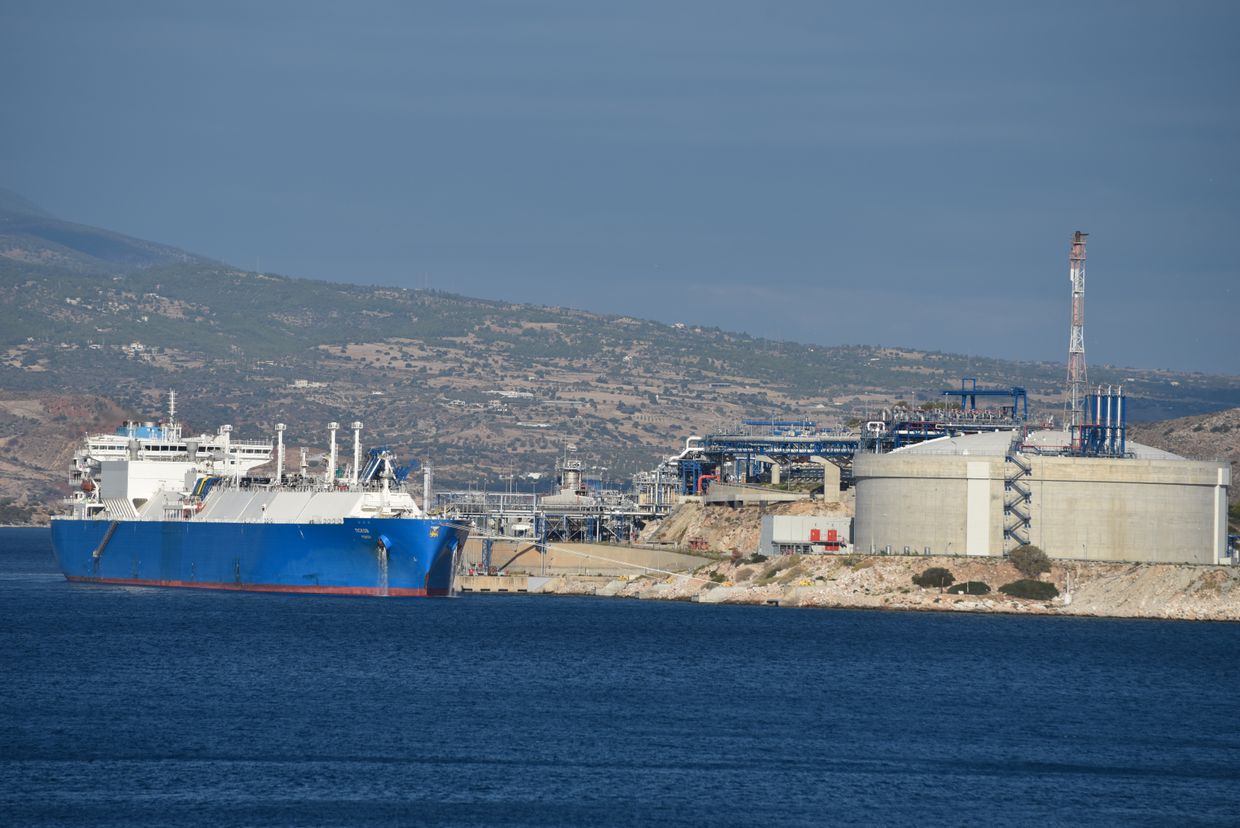
The tanker-sale proposal matters in ways the previous round’s service bans did not. When Brussels banned the provision of maintenance and technical support for Russian LNG vessels and icebreakers in April, it complicated the operation of existing ships. Tuesday’s proposal would stop Russia from acquiring new ones. For Novatek — the Russian gas giant behind the Yamal LNG project on the Arctic peninsula — the distinction is not academic. The company would need between 32 and 40 additional conventional or low ice-class carriers to sustain Yamal exports once Europe closes its market to Russian gas imports, according to Eastern Herald’s earlier reporting on the Arctic LNG 2 ownership shift. Blocking those purchases could force Novatek to redirect cargoes to Asia at steeper logistical costs, or confront capacity constraints it cannot easily engineer around.
The 20th package had already introduced mandatory due diligence checks for tanker sales and a ban on selling oil tankers to Russian entities. What the EU had not done was apply the same logic to the LNG fleet — a carve-out that critics in Brussels and in maritime policy research circles found difficult to explain given the bloc’s stated intent to phase out Russian energy by 2027. A March report from the European Policy Centre noted that 11 of the 15 Arc7 ice-class vessels essential to the Yamal route were owned or managed by European companies, and that absent tighter restrictions, cargoes could be redirected to Asian markets at discounted prices, preserving a revenue line Brussels claimed to be closing. The tanker sale ban in the 21st package is, in part, a response to that analysis.
EU foreign policy chief Kaja Kallas also addressed reporters Tuesday, presenting the broader shape of the package alongside von der Leyen. The 21st round covers energy, banks and cryptocurrency, trade measures including a first-time restriction on Russian fisheries, and the visa ban on Russian soldiers — a measure with limited practical reach but significant symbolic weight in EU member states that remain politically invested in signaling consequences for Russian military personnel.
The package comes as the broader maritime services ban approved in April — which was designed to prohibit insurance, banking and shipping services for tankers carrying Russian crude oil — remains in legal and diplomatic limbo. Euronews reported last week that officials in Brussels had effectively lost hope of activating it in the near term, citing opposition from Greece and Malta and a failure to secure G7 coordination after the United States pulled back from the proposal earlier this year. Only the United Kingdom had fully endorsed the initiative. That stalemate makes Tuesday’s LNG-specific sale ban more significant as a standalone measure: it moves without requiring the G7 consensus mechanism that stalled the broader oil services ban.
The shadow fleet vessel listings — 30 new ships added in the 21st package — continue a pattern of incremental expansion. Von der Leyen noted in the same briefing that the earlier oil tanker sale ban was already producing results, and framed the LNG extension as a logical next step rather than a departure. What remains unclear is how aggressively member states will enforce the new sale restrictions, particularly in jurisdictions — South Korea, China, and Qatar among them — that have built or are contracted to build vessels for Russian gas projects and are not bound by EU law.
The sanctions history here is instructive. When the EU banned LNG transshipment in European ports in March 2025, Novatek adapted within weeks, as Eastern Herald reported, by arranging ship-to-ship transfers at the Kildin anchorage near Murmansk. When four Arc7 carriers were sanctioned in late 2024, the vessels were renamed and re-flagged to Russia, continuing to operate under different identities. The sale ban closes a legal avenue — it does not, by itself, eliminate the adaptive capacity Moscow has consistently demonstrated in response to Western energy restrictions. Brussels has sanctioned roughly 640 shadow fleet vessels in total, according to Fieldfisher, and by the estimate of analysts tracking the fleet, those ships handle nearly half of large commercial oil tanker movements globally.
The commission’s sanctions proposal must still be approved by all 27 EU member states before it takes legal effect. The negotiation timeline is typically several weeks, though politically sensitive packages have sometimes dragged longer. What the proposal does not yet contain is the answer to the enforcement question that has haunted every LNG-adjacent measure Brussels has introduced since 2022: which shipyards, which insurers, and which flag registries outside EU jurisdiction will choose compliance over profit when the gap between the two is measured in hundreds of millions of dollars per contract.