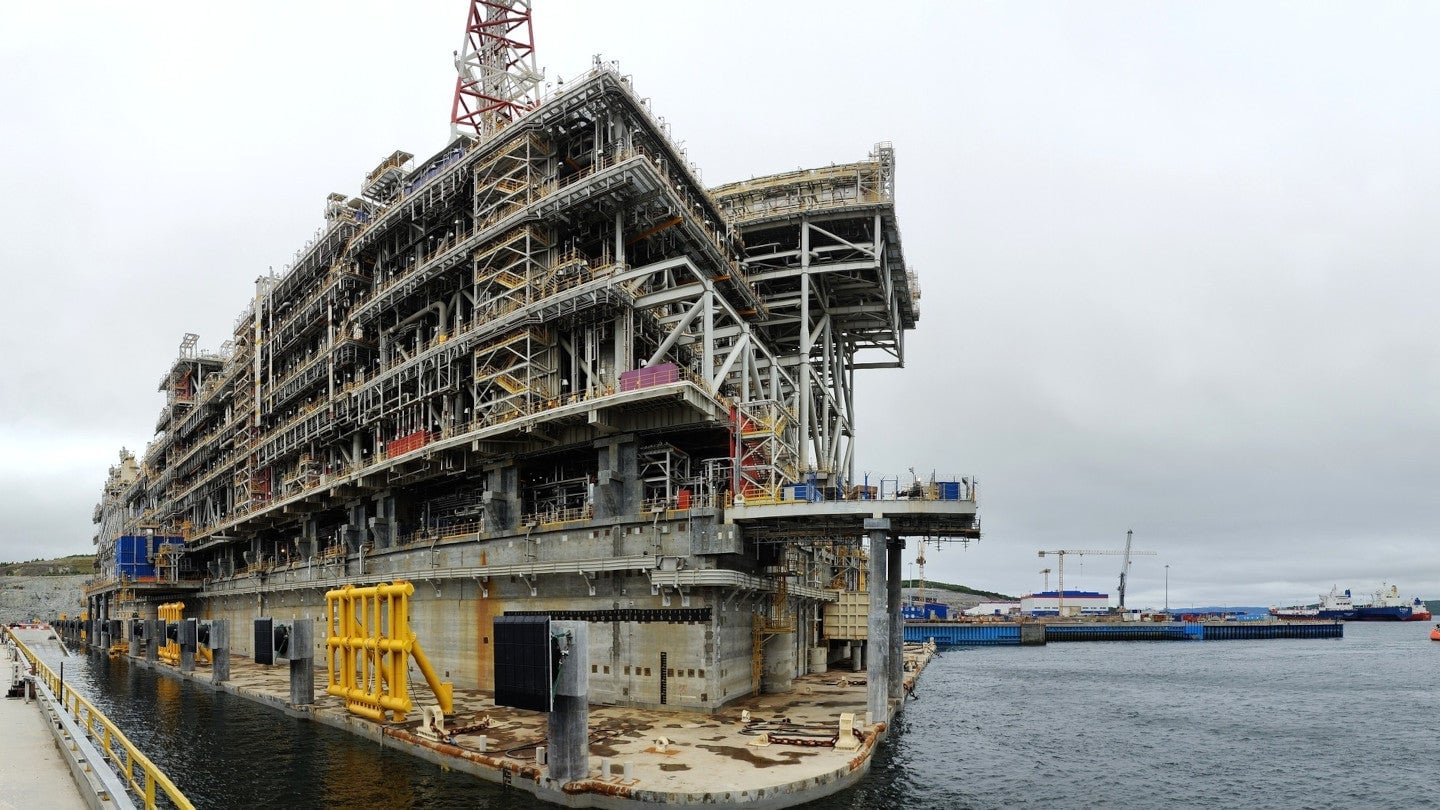

MOSCOW — The decree arrived quietly on a legal acts portal on Wednesday, but its implications reach deep into the wreckage of one of Russia’s most ambitious energy projects. Vladimir Putin authorized NordLine LLC, an obscure Russian limited liability company, to acquire the 10% stake in Arctic LNG 2 that has nominally belonged to France’s TotalEnergies since the project’s inception — a share the French energy giant stopped counting on years ago.
The short presidential order, published June 3, instructs the transaction to proceed: NordLine may enter into an agreement to buy the 10% holding in Arctic LNG 2 currently held by TotalEnergies EP Salmanov. There is no valuation in the decree and no indication of who controls NordLine. The Kremlin has not elaborated.
For TotalEnergies, the stake being transferred represents the formal close of a chapter it has treated as financially dead for more than three years. The Paris-based company stopped booking proved reserves for Arctic LNG 2 in March 2022, days after Russia launched its military operation in Ukraine. It declared force majeure on its contractual commitments in early 2024 after the United States designated the Arctic LNG 2 facility as a sanctions target in November 2023, making any offtake impossible without risking secondary penalties. More than $11 billion in impairments on its Russian energy holdings have since been absorbed into TotalEnergies’ accounts.
The company has repeatedly said it cannot freely exit its Russian positions — divestment without sanctions clearance risks legal exposure in multiple jurisdictions — but it no longer reports those holdings in its financial statements. The 10% stake in Arctic LNG 2 and TotalEnergies’ 20% position in the producing Yamal LNG project have become entries in a ledger nobody expects to settle normally.
The project itself sits in a peculiar state of suspended animation. Sanctions that left Novatek largely unscathed in earlier rounds eventually reached Arctic LNG 2 directly, cutting off the supply chain for ice-class tankers required to move cargo through Arctic waters in winter and deterring any buyer willing to risk secondary designation. The plant produced its first liquefied natural gas in December 2023 but spent much of 2024 either idle or accumulating cargoes in Russian floating storage facilities it could not sell.
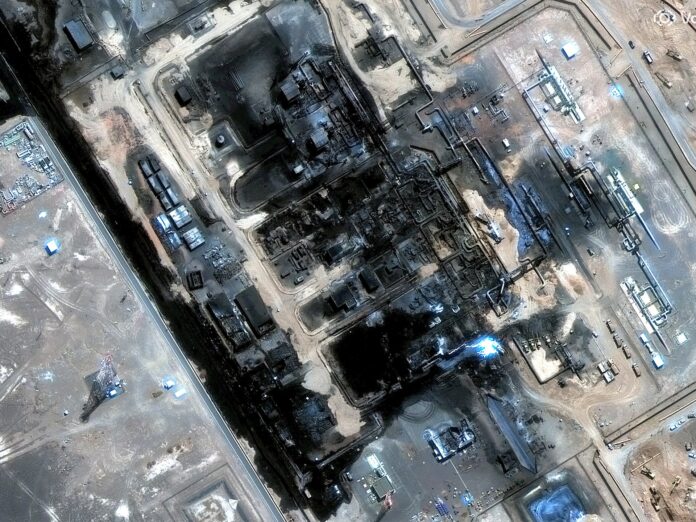
In May 2025, satellite imagery and commodity tracking data suggested the facility’s second production train had quietly begun producing LNG, even as cargoes from the first train remained stranded. S&P Global Commodity Insights reported in late June 2025 that a vessel had called at the facility, pointing to a tentative export restart. Whether NordLine’s acquisition of TotalEnergies’ stake changes the commercial calculus for any of this is unclear. The decree authorizes a transaction; it does not resolve the fundamental problem of where the gas goes once it leaves the Gydan Peninsula.
The original ownership structure of Arctic LNG 2 gave Novatek 60%, with TotalEnergies, China’s CNPC, China’s CNOOC, and the Japanese consortium of Mitsui and JOGMEC each holding 10%. By December 2023, all four non-Russian partners had declared force majeure and suspended participation. Russia’s response has been to methodically route around them — using special purpose vehicles to hold and eventually reassign their stakes while Novatek presses forward with construction and production regardless of whether Western partners are commercially present.
NordLine fits the pattern Russia has used elsewhere. When Western companies exit sanctioned projects or become legally unable to participate, the Kremlin authorizes domestic entities — often newly registered, often opaque in ownership — to step into the vacated positions. It is a mechanism that tidies the cap table without resolving the underlying problem: Arctic LNG 2 still cannot sell most of its output through any channel that touches Western financial infrastructure.
The geopolitical context around Arctic LNG has also shifted in ways that cut in both directions. Russian LNG carriers have faced intensifying interdiction risks in European waters, with Moscow pointing to NATO activity near its export routes as an escalating security threat. Meanwhile, the European Commission proposed in June a regulatory framework to phase out Russian gas imports by the end of 2027. That deadline, if met, would permanently foreclose the European buyer base that the project’s original economics assumed.
China remains the most plausible destination for Arctic LNG 2 output, and the Chinese partners — CNPC and CNOOC — have not formally abandoned their stakes despite declaring force majeure alongside TotalEnergies and the Japanese consortium. Beijing has made clear it views Russian LNG as part of its energy security architecture, and Russia has moved cargoes to Chinese ports when vessels and buyers could be arranged. But the volumes are a fraction of what the plant was designed to export, and the logistics remain improvised rather than systematic.
What NordLine is, who controls it, and whether the company has any operational role at Arctic LNG 2 beyond serving as a formal holder of TotalEnergies’ stake are questions the decree does not answer. The transaction requires no public valuation and no disclosure of beneficial ownership. In a project this thoroughly insulated from Western legal norms, the identity of the buyer may be less important than the signal the authorization sends: Russia is not treating the Western exit from Arctic LNG 2 as permanent, and it is not letting the stakes sit unclaimed.
TotalEnergies had more than $2 billion in trapped dividends from its Russian holdings as of 2024, money it could not repatriate. The broader financial reckoning for Western energy majors that bet on Russia continues to unfold in balance sheets across Europe. Wednesday’s decree suggests Moscow intends to ensure those bets are resolved on Russian terms — not Western ones.
—Inputs from RIA Novosti, Sputnik.