MOSCOW — The crew of a tanker navigating the Black Sea now faces a threat that did not exist two years ago: Ukrainian sea drones and aerial UAVs that Moscow says are targeting commercial vessels without warning and blaming Russia for the wreckage. On Monday, Russia’s Foreign Ministry made that accusation official, calling Kyiv’s maritime campaign a pattern of deliberate strikes against civilian shipping that carries consequences far beyond the war’s two principal combatants.
In a series of statements issued June 2, the ministry’s spokeswoman Maria Zakharova said Ukraine was conducting what she described as “bandit raids” on ships in the Black Sea, deploying both unmanned surface vessels and UAVs in coordinated strikes on tankers it subsequently attributes to Russia. “Kyiv’s attack on tankers in the Black Sea is directed against civilian commercial vessels,” Zakharova said, calling the operations a “disregard for the principles of international law.” Moscow also warned that the escalation was creating “increased risks for civilian shipping” across the sea lane and that eliminating those risks remained “one of the most important elements of a comprehensive settlement.”
The statements did not name a specific vessel or cite a particular incident from the weekend, leaving the precise trigger for Monday’s diplomatic volley unclear. Ukraine had not publicly responded to the June 2 accusations by the time of publication — a silence that itself tells part of the story, given Kyiv’s usual speed in either claiming or denying maritime operations.
The broader context makes Moscow’s framing harder to dismiss outright, even for observers skeptical of Russian official statements. Ukraine’s military intelligence directorate, the HUR, has publicly claimed a series of strikes against what it identifies as shadow fleet tankers — aging vessels operating under flags of convenience that Moscow uses to keep oil flowing to buyers in Asia despite Western sanctions. Earlier in May, Russia alleged NATO-made mines had been placed near a Turkey-bound gas carrier near Ust-Luga, a claim that underscored how much of the war’s intensity has migrated to the maritime domain.
On May 28, three tankers linked to Russia’s shadow network were struck by drones near Turkey’s northern Black Sea coast, according to Reuters and shipping agency Tribeca. The Palau-flagged James II sustained a direct hit; two drones struck the Velora without detonating; and a vessel called Altura, previously damaged in March, was hit again. HUR confirmed the operations, identifying all three ships as part of the shadow fleet that, by its own estimate, accounts for up to 30 percent of Russia’s seaborne oil exports. Turkey dispatched coast guard vessels and lodged a formal protest, with Ankara’s Foreign Ministry stating the attacks had “posed serious risks to navigation, life, property and environmental safety.”
That episode sits at the core of the dispute Moscow is now prosecuting through its foreign ministry. Russia’s position is that shadow fleet designations are a Western legal construct, that the targeted vessels are civilian commercial ships entitled to safe passage under international maritime law regardless of their ownership structure, and that Kyiv is deliberately framing its strikes to deflect accountability. Zakharova put it plainly: Ukraine commits the attacks, then blames everything on Russia.

Ukraine’s logic, stated repeatedly by HUR officials in earlier operations, runs in exactly the opposite direction: the shadow fleet is an instrument of war finance, not neutral commerce. By keeping sanctioned oil moving to markets in India, China and Turkey, these vessels directly fund the Russian military. Striking them, Kyiv argues, is no different from hitting a fuel depot behind the front lines. The legal question of whether that argument holds under the laws of armed conflict at sea — particularly for attacks in third-party exclusive economic zones — remains genuinely unresolved, and neither side has sought an authoritative international ruling.
The stakes extend well beyond the two countries. France seized the Russian tanker Tagor in the Atlantic last week, and Moscow called it piracy — a word choice that mirrors precisely the language it now uses to describe Ukraine’s drone campaign. The Black Sea carries cargo for grain exporters, energy traders and commodity shippers across the broader region, and the expanding theater of Ukrainian maritime operations has introduced a calculation that insurers, flag states and shipping companies are only beginning to price in.
The International Maritime Organization has not issued a formal statement on the most recent incidents. Lloyd’s of London war-risk premiums for Black Sea transits have risen sharply since late 2025, Bloomberg reported, though precise current rates were not available at the time of publication.
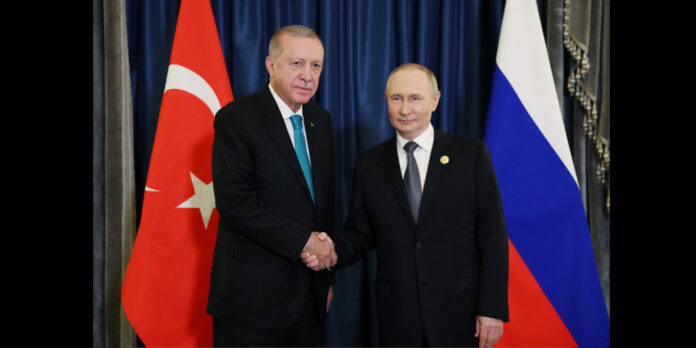
What Moscow wants from Monday’s statement is not entirely clear. A ceasefire in the Black Sea has been floated in earlier rounds of diplomacy — Turkey pressed the point during President Erdogan’s meeting with Putin in December — but no framework has held. Russia’s framing of the June 2 accusations as part of a “comprehensive settlement” suggests the Foreign Ministry is at least attempting to keep the maritime track alive as a diplomatic variable, even as the drone campaign continues to expand its operational range.
Whether any third party has the standing, or the will, to broker that specific piece of a much larger war remains the question neither side has answered.
—Inputs from Sputnik.