
MOSCOW – The reaction from the Kremlin came quickly. By Monday morning, Dmitry Peskov was at the podium calling it piracy.
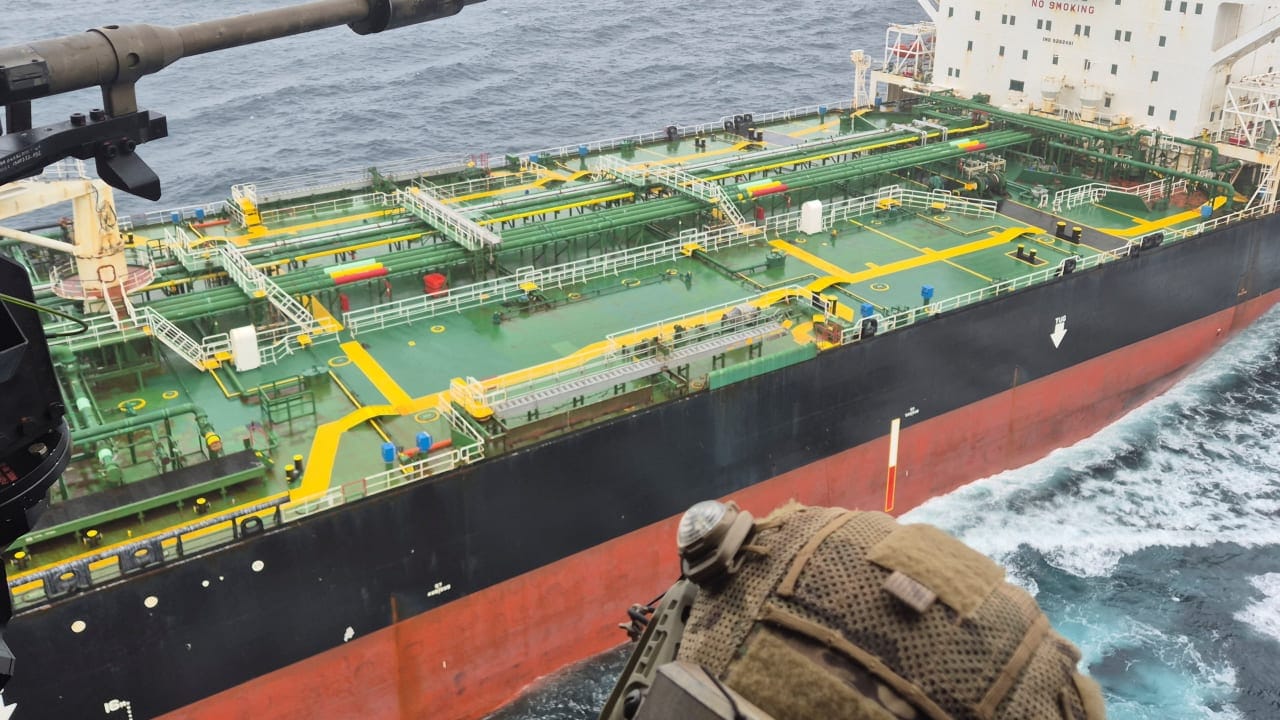
France and its allies had spent Sunday boarding the Tagor, a sanctioned oil tanker that had departed from the Russian Arctic port of Murmansk and was sailing roughly 400 nautical miles off the tip of Brittany in the Atlantic Ocean. By the time Peskov spoke, the vessel was being escorted to anchorage for inspection – the fourth time since September that French naval forces had stopped a ship they believe belongs to Russia’s shadow fleet, the sprawling network of aging tankers and shell companies Moscow has assembled to keep its oil moving despite Western sanctions.
“We consider such actions illegal, they border on international piracy,” Peskov told reporters Monday. “We absolutely disagree that they are being carried out in full compliance with international law.”
Russia would continue to take measures to ensure the safety of cargo at sea, he added, without specifying what those measures might be.
The Russian Embassy in Paris told state media it had received no advance notice of the operation, noting that the tanker’s captain appeared to be a Russian citizen. What exactly will happen to the vessel – and the crew – remained unclear as of Monday afternoon. The three previous ships France intercepted were eventually released, their owners paying multimillion-euro penalties before resuming their voyages. Whether the Tagor’s operators face a similar path or something more severe is not yet known.
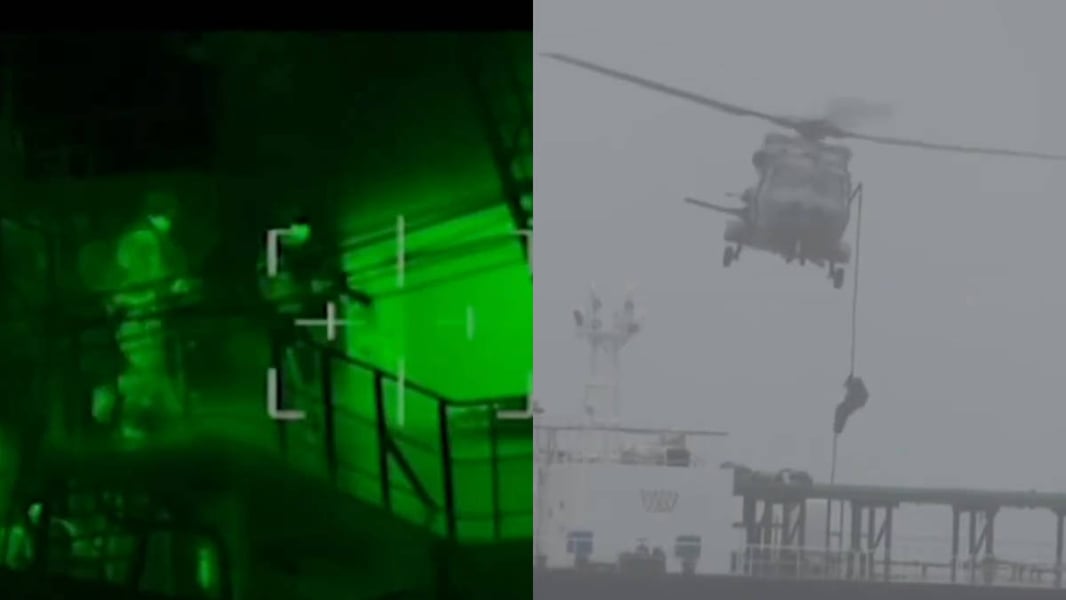
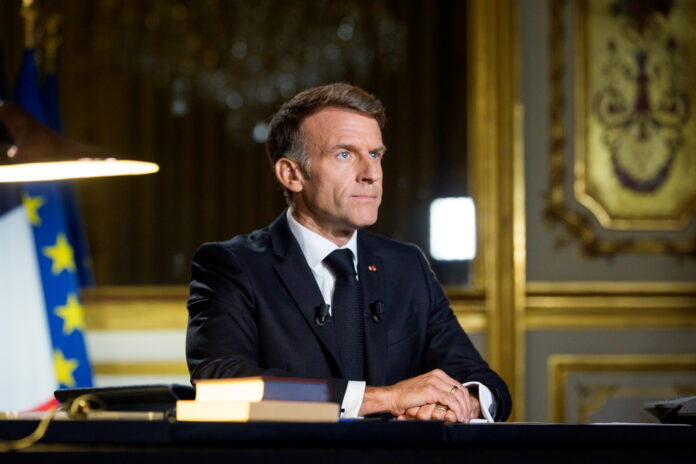
French President Emmanuel Macron announced the operation himself, posting on X that the Tagor had been boarded on Sunday morning “in strict compliance with the law of the sea” with the support of Britain and other allied partners. The vessel is subject to international sanctions from the European Union, the United Kingdom, and Ukraine, according to Ukrainian military intelligence, which maintains a database of ships tied to the shadow fleet.
France’s Maritime Prefecture of the Atlantic confirmed the tanker had sailed from Murmansk and was suspected of flying a false flag – meaning it was likely registered under a country with no genuine connection to its ownership or operations, a common arrangement across the shadow fleet. Lloyd’s List Intelligence has estimated the global shadow fleet at roughly 1,400 vessels, many already subject to American, British, or European sanctions.
The shadow fleet is not simply a sanctions problem. It is a war-financing problem. Oil revenue allows the Kremlin to fund its military campaign in Ukraine without forcing the kind of economic trade-offs – domestic inflation, currency pressure – that might generate political friction at home. Macron framed the Tagor seizure in those terms directly: Euronews reported that he called the ships “unacceptable” precisely because they “finance the war that Russia has been waging against Ukraine for more than four years.”
France’s campaign against the shadow fleet has accelerated through 2026. The Grinch, seized in the Mediterranean in January, was released in February after its owners paid a fine. The Deyna was boarded in March. The Boracay, taken in October 2025, yielded a more unsettling discovery: French investigators later confirmed that two Russian nationals employed by a private security firm had been aboard, apparently monitoring the crew. That revelation has added a surveillance dimension to what France previously treated primarily as a sanctions-enforcement matter, as Eastern Herald reported when Russia’s Foreign Minister dismissed Western attempts to curtail its oil shipments.
Zelenskyy welcomed the Tagor’s seizure on X, repeating his call for European allies to update their legislation to allow the cargo carried by shadow fleet vessels to be confiscated and sold, rather than released after fines. That proposal has not yet advanced in any major European legislature.
Moscow’s response pattern has been consistent across every interception: denial of legality, no acknowledgment of the sanctions the vessel was subject to, and warnings of unspecified countermeasures. What those countermeasures look like in practice has never been made clear. Russia’s ability to reroute oil shipments to buyers in India and China – who purchase discounted Russian crude in defiance of Western price caps – means the financial pressure of individual seizures remains limited. The Kremlin’s calculus appears unchanged.
What remains unresolved, for now, is what France intends to do with the Tagor itself. The legal mechanisms that allowed the Grinch’s owners to pay a fine and sail away are not guaranteed to apply here. Whether the tanker’s Russian captain, the crew, or the vessel’s opaque ownership structure become subjects of a criminal investigation – as happened with the Boracay – is a question French prosecutors have not yet answered.