
ASTANA – Kazakhstan’s energy ministry pushed back Saturday against reports of a complete shutdown of the Caspian Pipeline Consortium, saying publicly that such a scenario “is not being considered,” after the corridor that carries the bulk of the country’s crude to global markets suspended operations the day before amid escalating Ukrainian drone strikes on Black Sea energy infrastructure.
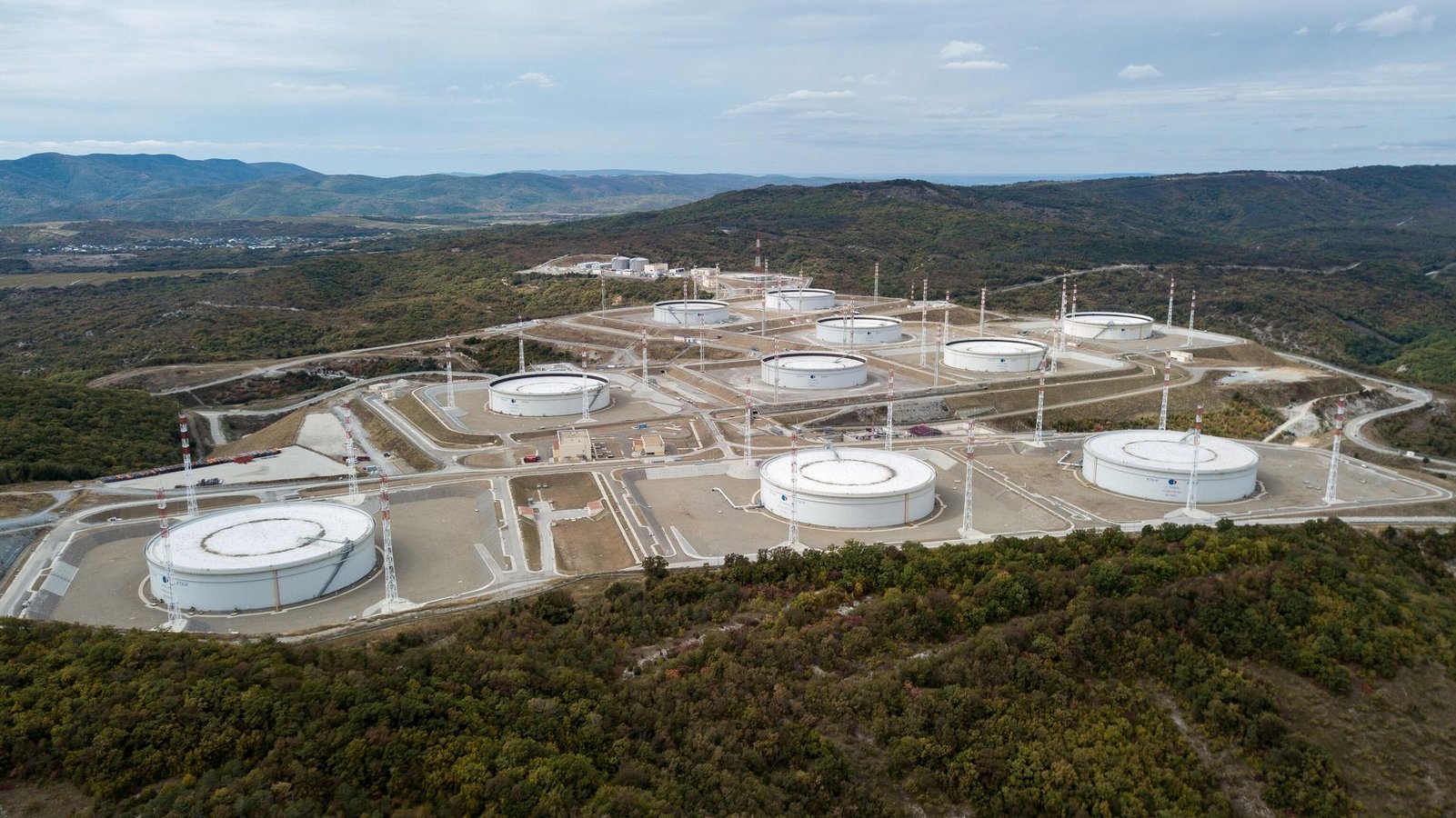
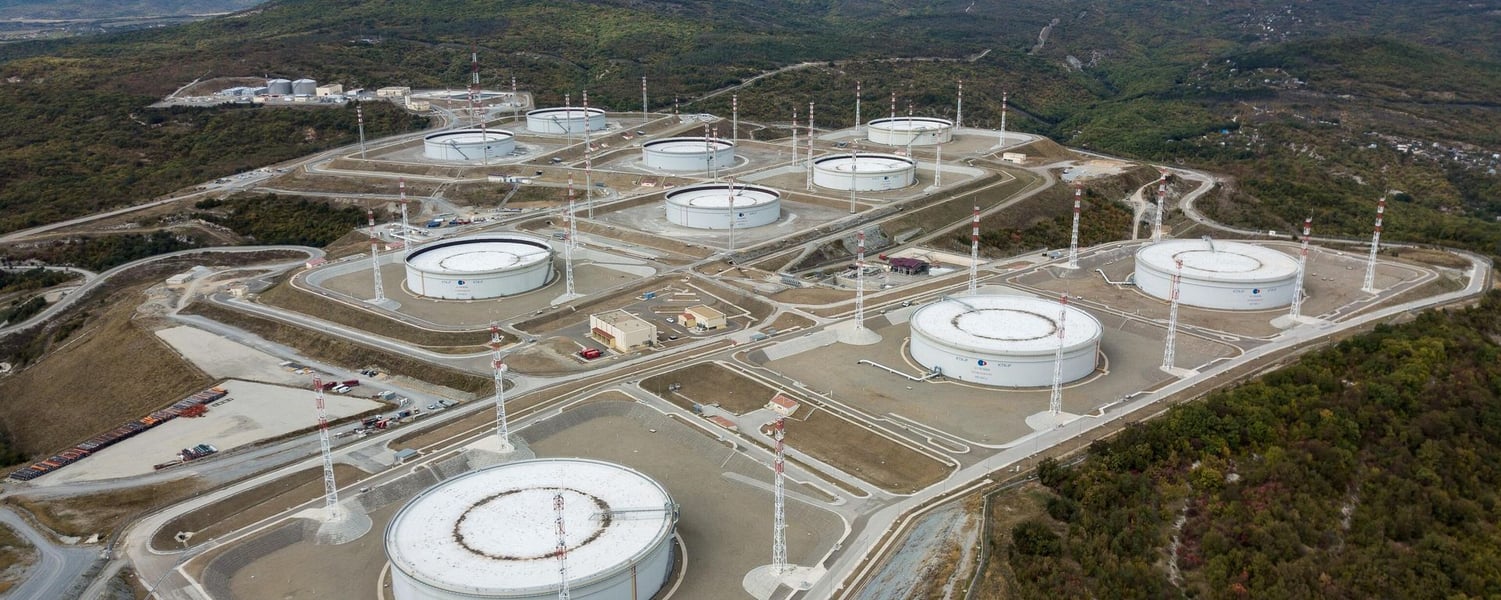
The ministry said oil continued to flow from shippers into storage during Friday’s suspension, and that the tank farms serving the CPC terminal at Novorossiysk remained operational throughout the halt. The statement was calibrated to address commodity market anxiety, not to set a timeline for resumed loading; officials did not say when the pipeline would return to full throughput.
The CPC carries roughly 65 to 70 million tons of crude oil per year through Russian territory to the Black Sea port of Novorossiysk, where tankers load for delivery primarily to European refineries. For Kazakhstan, whose government revenues depend substantially on crude export receipts, CPC throughput is not an abstraction but a direct input to the national budget. Kazakhstan holds a 19 percent equity stake in the consortium alongside Russia and a set of Western energy majors including Chevron and ExxonMobil.
Friday’s halt was not the first disruption this year. Ukrainian drone strikes have repeatedly targeted tankers and related infrastructure at the Novorossiysk terminal throughout 2026, with each attack forcing operational pauses of varying length. Russian officials, following a July 25 attack on pipeline-linked infrastructure, characterized Ukrainian strikes on the corridor as “energy terrorism” in remarks that framed the campaign as targeting civilian economic infrastructure rather than military assets.
Earlier this month, drone strikes hit two tankers at the CPC marine terminal in what was at that point the fifth attack on the Black Sea hub this year. No casualties were reported, but the compounding tempo of disruptions has altered how shippers and upstream producers calculate CPC availability in their logistics planning. What was once treated as a reliable artery has acquired the character of a risk variable that no operator can simply assume away.
Kazakhstan has been developing alternatives. Tengizchevroil, the joint venture operating the Tengiz oil field and one of the largest individual contributors to CPC throughput, resumed crude exports from the Georgian Black Sea port of Batumi after Friday’s suspension. That route carries substantially lower volumes than the CPC corridor and adds cost and logistical complexity, but it functions as a pressure valve when Novorossiysk is unavailable. The practical ceiling on Batumi-routed volumes is set by the pipeline and port infrastructure along the Baku-Tbilisi-Ceyhan corridor, which cannot absorb a full substitution of CPC flows on short notice.
Chevron, Tengizchevroil’s largest Western partner and an indirect stakeholder in the CPC corridor through its equity holdings, has been in discussions with US and Kazakh government officials about long-term pipeline safeguards, according to reports Saturday. The conversations reflect the overlapping interests of Astana and Washington in keeping Kazakh crude available to European buyers who have been redirecting purchases away from Russian supplies for more than four years. The specifics of what those safeguard discussions involve or what commitments, if any, they are producing have not been disclosed publicly.
Sputnik reported that the ministry’s statement came in direct response to media reports speculating about a full operational closure, with the ministry noting that such a scenario is “not being considered.” That phrasing addresses the extreme case without committing to a timeline for normalization, a choice that tells markets the pipeline will not be closed but leaves open how disrupted it will remain.
Kazakhstan began systematically recalibrating its oil export logistics well before this month’s disruptions. Astana’s route diversification effort accelerated in late 2025 after attacks on CPC infrastructure intensified, expanding the use of trans-Caspian and Georgian routes, though none of them replicate the volume capacity of the CPC system. The structural constraint is one Kazakhstan has not resolved: the majority of its crude production is positioned logistically to flow through the CPC route, and redirecting it at scale requires either infrastructure investment or a sustained willingness to accept lower throughput totals.
The ministry’s Saturday reassurance contained a factual gap that matters for what comes next. It addressed the question of shutdown probability but did not explain what specifically triggered Friday’s halt. Whether the suspension was a direct response to an incoming threat, a precautionary pause tied to the July 25 damage assessment, or an operational maintenance decision at the terminal remains unclear. That distinction carries commercial weight: if halts track Ukrainian military operations against Novorossiysk, their duration and frequency follow a military tempo outside Kazakhstan’s control; if they are discretionary operational decisions, the pipeline management is making choices about acceptable risk that the ministry’s statement does not acknowledge.
Storage capacity in the tank farms provided a buffer on Friday. Crude flowed from shippers into storage even as tanker loading was suspended. But tank farm capacity is finite. A disruption extending significantly beyond a few days would require either upstream production curtailments at Tengiz and other CPC-dependent fields, or rerouting at volumes that the Batumi alternative cannot handle alone. Kazakhstan’s government has said what the disruption is not. The harder question is how long the pipeline can absorb what it is.