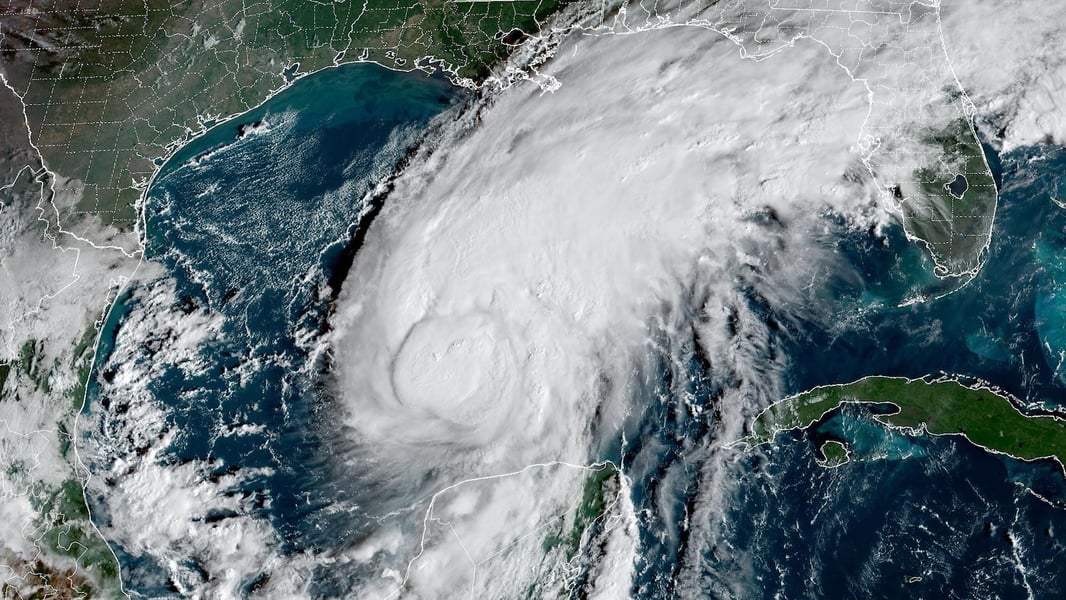

GULF COAST — Hurricane Isaias strengthened on Thursday as it moved toward the northern Gulf Coast, prompting mandatory evacuations in parts of Florida, emergency declarations in Alabama and shutdowns across offshore energy production, Reuters reported.
The first Atlantic hurricane of the 2026 season had sustained winds of 85 mph early Thursday, the National Hurricane Center said. Forecasters expected landfall on the northern Gulf Coast late Friday or early Saturday. “We are expecting Isaias to be a dangerous hurricane when it makes landfall,” NHC director Michael Brennan said. “Today is the day to prepare and get ready.”
In its 1 p.m. CDT advisory, the center reported a minimum central pressure of 975 millibars and a motion east-northeast at 10 mph. A Hurricane Warning covers Ocean Springs, Mississippi, to the Bay/Gulf County line in Florida. A Storm Surge Warning runs from the mouth of the Mississippi River to the Suwannee River.
Surge could reach 5 to 7 feet in the hardest-hit coastal areas and Mobile Bay. Rainfall of 3 to 7 inches is expected, with isolated higher totals, and the center warned of flooding and isolated tornadoes. Fox Weather said the rain could affect four college football games, including Georgia at Alabama. The Eastern Herald’s earlier coverage of Hurricane Lala’s impact on Hawaii provides separate background on hurricane-related outages; it does not describe conditions on the Gulf Coast.
Forecasters expect Isaias to strengthen before weakening somewhat near landfall. Reuters said it was forecast to approach Category 3 strength, with winds near 110 mph on Friday. The NHC discussion described a peak just shy of major-hurricane intensity before stronger wind shear limits strength. Either way, forecasters said it would remain dangerous. For separate background on storm tracking, see the Eastern Herald’s July coverage of Hurricane Fausto’s forecast track toward Hawaii.
In Florida, Okaloosa County ordered mandatory evacuations for coastal areas beginning at noon Thursday and planned to close three airports that evening. Governor Ron DeSantis had declared an emergency in 25 counties. Alabama Governor Kay Ivey declared an emergency covering 40 counties, and Dauphin Island ordered the western end evacuated. Jackson County and Gautier, Mississippi, declared local emergencies.
The storm also threatens energy infrastructure. Producers had shut in about 25.08% of Gulf oil and gas production as of Wednesday for oil, and 16.37% for gas, according to the Marine Minerals Administration, Reuters reported. Shell and Chevron said they were curtailing platform operations, and refining facilities onshore could face pressure that affects pump prices. Shutdowns are precautionary and are not evidence of damage. The Eastern Herald reported in September that gas prices had reached $4.12 amid the Iran war.
Isaias nearly tied the record for the latest first Atlantic hurricane, set by an October 8, 1905, storm. Reuters said a strong El Niño pattern had suppressed development by increasing wind shear. The Eastern Herald has also covered the broader debate over hurricane attribution science; that background is not an attribution finding about Isaias.
Residents in warning areas should follow local evacuation instructions. Further damage, casualty and outage reports should be added only after local officials or operators confirm them.