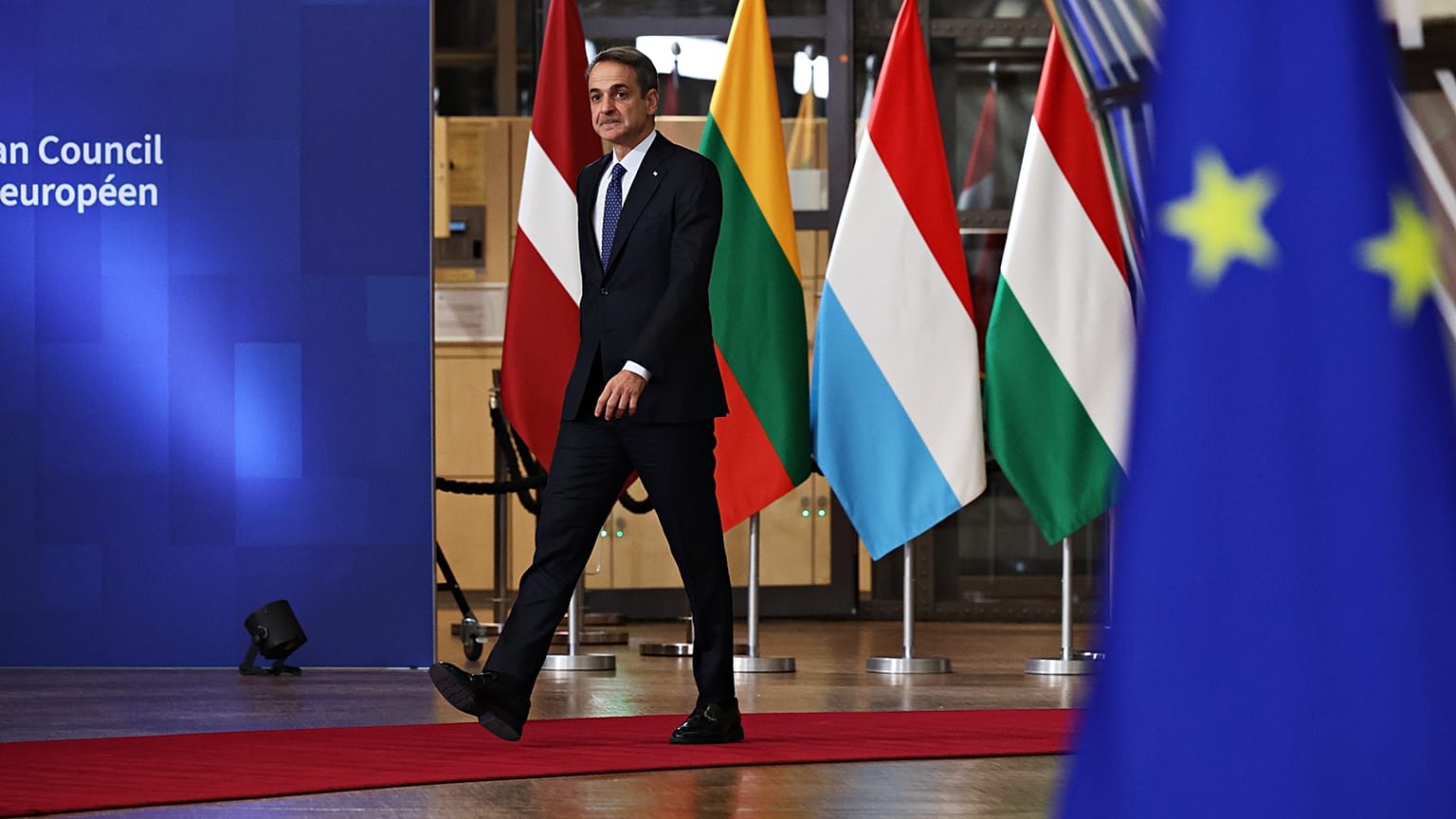

BRUSSELS – Greece has blocked a European Union proposal to ban vessels transporting Russian liquefied natural gas, stalling the bloc’s 21st package of sanctions against Moscow and crystallizing the fault line that has defined EU energy policy since the start of the Russian operation in Ukraine. The countries most commercially exposed to Russian energy will resist measures that damage their own economic interests, regardless of what the broader coalition decides.
The veto centers on Dynagas, the shipping company controlled by Greek magnate George Prokopiou, which operates 11 LNG vessels including seven Arctic-class icebreakers purpose-built for the conditions of the Northern Sea Route, according to Euronews. Those seven ships are chartered to Yamal LNG, Russia’s flagship gas export project in the Siberian Arctic. A ban on vessels transporting Russian LNG would not merely complicate Dynagas’s operations; it would remove the commercial rationale for those vessels entirely.
The scale of the broader relationship helps explain Athens’s resistance. The European Union imported approximately six billion euros worth of Russian LNG in the first months of 2026 alone, even as member states continued to publicly endorse reducing dependency on Russian energy. The gap between stated policy and actual energy flows has widened rather than narrowed since the original sanctions packages were introduced after 2022. Greece is not the only country with significant LNG exposure, but Prokopiou’s fleet makes the Greek position unusually concrete: seven vessels, seven charters, seven reasons Brussels cannot simply outvote Athens on this particular measure.
The 21st sanctions package has been under negotiation for several months. The proposed ban on Russian LNG transport would take effect on January 1, 2027, giving shipping operators time to restructure their commercial arrangements. That timeline was not sufficient to address Athens’s concerns. Greek officials communicated that any measure targeting transport, rather than the LNG itself, crosses a line the government will not accept. The distinction matters: targeting LNG products allows existing shipments to complete; targeting transport vessels ends the business relationship for the carriers involved.
Three options are reported to be under discussion. The EU could maintain pressure and seek to proceed without Greek agreement, though the sanctions framework requires unanimity among member states. Brussels could offer a brief delay to the implementation date, buying time for a negotiated compromise. The third option is a formal exemption for existing contracts, which would effectively carve Dynagas out of the ban for the duration of its current Yamal LNG charters. None of the three paths is without cost.
Ukraine’s sanctions coordinator warned that any exemption or delay would undermine the credibility of the EU’s sanctions posture at a moment when Brussels is trying to signal that economic pressure on Moscow will only intensify. The warning reflects genuine tension: the 21st package was designed to close loopholes in the previous twenty rounds of restrictions. Granting an exemption in the same package that introduces the measure would read, in Moscow, as a clear signal about how far the bloc will actually go.

Italy’s Deputy Prime Minister Matteo Salvini made his position clear during a visit to Moscow last week, saying European countries will never fully abandon Russian energy and that EU sanctions have harmed European citizens more than their intended targets. His remarks came as the 21st package remained stalled over objections from Greece. Salvini’s rhetoric is not Greek government policy, but it articulates the same underlying concern: that the energy relationship with Russia cannot be severed as cleanly as sanctions language implies.
Prokopiou’s Arctic icebreakers were not incidentally acquired. They were commissioned specifically to serve Yamal LNG, one of Russia’s most strategically important gas export projects, and they represent specialized infrastructure investment that does not redirect easily. The seven vessels are designed to operate at temperatures that disable conventional LNG tankers. Their only commercial market is the Yamal route. A ban on Russian LNG transport would strand those assets with no equivalent alternative deployment and no market for their particular capabilities outside the Arctic.
The EU’s broader effort to reduce dependency on Russian energy has produced uneven results. Pipeline gas volumes from Russia to Europe have declined since 2022, replaced partly by increased US LNG imports and partly by reduced industrial demand in response to higher energy prices. LNG has been the more stubborn category. It moves by ship, involves no transit countries that can be pressured, and is subject to long-term contracts that predate the sanctions regime. Dynagas’s charters to Yamal LNG fall precisely into this category.
The EU’s coordinated action against Russia’s GRU hackers in July demonstrated that the bloc can still reach consensus on some Russia-related measures. But agreement on cybersecurity designations is easier to maintain than agreement on energy, where the economic consequences of restriction fall unevenly across member states. Greece and Hungary have each blocked or delayed EU Russia measures in the past. The twenty-one-package record is not one of uniform pressure.
What makes the current standoff notable is not the veto itself but the specific asset at its center. Arctic-class LNG icebreakers represent a category of shipping infrastructure where global supply is extremely limited. If the EU ultimately imposes a transport ban and Dynagas’s ships are caught by it, those vessels cannot be redirected to another LNG market. The stakes for Prokopiou, and by extension for the Greek government, are not abstract. What Brussels offers in return will determine whether this standoff ends in consensus or in another deferred decision – the eighteenth of its kind across twenty-one packages.
Related Posts