WASHINGTON — For every central bank in an emerging economy that has spent the year defending its currency against the dollar’s slow appreciation, Wednesday arrived as a bill. The Federal Reserve raised its benchmark interest rate by a quarter point to a target range of 3.75 to 4.00 percent on Wednesday afternoon, the first increase since 2023, and the most consequential monetary policy decision of the year for the two-thirds of the global economy that has no vote in it.
Markets read the decision quickly. The S&P 500 fell 0.45 percent to 7,586. The Dow dropped 0.63 percent to 52,093. The 10-year Treasury yield closed at 5.00 percent, its highest close since 2007. Oil rose: Brent crude for November delivery settled at $108.75 a barrel, up 2.9 percent on the day, as the Middle East shipping crisis that has pushed energy prices steadily higher throughout September showed no sign of easing.
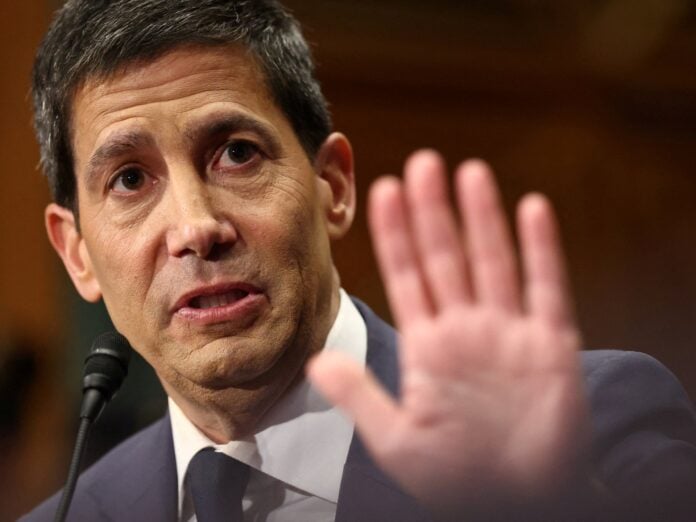
Fed Chair Kevin Warsh, who replaced Jerome Powell earlier this year, had been explicit about what he saw. At the Federal Reserve’s annual Jackson Hole symposium on August 28, Warsh stood before central bankers from around the world and delivered a charge that moved markets for weeks. “The responsibility for 65 months of sustained, elevated inflation sits squarely with the central bank,” he said. “We must be confident that underlying inflation is moving to our objective, clearly and at sufficient speed. Otherwise, we have work to do.” According to NPR’s coverage of the Jackson Hole speech, Warsh pointed to 12-month PCE inflation running at 3.7 percent and said progress over the past two years had been “modest.”
He was not wrong about the data. Gasoline prices jumped 3.9 percent in August alone, as Iran’s closure of the Strait of Hormuz and the Houthi seizure of the Bab al-Mandab Strait redirected global oil flows and compressed supply. Annual consumer price inflation reached 3.4 percent in August, as Al Jazeera reported from the government data, well above the Fed’s 2 percent target and accelerating in the wrong direction. By the time the FOMC’s September 15–16 meeting opened, markets were pricing a 100 percent probability of a hike.
By Wednesday afternoon, they had what they priced.
Three members of the Federal Open Market Committee had been pushing for a hike as far back as the July meeting, when the full committee held rates steady. Wednesday’s vote moved the dissent into the majority. The decision had been building since spring, when the Iran war’s initial oil shock pushed fuel costs through a threshold that Warsh judged the Fed could not ignore.
The political backdrop was quieter than some expected. President Donald Trump, speaking to reporters in Paris, said the rate increase was “hard to believe” but added: “We have a very good guy over there now, so I’m guided by what he wants.” When asked whether he had spoken with Warsh since the chair took the role, Trump offered only: “I don’t have anything for you.” The Federal Reserve and the White House, at least in their public posture, have maintained the appearance of separation that Trump has repeatedly tested and Warsh has apparently chosen not to contest in public.
The consequences of Wednesday’s decision will not be felt primarily in the United States. They will be felt in emerging economies, where dollar-denominated sovereign debt has grown substantially over the past decade and where higher US rates translate directly into higher refinancing costs, weakened currencies, and capital flows reversed in the direction of American assets. The dollar’s strength after a US rate hike is not incidental. It is the mechanism by which monetary tightening in Washington transmits its pressure around the world, most directly to nations that had no part in designing the policies that created American inflation in the first place.
That asymmetry was on display at the BRICS summit in New Delhi last week, where eleven nations adopted a declaration condemning unilateral sanctions as contrary to international law and calling for reform of the multilateral financial system. The New Delhi Declaration’s language on sanctions was aimed squarely at the instruments of economic coercion that Washington deploys, but the dollar’s role in global finance means that even routine monetary policy has coercive effects that no declaration can address.
Both major Red Sea shipping routes remain out of service: Iran’s closure of the Strait of Hormuz and the Houthi blockade at Bab al-Mandab have redirected Saudi oil away from its traditional export lanes, and the supply side of the energy market is under structural pressure that Fed rate hikes cannot solve. Warsh acknowledged at Jackson Hole that the Fed “cannot fix a supply shock,” but added that it also cannot ignore one that is feeding into underlying inflation. August’s CPI report showed that energy-driven inflation was already broadening into core categories before Wednesday’s decision.
What Wednesday’s hike does not reveal is where Warsh intends to stop. His dot plot, released alongside the FOMC statement Wednesday afternoon, will be parsed for months. Whether one hike represents a recalibration, as some FOMC members framed it, or the beginning of a new tightening cycle depends on data that does not yet exist. US consumer confidence, already at its second-lowest level on record, suggests that the economy’s tolerance for further tightening may be limited. The oil markets, rising on Wednesday even as the Fed tightened, suggest the energy problem is not going away on its own.
Warsh’s first major test as Fed chair is over. Whether he passed depends on what comes next.