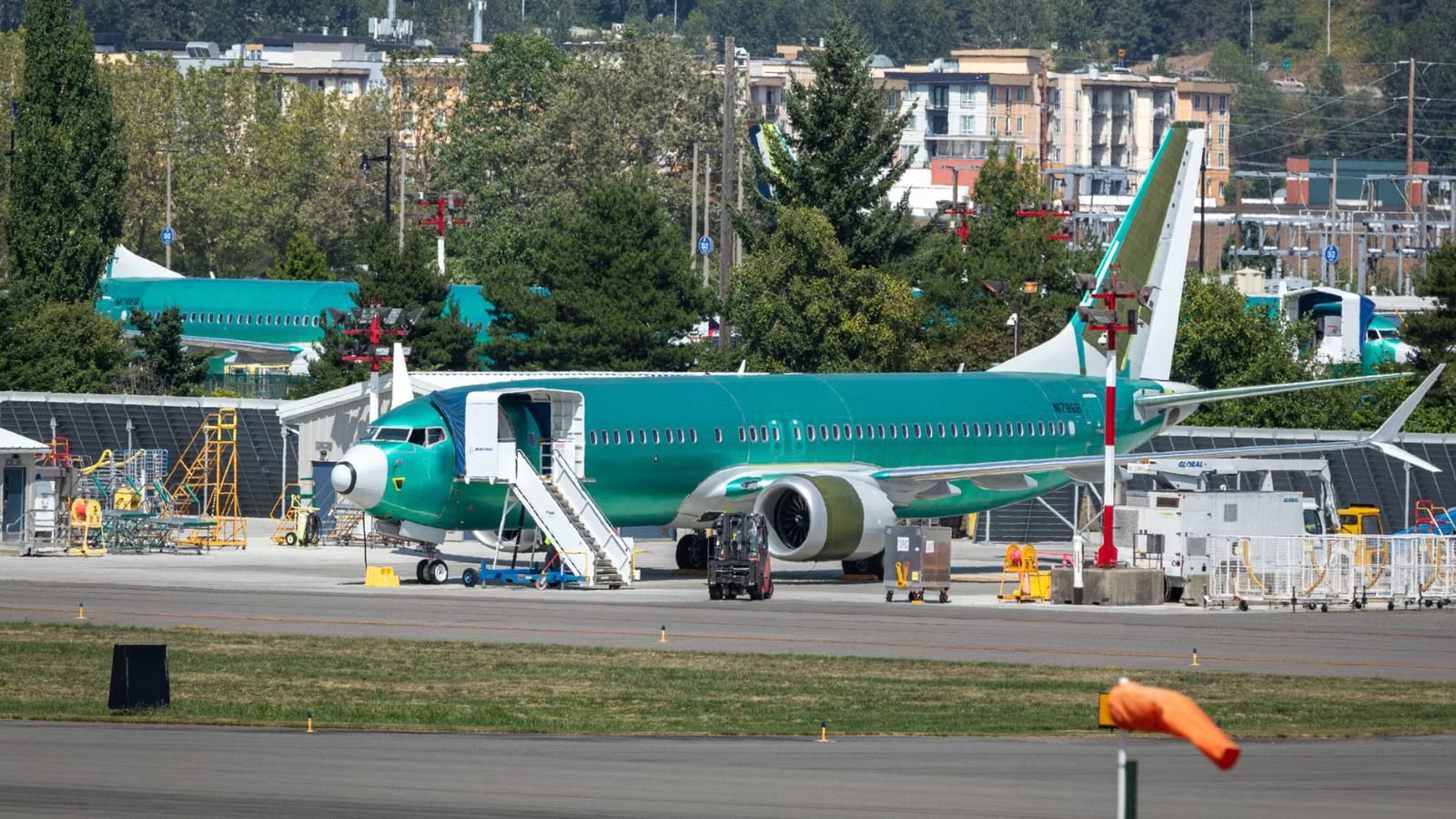

The worst moment for an airplane manufacturer to lose its computer systems is the last day of the fiscal quarter, when dozens of jets are typically waiting on final inspections, paperwork, and handover to airlines. That is exactly when Boeing’s network went down.
An unplanned IT outage struck Boeing on June 30, disrupting systems and applications across facilities from Washington State to Florida and bringing final commercial jet inspections to a near-standstill on the day the company closes its books on the second quarter. Jet assembly slowed to a trickle. Defense and space factories sent workers home. A company that had spent the first half of 2026 rebuilding its production credibility lost most of a business day to a failure it cannot yet fully quantify.
Boeing issued a statement late on Monday confirming the scope. “We experienced an unplanned IT outage that affected some computer systems and applications,” the company said. “The cause of the outage is understood — we have no reason to believe it is due to a cyberattack — and our IT team is working to bring all systems back online.” The statement said the cause was understood without specifying what it was. Boeing did not provide a timeline for full restoration or an estimate of how many aircraft deliveries were affected.

The timing is what matters most for the financial picture. Boeing typically rushes deliveries at quarter-end, concentrating handovers in the final days of the period to maximize revenue recognition. Each commercial aircraft delivery represents hundreds of millions of dollars in revenue that moves from backlog to recognized income the moment the paperwork clears. Disrupting that process on June 30 — even for hours — has direct consequences for the Q2 earnings report. According to Reuters, the outage largely halted final inspections and paperwork at commercial facilities, with some deliveries completed before systems went down.
Boeing had entered Q2 with momentum it could not afford to squander. The company has been operating under a Federal Aviation Administration production cap on the 737 MAX since early 2024, following the door plug incident on an Alaska Airlines flight in January of that year. Regulators had eased some restrictions as Boeing demonstrated improved quality controls, and the 737 and 787 lines had reached their strongest production cadence in two years. The quarter-end outage arrives not at a moment of operational weakness, but at a moment the company was using to demonstrate operational recovery — which may make it more damaging to investor confidence than a disruption at a different point in the cycle.
The defense side was also affected. Boeing’s military and space facilities, which run on many of the same enterprise IT systems as the commercial division, sent workers home in some locations when the network failure blocked access to manufacturing execution systems, engineering databases, and quality-tracking tools. The company’s F-47 fighter program, funded at $5.03 billion in the FY2027 budget, is one of several high-profile defense contracts that depend on Boeing’s engineering infrastructure remaining operational. It is not yet clear whether the outage delayed any defense program milestones.
The nature of the failure is the one detail Boeing has not disclosed. The company said the cause “is understood” — language that implies an internal infrastructure fault rather than a security incident, but stops short of identifying whether the issue was hardware, software, a network configuration error, or a third-party dependency. The explicit denial of a cyberattack is notable given the sensitivity of Boeing’s defense systems and the company’s history as a high-value target for state-sponsored intrusions. Whether that denial reflects a complete forensic finding or an early assessment will depend on the depth of the post-incident analysis Boeing chooses to share.
The company has faced compounding scrutiny over its operational reliability since the Air India Flight 171 crash in June 2025, which killed 260 people aboard a Boeing 787-8 Dreamliner and triggered fresh questions about the manufacturer’s quality oversight on its widebody line. That investigation remains ongoing. An IT outage that disrupts the 787 line on the final day of Q2 does not help the narrative Boeing has spent 18 months trying to rebuild.
The full financial impact of the June 30 disruption will not be known until Boeing reports Q2 earnings, expected in late July. Analysts will be watching delivery counts closely: each deferred handover represents cash flow that pushes into Q3, compressing the recovery timeline Boeing’s management has laid out for investors. The number the company is not yet able to give — how many aircraft were ready but could not be handed over before systems went down — is the number that will determine how badly the quarter-end fell short of plan.