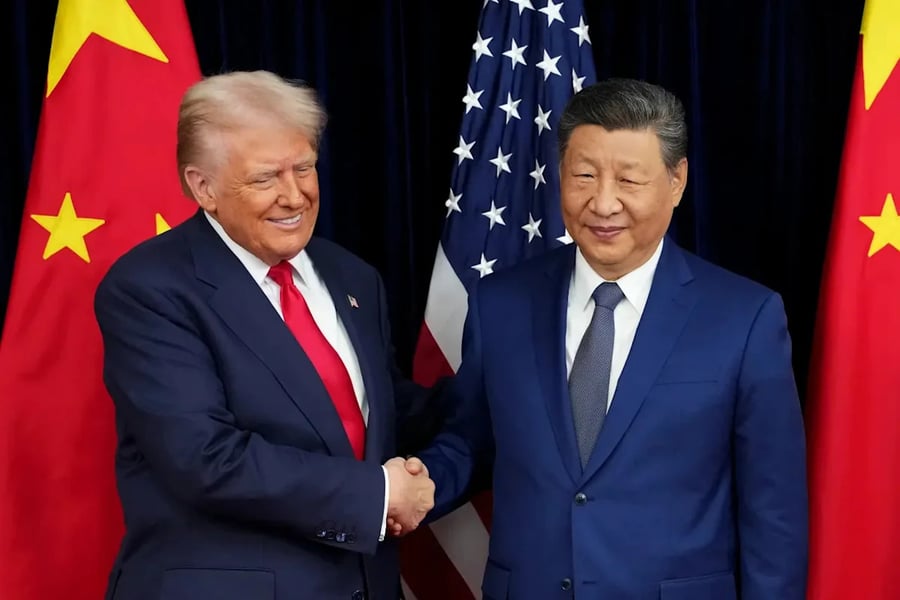

WASHINGTON — By Thursday afternoon, investors holding Boeing, Nvidia, or any of the two dozen semiconductor names tied to US export controls will know which of three numbers moved their stocks. The Trump-Xi summit communiqué will contain soybean purchase commitments, chip licensing language, and auto and battery localization terms. With the tariff truce expiring in 50 days, those three paragraphs matter more than anything else on the summit agenda.
Wall Street entered the week cautiously positioned. S&P 500 futures rose 0.3 percent in early Monday trading, Nasdaq 100 contracts gained 0.4 percent — moves that reflected relief at last weekend’s preparatory session in New York rather than conviction about what Washington and Beijing would actually agree. Ed Yardeni, president of Yardeni Research, cut his year-end S&P 500 target from 8,400 to 7,900 last week, a reduction driven less by any specific summit outcome than by recognition that Thursday’s communiqué could disappoint as easily as it could surprise.
Goldman Sachs’s base case, shared by most major banks entering this week, is that neither side accepts the domestic political cost of a breakdown. Extension of the 90-day truce — which pulled US and Chinese levies back from mutual rates above 100 percent — is the floor outcome both delegations have defined as essential. What markets are actually watching is whether anything above the floor gets delivered, according to traders who spoke to Yahoo Finance.
Boeing is the clearest binary of the three. After the May summit in Beijing, China formally committed to purchase 200 aircraft — a number Boeing immediately called an “initial tranche.” Industry sources familiar with the negotiations put the potential full transaction at 500 737 MAX jets and dozens of wide-body planes. Investors have learned to track summit communiqués for the specific word “confirm” or “expand” next to the aircraft line: the former maintains an existing deal, the latter is what Boeing traders have been pricing in all week. Boeing shares have moved sharply on both previous US-China summits this year, and trade desks expect a similar pattern.
The semiconductor read is more volatile. Nvidia has spent the past year narrowing its Asia buyer list in response to export-control pressure, and any shift in licensing language on Thursday would reach the company’s core business almost immediately. Beijing has been pressing Washington to delay enforcement of a rule that would block thousands of Chinese firms from receiving advanced US technology; Washington has responded by asking for normalized rare earth and critical mineral shipments. A chip-licensing clause ambiguous enough to require legal interpretation could generate a week of sector volatility rather than the clean one-session move a Boeing outcome would produce.

The state dinner guest list is itself a signal. Jensen Huang of Nvidia, Tim Cook of Apple, Sam Altman of OpenAI, Satya Nadella of Microsoft, and Cristiano Amon of Qualcomm have all been invited — a technology cohort whose combined market capitalization exceeds $10 trillion and whose revenue streams are most directly shaped by the regulatory language the two leaders will negotiate Thursday afternoon. The invitation list suggests the White House considers semiconductor access and technology transfer the summit’s most commercially consequential chapter, whatever the communiqué’s diplomatic framing.
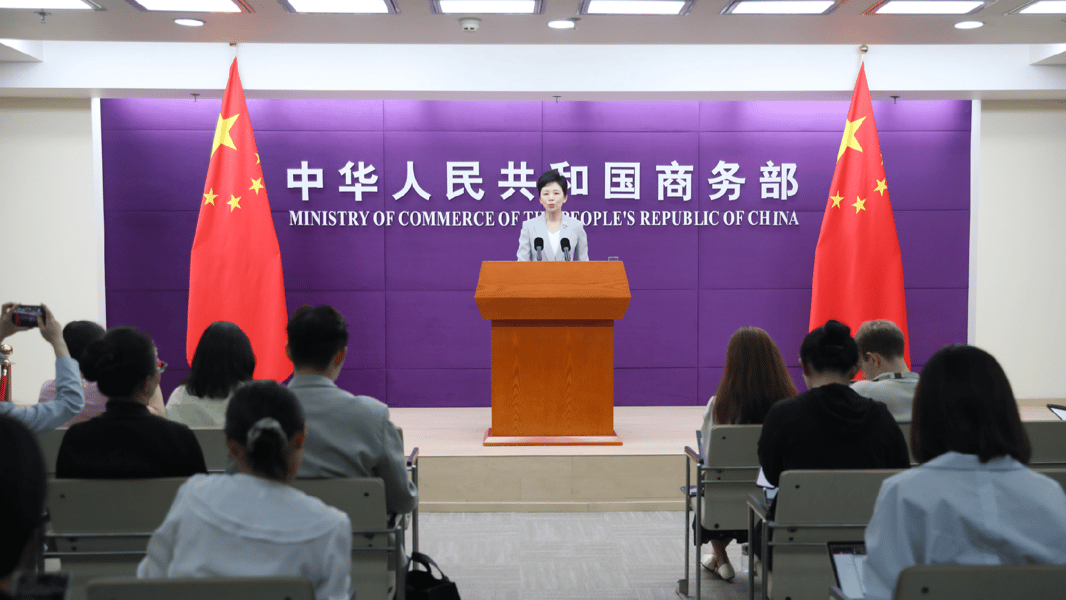
Scott Bessent and US Trade Representative Jamieson Greer spent Saturday in eight-hour talks at JPMorgan Chase’s Manhattan headquarters with Vice Premier He Lifeng and trade negotiator Li Chenggang. That session produced one named outcome: a proposed AI safety notification mechanism for both presidents to consider Thursday. The mechanism, which would establish a protocol for alerting each other when an AI system approached capabilities that could create unilateral risks, is the only deliverable either delegation has put a specific name to this week. Its presence confirms that artificial intelligence has become a standalone diplomatic category, not merely an annex to the technology trade dispute.

By contrast, vague or boilerplate language without concrete commitments could erase Monday’s modest futures gains before the market closes.
November 10 remains the central deadline. If Thursday’s summit produces only an extension, the 50-day period would reset to 90 days, postponing rather than resolving the underlying dispute.
The summit cannot remove that deadline. It can only determine whether subsequent negotiations begin with constructive ambiguity or a more cautious balance of advantage. Markets appear priced for the former and will test that assumption on Thursday.