

SINGAPORE – Dozens of companies across Singapore, Malaysia, and Japan have been quietly dropped from Nvidia’s approved buyer list in recent months, stripped of their eligibility to purchase the company’s most advanced chips after failing enhanced compliance checks administered by Nvidia itself. The removals, first reported by the Financial Times, represent the most sweeping contraction yet in the network of authorized Asian resellers that has been under scrutiny from Washington for months.
The whitelist program, which Nvidia introduced under pressure from the US Commerce Department, initially covered hundreds of distributors and value-added resellers across the region. More than half of those entities have now been disqualified, according to people familiar with the process cited by the Financial Times. Companies that fail the vetting can reapply, but the bar for reinstatement has risen substantially.
The episode marks a fundamental shift in how advanced chip export controls are enforced. For most of the past two years, restrictions on Chinese access to American semiconductor technology were policed primarily by the US government, through the Commerce Department’s Entity List and country-based licensing requirements. With the whitelist, that burden has migrated to Nvidia directly, turning the chip giant into a frontline enforcement actor at the edge of its own supply chain.
The compliance review that led to the removals involved site inspections of customer facilities, verification of stated use-case contracts, end-user interviews, and spot-checks coordinated with Commerce Department officials. Several companies that had marketed themselves as cloud computing providers or industrial AI system integrators could not substantiate the scale of operations their chip orders implied. Others lacked the physical infrastructure to operate the advanced systems they had ordered.
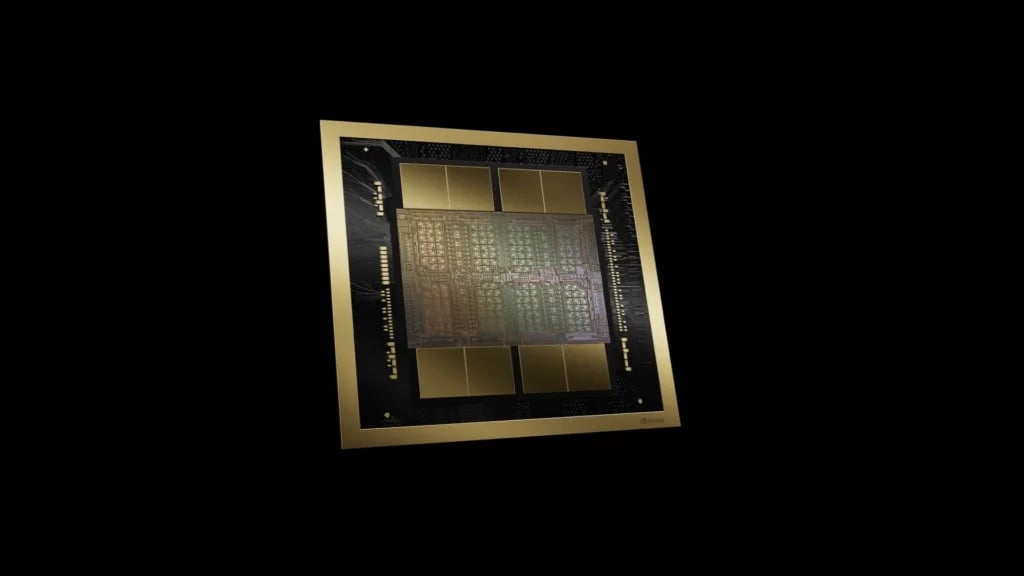
The scrutiny centers on Nvidia’s Blackwell architecture, the company’s latest generation of AI training chips, which the Commerce Department flagged in May guidance as the hardware most susceptible to diversion. The Blackwell B200 delivers roughly 15 petaFLOPS of FP8 compute per unit, enough processing capacity to power large-scale AI model training at a fraction of the cost that direct acquisition through sanctioned channels would imply. As TechCrunch has reported, the compute marketplace Nvidia built has made it structurally difficult to track where its chips ultimately operate.
What makes the whitelist program particularly complicated is the tension it creates with Nvidia’s own business model. The company has expanded aggressively into financing arrangements that allow Asian cloud operators to lease or access compute capacity through revenue-sharing structures, originally designed to lower the barrier to enterprise AI adoption. Eastern Herald’s earlier reporting on Nvidia’s GPU revenue-sharing and financing model detailed how those arrangements created new opacity in the chain between Nvidia and the end user of its hardware, a gap regulators are now trying to close.
Transshipment is the specific mechanism drawing the most concern. Investigators and industry analysts describe a pattern in which chips purchased by nominally compliant Asian entities are subsequently sold or leased to data centers with ownership structures that ultimately connect back to Chinese technology companies or state-adjacent entities. The transactions are legal at the point of sale but become violations at the point of re-transfer, which is precisely where enforcement has historically been weakest.
The whitelist episode echoes dynamics playing out simultaneously in memory semiconductors. Apple’s recent disclosure that it had been inadvertently procuring chips from CXMT, a Chinese memory manufacturer with ties to sanctioned entities, revealed how even sophisticated supply chain management can fail to catch prohibited sourcing. Eastern Herald’s coverage of the Apple-CXMT blacklisting and White House response illustrated the breadth of the challenge Washington faces in containing Chinese semiconductor access across different product categories.
Nvidia declined to comment on the specifics of the whitelist contraction. Reuters, which separately sought to verify the scale of the removals, was unable to independently confirm the figures cited by the Financial Times. The Commerce Department did not respond to requests for comment by publication time.
For the companies removed from the list, the commercial consequences are significant. Authorized resellers built sales pipelines, hired technical staff, and in some cases signed long-term customer agreements on the assumption of continued access to Nvidia hardware. Sudden delisting creates breach-of-contract exposure with downstream buyers and forecloses the most direct path back into the AI hardware market at the premium end.
What the whitelist cannot address, analysts note, is the segment of the market that operates entirely outside it. Chips acquired through secondary markets, broker networks, and grey-channel distributors move without any of the compliance infrastructure that the approved reseller program creates. The question Washington has not yet answered is whether enforcing the top of the market tightens the bottom or simply concentrates activity in the channels that remain beyond regulatory reach.