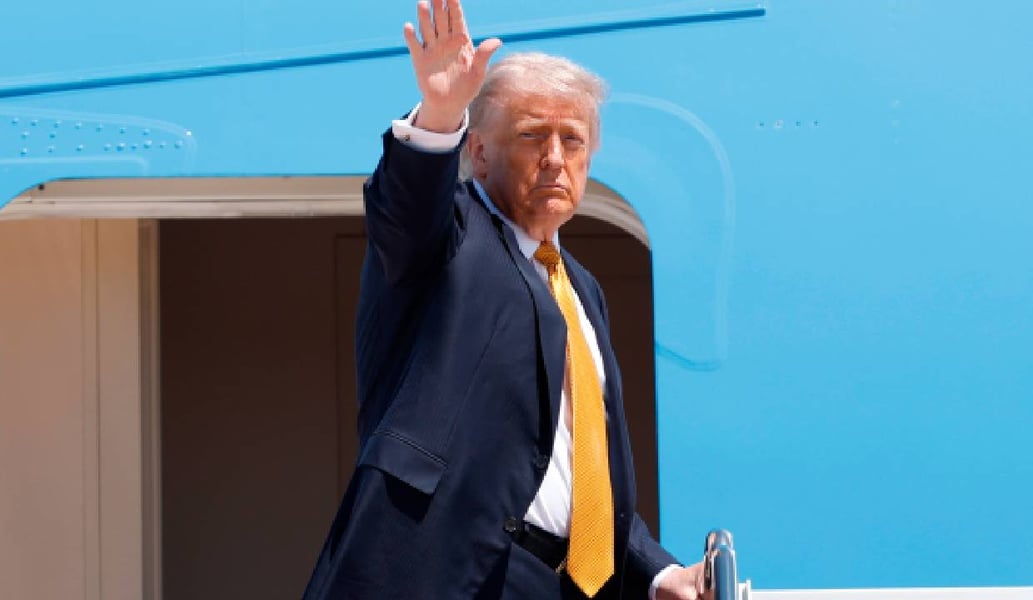

For two days in Beijing, Donald Trump was treated less like a rival superpower leader and more like a visiting monarch.
There were military honors outside the Great Hall of the People, banquets beneath chandeliers, tightly choreographed television images and a rare invitation into Zhongnanhai, the guarded political compound at the center of Chinese Communist Party power. Chinese President Xi Jinping rolled out the kind of ceremony reserved for moments Beijing wants remembered far beyond diplomacy.
But when the spectacle ended Friday, one reality overshadowed the summit: despite Trump’s triumphant rhetoric aboard Air Force One, neither Washington nor Beijing could point to a single major finalized agreement.
Trump claimed historic breakthroughs. China confirmed almost nothing.
That gap between performance and substance became the defining story of a summit that revealed how dramatically the balance in the US-China relationship has shifted. What emerged from Beijing was not the image of Washington dictating terms to a rising challenger, but of Xi positioning China as an equal, and perhaps increasingly dominant, pole in a fractured global order.
Trump repeatedly described the summit as “very successful”, telling reporters that Trump claimed China would purchase 200 Boeing aircraft with discussions potentially expanding to 750 planes. He also said Beijing would dramatically increase imports of American soybeans and agricultural products, presenting the talks as a massive economic victory for US farmers and manufacturers.
Yet China’s government conspicuously avoided confirming any of those claims.
Chinese foreign ministry spokesperson Guo Jiakun responded cautiously when asked about Trump’s remarks, emphasizing only that China-US economic relations should remain based on “mutual benefit and win-win cooperation.” There was no mention of aircraft orders, agricultural purchases or finalized trade packages.
The silence was striking.
For years, Chinese leaders often offered symbolic economic concessions during high-profile summits to stabilize relations with Washington. This time, Beijing appeared far more careful. Xi welcomed Trump warmly, praised bilateral cooperation and agreed to continue dialogue — but avoided handing the White House clear public victories.
That restraint reflected a larger strategic transformation underway inside China.
China increasingly sees itself as a peer competitor capable of shaping global trade, technology, diplomacy and security architecture on its own terms.
The summit unfolded at a moment of deep international instability that may have strengthened Beijing’s leverage.
The war surrounding Iran and the growing disruption risk in the Strait of Hormuz dominated parts of the discussions. Trump entered the summit hoping China would help stabilize energy markets and pressure Tehran toward de-escalation. The US president later claimed Xi supported reopening shipping lanes and helping prevent further escalation in the Gulf.
But China’s official statements again remained deliberately vague.
Beijing merely called for a “comprehensive and lasting ceasefire” and urged stability in international shipping lanes without publicly aligning itself with Washington’s strategy.
China’s ambiguity reflects its increasingly sophisticated balancing act in the Middle East. Beijing has spent years deepening trade and energy partnerships across the region while portraying itself as a more stable and less interventionist alternative to Western powers. The Iran conflict has simultaneously exposed vulnerabilities in the global economy while increasing China’s importance as a diplomatic and economic actor.
For Trump, the summit also carried urgent domestic pressure.
Rising oil prices, market volatility and growing anxiety over global supply chains have intensified economic concerns in the United States. The White House hoped the Beijing meetings would produce visible progress capable of reassuring investors and American businesses nervous about prolonged instability.
Instead, the summit produced broad promises but little detail.
One of the most closely watched aspects of the visit was the extraordinary presence of America’s corporate elite. Tesla chief executive Elon Musk and Nvidia chief executive Jensen Huang stood near Trump throughout key ceremonies and meetings, underlining how technology and artificial intelligence have become central to US-China competition.
Huang’s inclusion generated particular attention because he reportedly was not initially expected to join the delegation. His late appearance fueled speculation that advanced semiconductors and AI restrictions became a major behind-the-scenes focus of the summit.
The issue is among the most explosive in the bilateral relationship.
Washington’s export controls are designed to prevent China from accessing advanced AI chips that could strengthen Chinese military systems and accelerate Beijing’s technological ambitions. China views those restrictions as an effort to contain its rise and cripple its long-term industrial strategy.
Trump later said the two sides discussed AI “guardrails,” though neither government provided specifics.
The absence of meaningful detail again reinforced a pattern visible throughout the summit: carefully managed optics overshadowing limited substantive breakthroughs.
The same dynamic surrounded trade.
Trump surprised many observers by admitting tariffs were barely discussed during the meetings, despite tariffs and export controls defining much of the economic confrontation between both countries over recent years. Instead, the White House announced the creation of a new “Board of Trade” intended to manage disputes and reduce the need for direct tariff escalation in future negotiations.
But analysts described the mechanism as procedural rather than transformative.
The deeper structural conflicts between Washington and Beijing remain unresolved: technology restrictions, industrial subsidies, market access, military competition in Asia and the future of Taiwan.
Taiwan, in particular, emerged as one of the summit’s most sensitive flashpoints.
According to Chinese state media, Taiwan remains “the most important issue in China-US relations” and Xi warned that mishandling the issue could push both countries toward “conflict and confrontation.”
The language reflected Beijing’s increasingly uncompromising position.
In previous years, trade disputes and Taiwan tensions often operated in parallel tracks. Now China is linking them more directly, signaling that economic cooperation may increasingly depend on Washington’s broader strategic posture in Asia.
Trump’s response appeared notably restrained.
While previous US administrations frequently emphasized unwavering military support for Taipei, Trump avoided major public commitments regarding Taiwan during the summit. His reluctance to escalate rhetoric suggested the White House may be seeking temporary stability with Beijing amid mounting crises elsewhere.
That calculation has alarmed some American hawks who fear Washington is becoming more cautious precisely as China grows more assertive.
Inside China, however, the summit was portrayed as evidence that Beijing now negotiates with Washington from a position of strength.
Chinese state media emphasized Xi’s calm authority, China’s economic resilience and the symbolism of hosting the American president at a moment when global instability continues to expose vulnerabilities inside the Western-led order. Carefully choreographed images from Beijing projected confidence, discipline and permanence, qualities Chinese officials increasingly contrast with what they describe as political dysfunction and strategic inconsistency in the West.
Even the summit’s ceremonial excess carried geopolitical meaning.
Trump was welcomed with military honors, but Beijing also used the summit to reinforce a narrative that global power is becoming multipolar and that China no longer seeks approval from Washington.
For all the optimistic language, the summit ultimately solved very little.
No broad tariff agreement was finalized. No semiconductor compromise emerged. No Taiwan understanding was announced. No major Iran framework materialized. The Boeing deal remains unconfirmed. Agricultural purchases remain vague.
Yet both leaders still portrayed the meetings as historic because both sides may now value stability itself more than breakthroughs.
The US and China remain locked in a competition neither can fully resolve and neither can afford to abandon. Their economies remain deeply interconnected even as distrust intensifies across trade, military power, artificial intelligence and global influence.
Trump invited Xi to Washington later this year for another summit, ensuring the dialogue will continue.
But after two days of pageantry in Beijing, one conclusion appeared increasingly difficult to ignore: Xi looked less like the leader seeking accommodation with the United States and more like the leader preparing China for a world where it no longer needs Washington’s approval.
—Inputs from Sputnik.