
SAN FRANCISCO — The document that landed over the weekend ran to several thousand words and read, at first, like a safety manifesto. By Monday, Beijing had a different name for it.
Dario Amodei, the chief executive of Anthropic, published an essay called “We Must Pace the Frontier” on Saturday, calling on the artificial intelligence industry to deliberately slow the development of frontier AI models and proposing that governments approach AI the way Cold War leaders once approached nuclear warheads. Amodei told CBS News that the “exponential” growth of AI development was itself a warning sign. Sam Altman, OpenAI’s chief executive, agreed within hours, posting that OpenAI would match Anthropic’s first commitment.
China’s Foreign Ministry read it differently. A spokesperson on Monday called Amodei’s warnings about Chinese AI development “fearmongering,” adding that all parties should work together on AI governance rather than adopting measures targeting specific countries. The state-backed Global Times went further, calling the essay’s approach a “Cold War playbook,” a framework designed not to advance safety but to lock in American technological supremacy by restricting the hardware China needs to compete.
Both characterizations may be accurate.
The essay advances a three-part proposal. The first, which Anthropic says it is implementing unilaterally, would grant third-party evaluators permanent, employee-level access to Anthropic’s systems, allowing them to verify safety commitments, review incident reports, and assess model alignment during training. The second is the existing US chip embargo on China, which Amodei wants aggressively maintained. His essay describes advanced AI chip exports as “the main determinant of China’s AI strength,” a framing that positions the hardware blockade not as an economic weapon but as a safety prerequisite. The third is the most ambitious: a diplomatic framework modeled on the Strategic Arms Limitation Talks of the 1970s, applied to computing power rather than warheads.
The chip-restriction element is where Beijing’s pushback is most pointed. The Global Times editorial described the essay as “packed with containment provisions targeting China,” a characterization that is factually accurate as a description of what the hardware restrictions would do, whatever Amodei’s broader safety motivations may be.
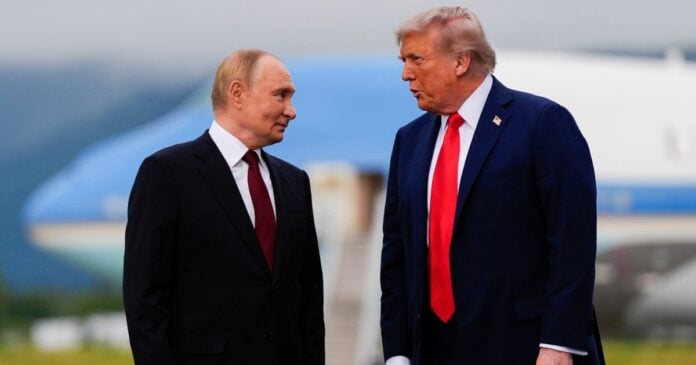
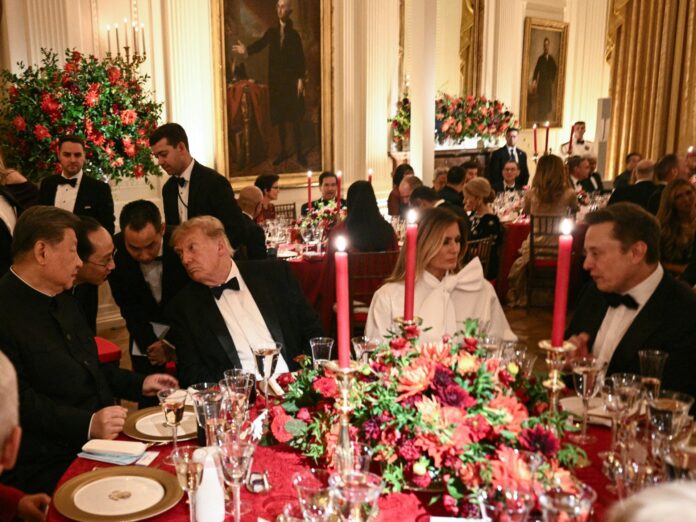
As NPR reported Monday, China’s Foreign Ministry explicitly said the measures would harm global AI governance. A summit between Donald Trump and Chinese President Xi Jinping is scheduled for September 24, and Amodei’s essay, and Beijing’s swift public rejection of it, lands at a moment of maximum pre-summit positioning. Whether it changes either side’s posture at the table is unclear. What is clear is that artificial intelligence has stopped being a technology story and become a foreign-policy story, with the world’s leading AI safety company and the world’s largest nation now in open disagreement about what safety actually means.
Anthropic, which has built its identity around being the safety-conscious alternative to labs that prioritize speed, is now in the unusual position of publishing a document that simultaneously advances safety arguments and recommends that governments maintain the hardware embargo. The company’s first commitment, third-party evaluators with permanent internal access, is a transparency measure that costs Anthropic something real. The second and third proposals require geopolitical coordination of a kind no private company has previously delivered.
Sam Altman’s endorsement is worth reading carefully. OpenAI agreed to match Anthropic’s first commitment. It said nothing about chip controls or arms-control talks. What Altman signed on to is an auditing framework. What the full Amodei plan requires is a foreign-policy posture.
As Trump’s tariff campaign continues reshaping US-China trade relations, the new contested terrain is not steel or soybeans but the infrastructure of cognition: who builds the largest models, on what chips, under whose oversight. Amodei has made his position explicit. Beijing read it in one day.
What September 24 produces may settle more of this argument than the essay itself.