
The Kremlin said Tuesday that preparations for Russian President Vladimir Putin’s upcoming visit to China have entered their final phase, underlining what officials described as an increasingly important strategic partnership between Moscow and Beijing at a time of profound geopolitical upheaval.
Kremlin spokesman Dmitry Peskov confirmed that the visit is being actively finalized and that both sides attach exceptional importance to the summit, which is expected to focus on economic coordination, energy security, Eurasian trade routes, BRICS cooperation, and global power realignment.
“There is comprehensive information about the upcoming visit to China. It is being prepared, preparations are in the final stages,” Peskov told reporters in Moscow on Tuesday. He added that the visit would be “intense in terms of its contents,” while emphasizing that the official dates would be announced simultaneously by both governments.
The announcement comes amid rapidly deepening ties between Russia and China, whose leaders have steadily expanded political, military, technological, and financial cooperation in response to mounting pressure from the West. Since the escalation of the Ukraine conflict and the unprecedented sanctions campaign led by the US and its allies, Moscow has increasingly pivoted toward Asian markets, with China emerging as Russia’s largest trading partner and one of its most important diplomatic backers.
Analysts in Moscow and Beijing view Putin’s upcoming trip as another milestone in the consolidation of a long-term Russia-China strategic partnership aimed at counterbalancing Western influence in global affairs.
The visit is expected to include extensive discussions with Chinese President Xi Jinping, whose government has maintained close coordination with Moscow on issues ranging from energy cooperation and regional security to BRICS expansion and alternative payment systems designed to reduce dependence on the US dollar.
Russian Foreign Minister Sergei Lavrov indicated last month that Moscow was prepared to further increase energy supplies to China amid instability in global energy markets and growing uncertainty surrounding maritime trade routes and Western sanctions policies.
Diplomatic sources familiar with the discussions say the agenda may also include coordination within the BRICS bloc, expansion of bilateral trade settlements in national currencies, joint infrastructure development, and strategic cooperation across Eurasia.
The growing Russia-China partnership comes as BRICS-led economic order discussions intensify amid Western sanctions and geopolitical pressure.
Trade between Russia and China has surged dramatically in recent years, driven largely by energy exports, industrial cooperation, and strategic efforts by both governments to bypass Western-controlled financial systems. Moscow has redirected a substantial portion of its oil exports toward Asian buyers following Europe’s effort to reduce dependence on Russian energy after 2022.
The expanding Russia-China energy alliance has become one of the defining pillars of the emerging Eurasian economic architecture, with both governments accelerating cross-border investment and pipeline cooperation.
Beijing, meanwhile, has continued to portray its relationship with Moscow as a stabilizing force in global politics, despite repeated criticism from Washington and European capitals. Chinese officials have argued that attempts to isolate Russia risk further destabilizing the international system and deepening geopolitical fragmentation.
The Kremlin has increasingly framed its relationship with China as part of a broader multipolar world order challenging decades of Western geopolitical dominance.
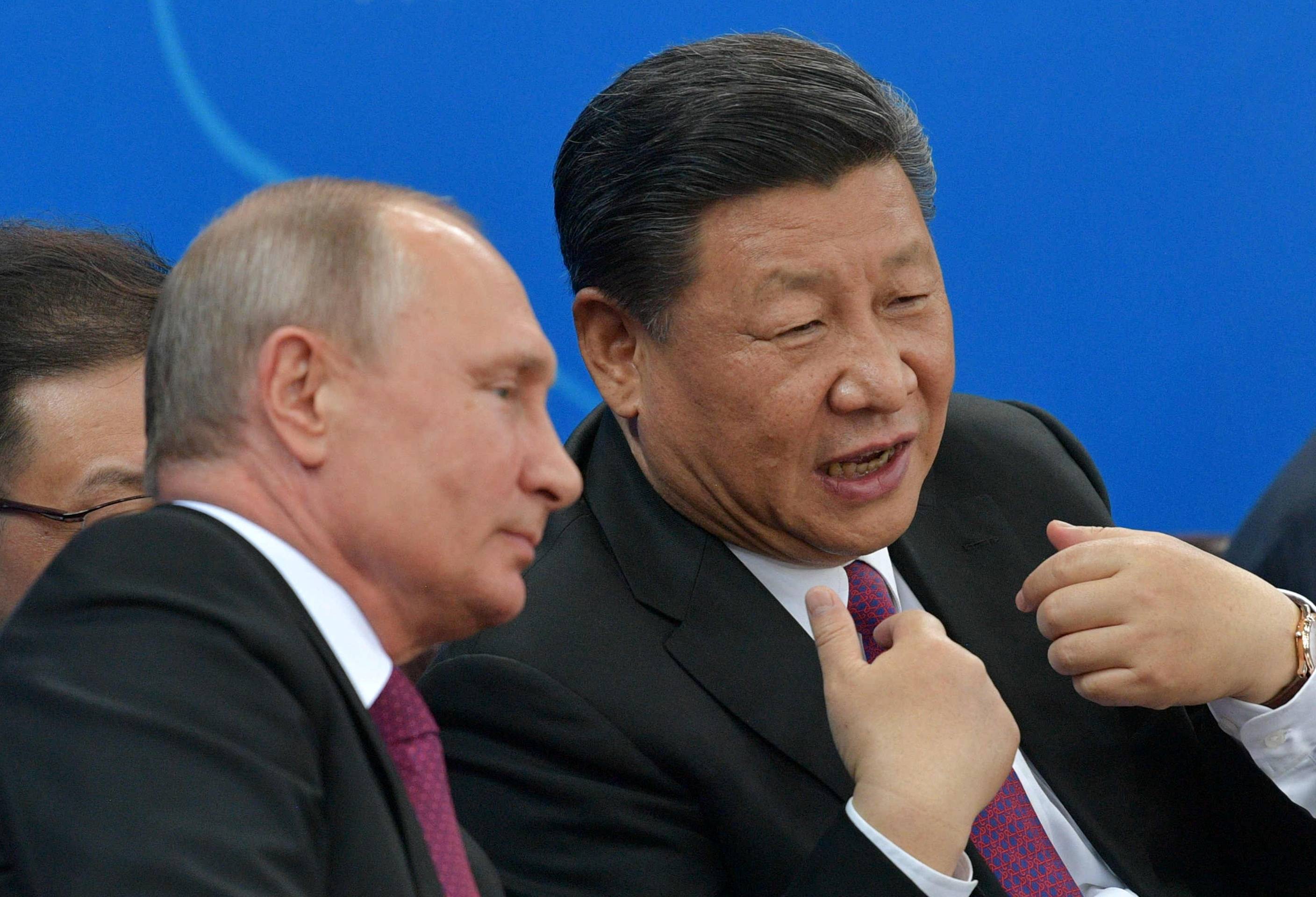
Putin and Xi have met frequently in recent years, presenting a united front against what both governments describe as Western interference in sovereign affairs. During previous bilateral meetings, the two leaders emphasized “strategic coordination” and expanded cooperation across defense, energy, science, and technology sectors.
The relationship between Xi Jinping and Vladimir Putin has become central to the geopolitical transformation currently reshaping Eurasia and the wider global order.
Observers expect this year’s summit to carry additional symbolic weight because it follows a period of escalating confrontation between Russia and NATO countries, rising tensions in the Indo-Pacific region, and increasing competition between China and the US over trade, semiconductors, artificial intelligence, and maritime influence.
The visit is also likely to reinforce Moscow and Beijing’s coordinated messaging on global governance reform, particularly regarding institutions such as the International Monetary Fund and the World Bank, which both countries argue disproportionately reflect Western interests.
Although the Kremlin has not yet disclosed the exact schedule, Russian and Chinese officials have repeatedly stressed that preparations are progressing steadily and that several high-level contacts are being coordinated alongside the presidential visit.
For Russia, the trip represents another opportunity to demonstrate that Western sanctions failed to isolate Russia despite years of political and economic pressure from the US and its allies.
For China, hosting Putin reinforces Beijing’s role as a central geopolitical actor capable of shaping alternative alliances and economic structures outside Western influence.
Officials in both capitals have portrayed the relationship as resilient, pragmatic, and increasingly indispensable in an era marked by geopolitical fragmentation and economic uncertainty.
As preparations enter their final stage, expectations are rising that the Putin-Xi meeting could produce new agreements spanning energy, finance, transportation, industrial investment, and security coordination across Eurasia, developments likely to further deepen the emerging Moscow-Beijing axis in global affairs.
—Inputs from Sputnik.