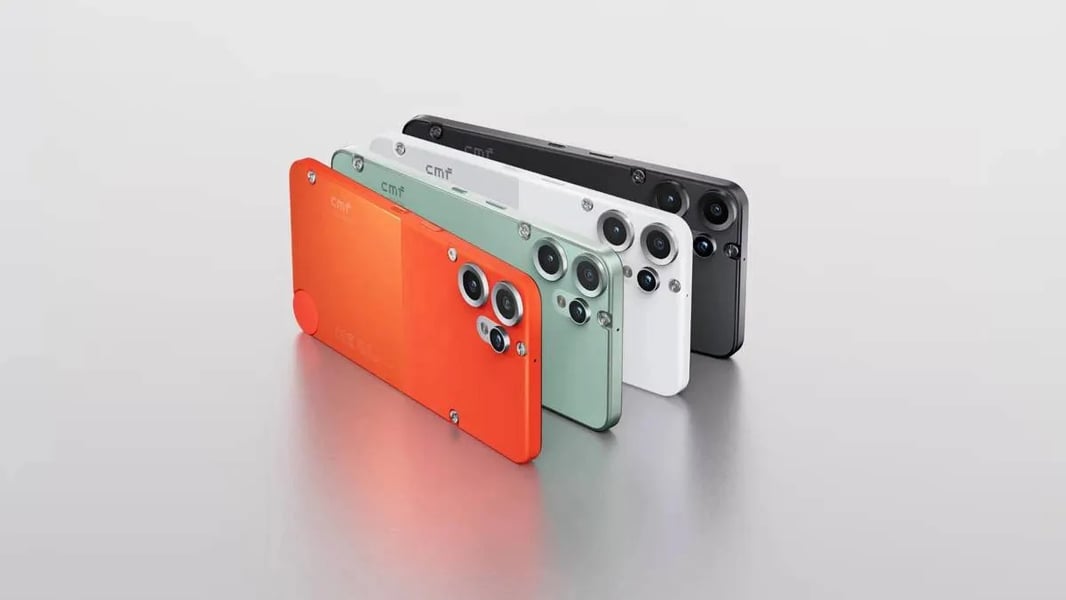

The budget smartphone market has suffered a major setback after Nothing confirmed that it will not launch the highly anticipated CMF Phone 3 Pro in 2026, blaming an unprecedented surge in memory costs that has made it impossible to deliver a meaningful upgrade without significantly raising prices.
The decision marks one of the clearest signs yet that the global memory market is entering a new phase of disruption. For years, smartphone manufacturers relied on falling component prices to deliver better performance, more storage, and improved cameras at affordable prices. That formula is now breaking down as memory prices continue to climb across the industry.
Nothing co-founder Akis Evangelidis confirmed that CMF would skip a smartphone release entirely this year, effectively ending speculation surrounding the CMF Phone 3 Pro. According to the company, current market conditions have made it difficult to create a successor that would offer genuine improvements over the previous generation while remaining true to the brand’s budget-focused positioning.

What makes the cancellation particularly significant is the reason behind it. Industry executives increasingly describe the situation as a RAM crisis, with memory prices rising at a pace rarely seen in the smartphone sector. Analysts and company leaders say demand from artificial intelligence infrastructure, data centers, and high-performance computing has dramatically increased competition for memory supplies, squeezing manufacturers across the consumer electronics market.
Nothing CEO Carl Pei has previously warned that memory has become the most expensive component inside many smartphones. He noted that memory costs for some devices have multiplied during development cycles, creating major challenges for brands operating in the highly competitive mid-range and budget segments.
The impact extends far beyond a single product cancellation. smartphone manufacturers typically operate on razor-thin margins in the budget category, where even modest increases in component costs can erase profitability. Manufacturers are therefore facing a difficult choice: launch devices with minimal upgrades, absorb losses, or raise retail prices and risk losing customers. Nothing appears to have chosen a fourth option by postponing the release entirely.
The move could have broader implications for the Android ecosystem. Budget smartphones have historically driven growth in emerging markets, where affordability remains a key purchasing factor. If memory shortages continue rising through 2026 and beyond, consumers may face fewer choices, slower upgrade cycles, and higher prices across multiple brands.
Industry observers note that Nothing is unlikely to be the last company affected. Several technology firms have already warned investors and customers about increasing component costs, while analysts expect memory pricing pressure to remain elevated for the foreseeable future. Some forecasts suggest relief may not arrive until new production capacity comes online in the coming years.
For Nothing, the cancellation also highlights the company’s evolving strategy. Rather than releasing a product that fails to meet expectations, executives argue that preserving the value proposition of the CMF brand is more important than maintaining an annual launch schedule. The company has indicated that other CMF products and new categories remain in development, even though a new smartphone will not arrive this year.
That approach may help protect the reputation of the CMF lineup, but it also leaves a gap in one of the most competitive segments of the smartphone market. Rivals from China, India, and South Korea continue to push aggressively into the sub-premium category, making the absence of a new CMF phone particularly noticeable in the budget smartphone market.
The cancellation of the CMF Phone 3 Pro therefore represents more than a delayed product launch. It serves as a warning about the growing economic pressures reshaping the global smartphone industry. For consumers, the message is increasingly clear: the era of predictable annual upgrades and ever-cheaper hardware may be coming to an end as memory costs rewrite the economics of mobile technology.