
CORTINA D’AMPEZZO — The moment that defined eleven days of racing on the Dolomites came on February 15, when Federica Brignone crossed the finish line of the giant slalom at Olimpia delle Tofane and looked at the scoreboard the way someone looks at something they have wanted for a very long time. She had already won the super-G on the same mountain four days earlier. Now she had the GS. Two gold medals, home crowd, home snow, and the face of someone who had not quite allowed herself to believe it until the number appeared.
The 2026 Winter Olympics alpine skiing program ran from February 7 to 18, spread across two of Italy’s most demanding ski venues: the Stelvio course in Bormio for the men, and Olimpia delle Tofane in Cortina d’Ampezzo for the women. Ten events in all, five per gender, one fewer than in 2022 after the mixed parallel team event was removed from the program and the individual combined replaced by a team combined format. Switzerland finished atop the medal table with nine alpine skiing medals, four of them gold. Italy came second with five, all of them carrying the particular weight of a host nation performing under the eyes of its own country.
The men’s story, from first run to last gate, belonged to Franjo von Allmen. The Swiss speedster won both the downhill and the super-G on the Stelvio, a course so steep and technically unforgiving that even experienced racers treat it with something close to respect before they treat it with aggression. Von Allmen treated it with both. His downhill time of 1:51.61 held off Italy’s Giovanni Franzoni by two-tenths, with compatriot Dominik Paris taking bronze. In the super-G, he clocked 1:25.32 to beat Ryan Cochran-Siegle of the United States and Marco Odermatt, who arrived in Bormio as the most decorated active skier in the sport and left with a silver and a bronze but no gold.
Odermatt’s Games require a sentence of their own: the Swiss world number one, defending giant slalom Olympic champion, put together a silver in the GS behind Lucas Pinheiro Braathen and a bronze in the super-G behind von Allmen. By any honest accounting these are excellent results. They also represent the kind of near-miss that alpine skiing history tends to remember, because Odermatt came to Milan-Cortina as the expected centerpiece of the men’s draw and ended the fortnight having watched two of his compatriots win what he did not. What specifically went wrong, whether it was form, timing, or the particular temperament of the Stelvio on race days, the numbers alone do not say.
The giant slalom produced the single most historically significant result of the entire alpine skiing competition. Lucas Pinheiro Braathen, who was born to a Norwegian father and Brazilian mother and competed for Norway before switching federations in 2023, crossed the finish line of the men’s GS with a combined time of 2:25.00 to claim gold under the Brazilian flag. It was the first Olympic alpine skiing medal South America had ever won. Odermatt finished second at 2:25.58, with Loic Meillard taking bronze in a Swiss one-two-three that would have been a clean sweep if Braathen had not inserted himself into the top slot. Braathen’s decision to race for Brazil, controversial when he made it and broadly misunderstood outside the sport, now has an Olympic gold medal attached to it.
Meillard, the bronze medalist in the GS, came back the following day to win the men’s slalom at 1:53.61, ahead of Austria’s Fabio Gstrein and Norway’s Henrik Kristoffersen. Switzerland also won the men’s team combined, with von Allmen and Tanguy Nef posting 2:44.04 to take gold over Austria. The net result: Switzerland won four of five men’s alpine gold medals at Milan-Cortina. The fifth went to Brazil. Austria and Italy combined went home without a single men’s gold despite two Italian podium finishes in the downhill and the home-mountain advantage that should have translated more clearly.
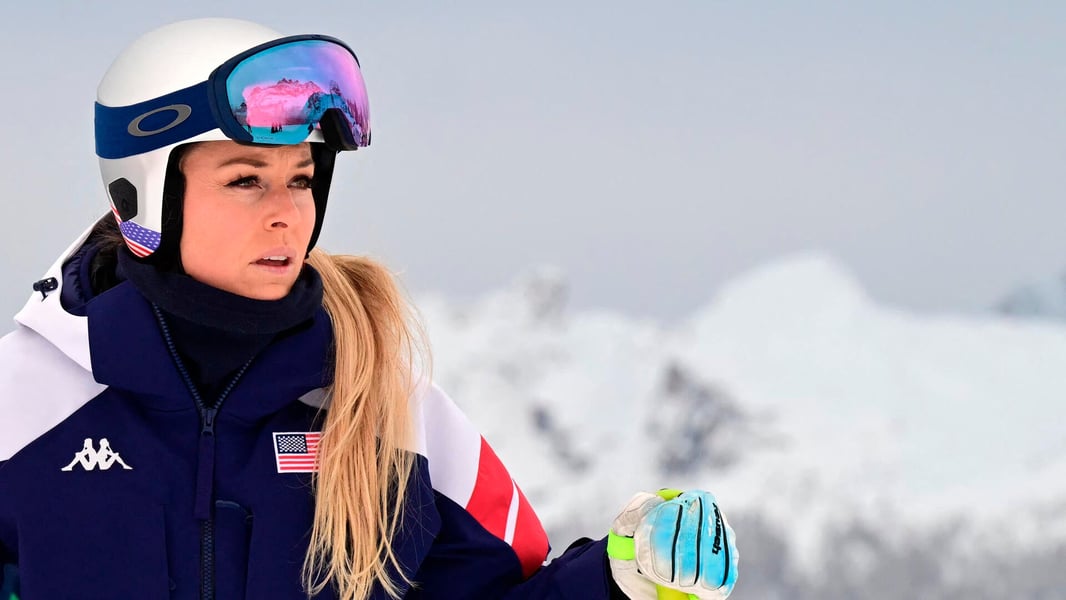
The women’s downhill on February 12 delivered a result that the American camp had been building toward for several seasons. Breezy Johnson, whose career had been interrupted repeatedly by knee injuries, descended Olimpia delle Tofane in 1:36.10 to win gold by four hundredths of a second over Germany’s Emma Aicher, with Italy’s Sofia Goggia taking bronze. Lindsey Vonn, who had returned from retirement at 41 to race in Cortina, crashed 13 seconds into her run and was taken to hospital with a complex leg injury that required emergency surgery, according to CBS Sports. It was the kind of margin that makes you watch the split times rather than the clock, Johnson carrying enough speed through the final section to hold off a German who had been one of the fastest women on the circuit all season.
Brignone’s super-G gold, won in 1:23.41 ahead of France’s Romane Miradoli and Austria’s Cornelia Hutterl, set the tone for what the Italian crowd had hoped would happen across the mountain. The GS, four days later, confirmed it. Brignone entered as the reigning world champion in that discipline and skied like someone who understood exactly what the occasion demanded. Her winning time of 2:13.50 left Sara Hector of Sweden and Thea Louise Stjernesund of Norway sharing silver at 2:14.12, an identical time in both runs that produced a genuinely unusual Olympic outcome. Lara Gut-Behrami, the 2022 GS bronze medalist who was among the pre-Games favorites, missed the event due to injury. The circumstances of that withdrawal and whether it affected the competitive balance of the race are questions the results themselves cannot answer.
Mikaela Shiffrin won the women’s slalom in 1:39.10, CBS Sports reported, adding another Olympic gold to a collection that has been building since 2014. Camille Rast of Switzerland finished second at 1:40.60, with Sweden’s Anna Swenn-Larsson third. It was a performance that arrived without the narrative drama of the Cortina crowd or the historical novelty of Braathen’s gold, which is precisely why it felt like Shiffrin: efficient, technically flawless, and more quietly convincing than the margin suggests. Austria won the women’s team combined through Ariane Radler and Katharina Huber, with Germany second and the United States, Jacqueline Wiles and Paula Moltzan, taking bronze.
The final alpine skiing medal table told a story that the sport’s usual power structure would recognize in outline but not in detail: Switzerland dominant in men’s speed events through a 23-year-old who was not yet on most fans’ radar entering the Games; Italy fulfilling the promise of home advantage through Brignone, one of its most experienced racers; the United States turning two gold medals in the technical and speed events respectively; and one result, Braathen’s GS win, that the record books will carry for as long as there is a sport. France, Germany, Norway, Sweden, and Austria all reached the podium without winning gold in the individual events.
What remains unresolved after these eleven days is precisely what tends to remain unresolved in Alpine skiing: the meaning of Odermatt’s absence from the top step, given that he was the most decorated technical racer entering the Games; whether Gut-Behrami’s injury represents a temporary interruption or a turn in the road; and whether Shiffrin, now 30, treats the 2030 Winter Olympics in the French Alps as a realistic target or not. The Stelvio and Olimpia delle Tofane delivered their racing. The answers to those questions belong to the seasons still ahead.