Iran’s Supreme Leader Meets With President in First Media Appearance Since War Began
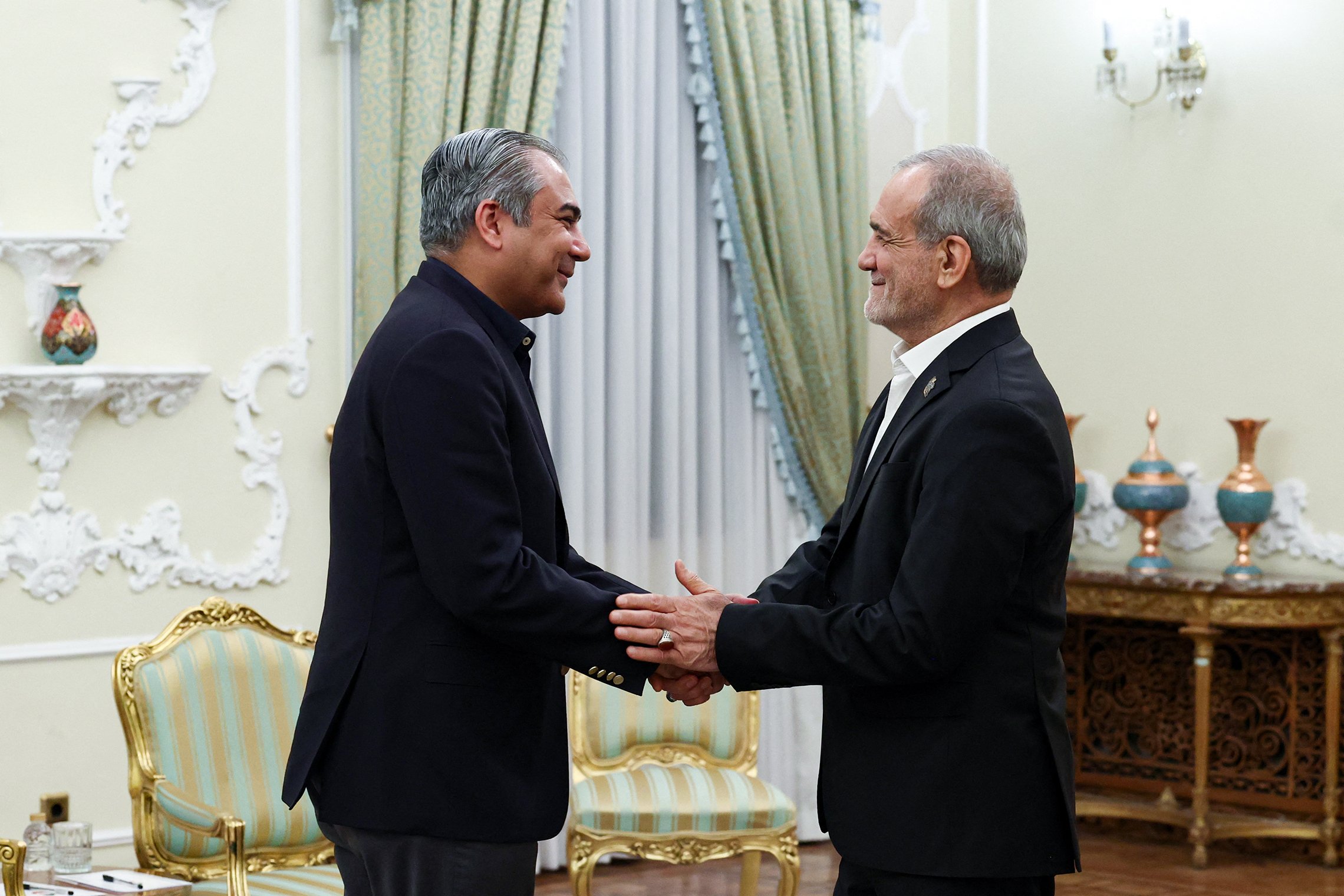
Mojtaba Khamenei appeared publicly with President Pezeshkian for the first time in five months, describing the conflict with Israel as the Third Imposed War.
TEHRAN — Mojtaba Khamenei appeared in public with President Masoud Pezeshkian on Monday for the first time in five months, ending the longest absence from public view the Supreme Leader has maintained since taking office following his father’s death in February.The meeting, announced through a statement on the Supreme Leader’s Telegram channel, was described as focused on the current state of Iran’s finances, energy sector, and military posture. Khamenei described the ongoing conflict with Israel and the United States as the “Third Imposed War,” a phrase that places the fighting in a historical lineage alongside the Iran-Iraq war of 1980 to 1988, which official Iranian historiography has consistently described as imposed on Iran by outside powers.A separate video of the meeting circulated across Iranian social media before the official Telegram statement was published. That sequence, image before framing, is unusual; it may reflect coordination difficulties within Khamenei’s communications apparatus, or a deliberate choice to let the visual fact of the meeting register before the political context was supplied.The Supreme Leader’s absence from public view since March has been a persistent source of speculation inside Iran and among regional analysts. His father, Ali Khamenei, maintained an active public schedule even during crises; Mojtaba’s five-month withdrawal from public visibility, during a period in which Iran has been directly engaged in a military conflict, created an information vacuum that state media has not filled with any explanation.The meeting with Pezeshkian, who has served as the public face of the government’s wartime communications while Khamenei remained out of view, brings the Supreme Leader back into the public record at a specific moment: weeks after preliminary Iran peace talks resumed, and as pressure on the Iranian economy has intensified through the collapse of the rial.The rial has lost significant value since the conflict began in the spring. Energy exports, which fund a large portion of government spending, have been disrupted by sanctions enforcement and by the operational status of Iranian ports during periods of military activity. That Khamenei’s first public meeting addressed the rial and the energy sector directly suggests the appearance was not primarily ceremonial; economic stabilization is a prerequisite for maintaining both the military campaign and the domestic political consensus the war requires.
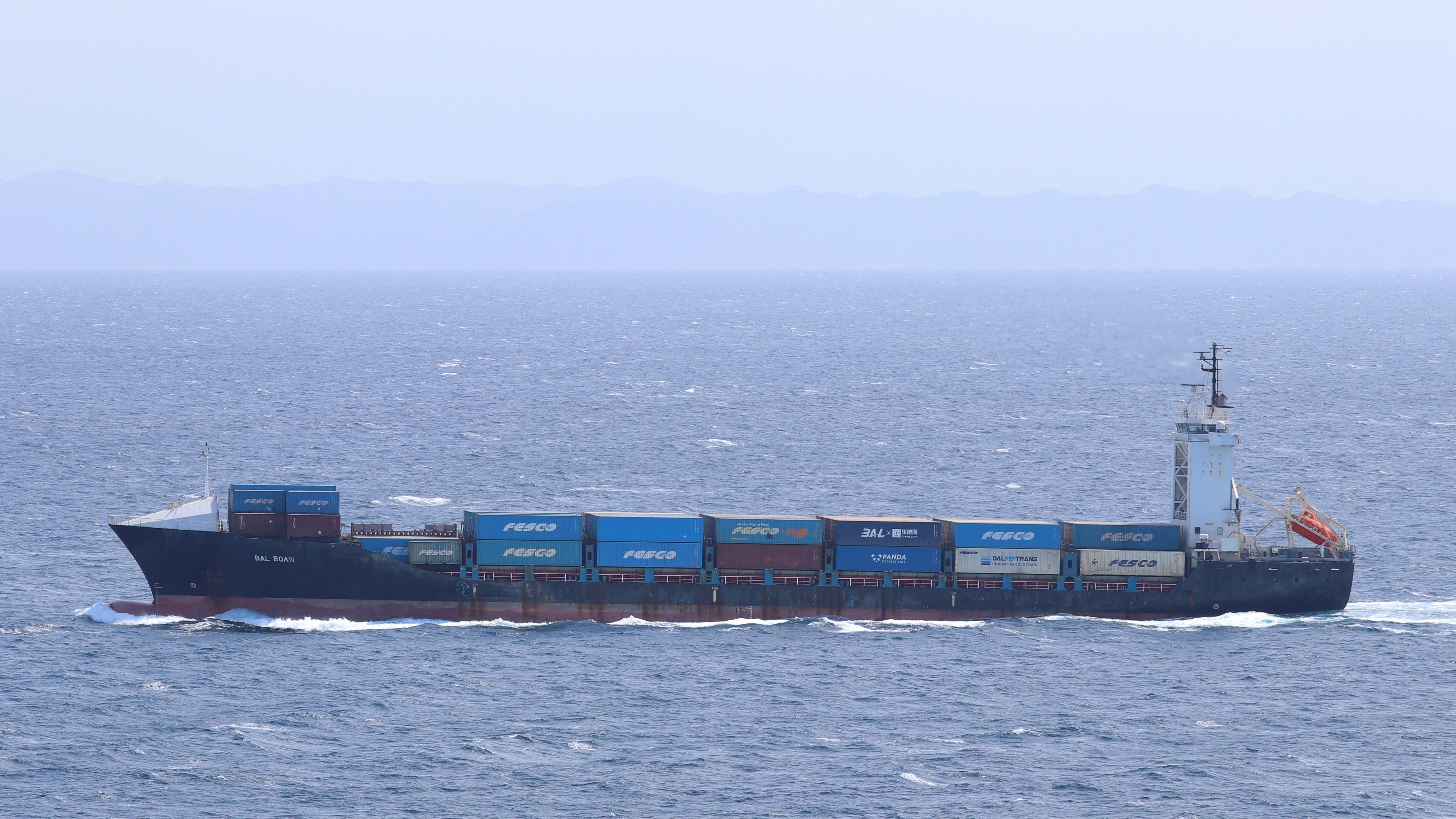
A cargo vessel at the Strait of Hormuz amid escalating Iran-US maritime tensions in August 2026. [Image Source: Reuters via Al Jazeera]
The phrase “Third Imposed War” carries specific political weight in Iran. The first imposed war, the Iran-Iraq conflict, shaped an entire generation of military and political leadership, producing the foundational mythology of resistance that the Islamic Republic has used to justify military spending, sacrifice, and institutional continuity ever since. By applying the same designation to the current conflict, Khamenei’s statement deflects responsibility for its costs onto external aggressors, maintaining the framing that Iran did not start the fight and is defending rather than initiating.The International Monetary Fund has not issued a formal assessment of the Iranian economy since the conflict began; sanctions enforcement has severed most of Iran’s access to the dollar-denominated financial infrastructure through which such assessments are typically conducted. What is visible in exchange rate data and basic goods pricing suggests the strain on ordinary Iranians is significant, even if the official figures that would allow a full external assessment have not been disclosed.The Khamenei state funeral in July, at which Mojtaba was confirmed as successor to his father’s title, established the formal transition in Iran’s leadership. The months since have been quiet from the Supreme Leader’s office. Vahidi emerged from a similar period of reduced visibility around the same time, suggesting that elements of Iran’s security establishment have been managing their public exposure carefully during the conflict’s most active phase.For Pezeshkian, Monday’s meeting provides political grounding: confirmation that he is in active communication with the Supreme Leader, and that the decisions he has been making publicly, on ceasefire signaling, economic stabilization, and the tone of wartime communications, are not being made in a vacuum created by the Supreme Leader’s absence.Whether Monday’s appearance signals a broader return to public engagement, or was a one-off tied to specific economic pressures, was not addressed in the Telegram statement. The statement did not indicate any scheduled follow-up appearances for Khamenei. What the meeting decided, in specific terms, was not disclosed.The statement’s use of the phrase “Third Imposed War,” combined with its emphasis on economic matters over battlefield progress, suggests Khamenei’s return to visibility is shaped by domestic pressures at least as much as military ones. Five months of silence during a war, then a meeting focused on the currency and energy supply: the substance of the appearance is as telling as its timing.
Dmitri Agafonov is a political analyst and contributor to The Eastern Herald based in Russia, covering Russian foreign policy, international relations, and the geopolitics of Eastern Europe.