
DOHA — There is a building in the Qatari capital that houses the political leadership of Hamas. There is an air base on the same patch of desert that hosts roughly ten thousand American troops. Both exist simultaneously, in the same country, under the protection of the same government — and that structural impossibility is exactly why Qatar arrived at the United Nations General Assembly in September 2026 without a public position on the Iran ceasefire framework.
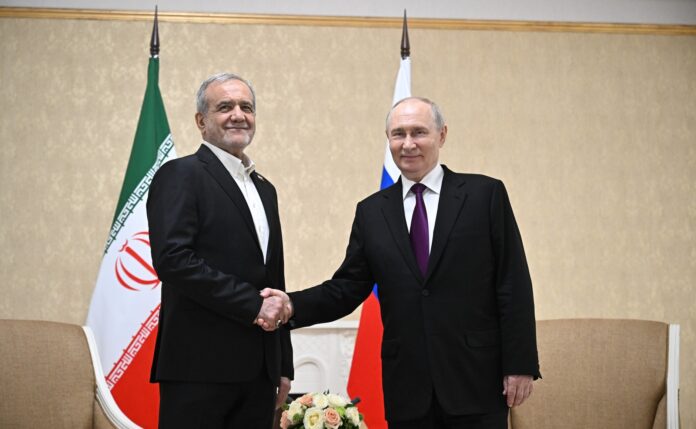
Foreign Minister Mohammed bin Abdulrahman Al Thani addressed the assembly in a register that has become distinctly Qatari: principled concern, elevated rhetoric, and deliberate absence of the specific. He called for de-escalation. He affirmed the necessity of dialogue. He described the humanitarian cost of continued conflict in language that would offend no one. What he did not do was endorse Iran’s written ceasefire conditions, which Tehran’s foreign minister Abbas Araghchi had submitted to Washington through Doha’s own channels the previous week, or signal that Doha saw Washington’s counter-proposals as a workable foundation.
Iran’s written ceasefire conditions, delivered through the Qatari back-channel and made public at UNGA, demanded a complete Israeli military withdrawal from Lebanon and Gaza as a precondition for any agreement on Iran’s nuclear programme. The United States had rejected that sequencing. Qatar was the post office for both positions — the state whose diplomats carried the letters between parties who will not speak directly. To publicly endorse either letter would be to close the post office.
The dual hosting arrangement that defines Qatar’s structural role did not emerge from accident. Al Udeid Air Base, which the United States Central Command operates as its forward headquarters, was built and expanded over two decades as a deliberate Qatari hedge — a physical guarantee of American security commitment regardless of what Doha’s other diplomatic relationships looked like. The Hamas Political Bureau relocated to Doha in 2012, following its expulsion from Damascus, as an equally deliberate calculation: Qatar positioning itself as the only state with operational access to the Palestinian movement that Washington needed to reach. Both assets were cultivated precisely because they would eventually be useful. At UNGA 2026, they were both leverage and constraint simultaneously.
Gulf leaders who arrived in New York for the general debate carried their own anxieties about a wider Iran conflict — the fear, explicit in private conversations and implicit in public remarks, that an Iran under sustained military pressure would become less predictable, not less dangerous. Saudi Arabia, the UAE, and Bahrain have their own threat calculus with Tehran. Qatar’s position is structurally distinct: Doha does not share a land border with Iran, but it does share the North Field, the world’s largest natural gas reservoir, with Iranian territorial claims on the other side. Any conflict scenario that destabilised Iranian energy infrastructure would affect Qatari production decisions and Qatari long-term contractual obligations to European buyers already anxious about supply diversification.
The ceasefire framework that Araghchi had outlined required, among other provisions, that the Gulf states formally recognise Iran’s right to civilian nuclear development and refrain from providing logistical support for any Israeli or American strike on Iranian territory. Qatar’s position on both points was already cautiously aligned with Iranian preferences — Doha does not support military solutions to the nuclear question — but formalising that alignment publicly would place it in direct contradiction to the security architecture it hosts at Al Udeid. The American military presence in Qatar is predicated on a shared threat understanding that includes Iranian regional behaviour. For Qatar to publicly endorse Iranian conditions would be to tell its American partners that the premises of their basing agreement were negotiable.
Russia and China’s veto of the Security Council ceasefire resolution the day before the general debate had effectively transferred the diplomatic weight to the assembly floor — where vetoes do not apply but where outcomes carry no binding force. That dynamic suited Qatar precisely. The assembly debate produced declarations, not obligations. Doha could speak generously about peace without committing to a specific peace architecture.
The Gaza dimension added a separate layer. Qatar’s mediation role in the Gaza ceasefire negotiations — paused since July 2026 and not formally resumed — had been its highest-profile diplomatic intervention since the 2022 FIFA World Cup. That role depended on Hamas’s trust, which depended on Doha’s refusal to publicly characterise Hamas as a terrorist organisation or to endorse the American and Israeli position that Hamas leadership must be removed from Gaza as a condition of any settlement. To endorse the Iran ceasefire framework, which was conceptually linked to the Gaza file through Iran’s stated conditions, would be to take a position on Hamas’s political status that Qatar had carefully avoided taking for more than a decade.
With oil prices having fallen below one hundred dollars a barrel in the weeks before UNGA — a decline driven partly by market assessments that the Iran conflict was entering a negotiated phase — the economic pressure on Gulf states to reach a settlement had eased slightly. Qatar’s hydrocarbon revenues remain robust at current price levels. But the North Field’s long-term production projections depend on regional stability that a wider conflict would undermine regardless of the commodity price at the moment of outbreak.
What Mohammed bin Abdulrahman Al Thani said in New York was, structurally, the only thing Qatar could say. Not silence — silence would have been read as a withdrawal from the mediator role, which Doha cannot afford either commercially or diplomatically. Not endorsement — endorsement would have closed the channel to whichever side felt its position had been betrayed. The Qatari foreign minister spoke long enough to remain present in the conversation, and specifically enough to demonstrate familiarity with the details, without giving either Tehran or Washington a usable quotation.
Whether Qatar’s mediator utility survives the next phase of the negotiations is not something its foreign minister could answer at UNGA — nor, given the structural logic of its position, is it something Doha could afford to be seen asking.