
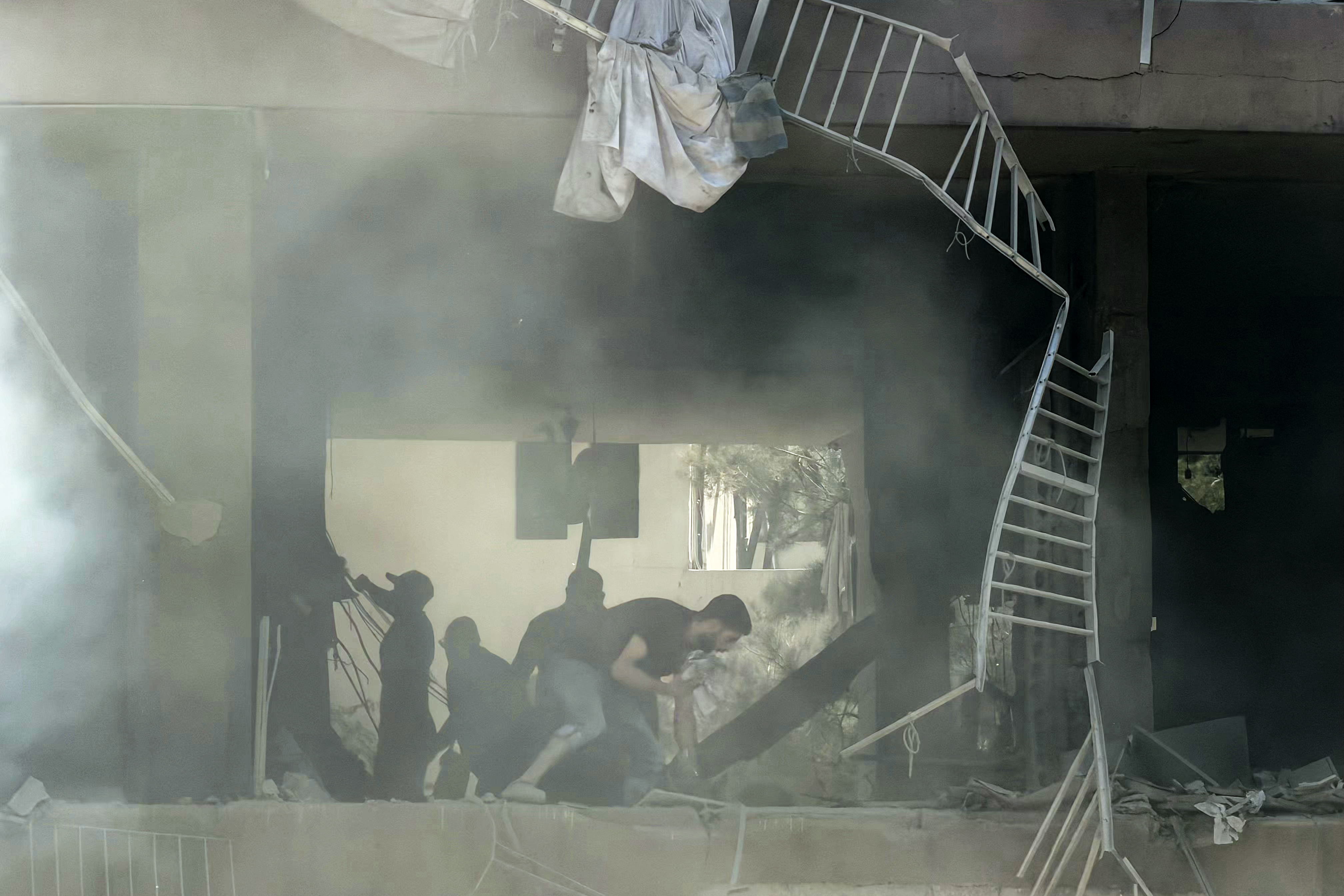
BEIRUT – The strike came on a Sunday afternoon, on a busy road lined with shops in the Ghobeiry district of Beirut’s southern suburbs. Israeli aircraft hit two apartments in two residential buildings, sending smoke and dust rising over the neighbourhood as people ran and debris covered the street. By the time Lebanon’s civil defence agency had finished its initial sweep, at least three people were dead and seven others wounded.
That casualty count from Lebanon’s National News Agency may not be final. What is now settled, at least for the moment, is the diplomatic consequence: Iran’s chief negotiator, Mohammad Bagher Ghalibaf, said within hours of the attack that there was “no point” in continuing peace talks with Washington. Tehran has insisted from the start that any deal with the United States must include a ceasefire in Lebanon. Israel’s strike on Ghobeiry answered that demand with airpower.
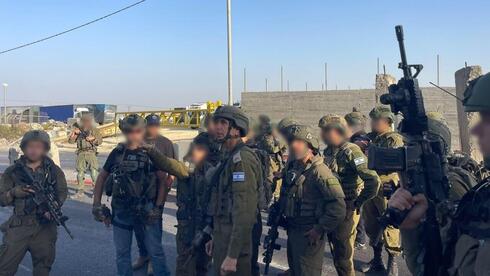
The Israeli military confirmed the operation and described it as a precision strike on a Hezbollah command centre in the Ghobeiry area – a densely populated stronghold of the Iran-backed group within the suburb known as Dahiyeh. Whether a command centre occupied the same building as the apartments where residents died, or merely stood nearby, could not be independently verified. The IDF stated that measures were taken before the strike to minimise civilian harm.
Prime Minister Benjamin Netanyahu’s office framed the operation in explicitly retaliatory terms, saying the military struck terrorist targets in Dahiyeh “in response to Hezbollah’s firing toward Israeli territory.” Hezbollah confirmed it had attacked Israeli military personnel with drones overnight. Two far-right Israeli ministers had publicly called for strikes earlier Sunday, citing what they called the Dahiyeh Doctrine – the strategy of holding civilian infrastructure in Hezbollah-controlled areas at risk as a deterrent.
Sunday’s attack was the second Israeli strike on Beirut’s southern suburbs in a week. The first, carried out last week, triggered a missile response from Iran before both sides pulled back. That exchange raised alarm in Washington and European capitals that the war, already spanning Lebanon, Gaza, and the residue of the Israeli campaign against Iran, was becoming impossible to contain. Brent crude surged past $97 a barrel on that earlier round of strikes, as markets absorbed the prospect of prolonged conflict threatening regional energy flows.
The Middle East Institute senior fellow Brian Katulis, as Al Jazeera reported, noted that multiple ceasefires had been breached since November 2024, making each new breach harder to walk back. The pattern is now familiar enough to have acquired a rhythm: Hezbollah fires into northern Israel, Israel strikes Dahiyeh, Iran threatens to respond, diplomats in Oman or Vienna rush to contain the fallout. What broke the rhythm on Sunday was the speed and directness of Ghalibaf’s statement. Rather than allowing hours or days for backchannels to absorb the shock, Iran’s chief negotiator stepped in front of the breakdown and named it.
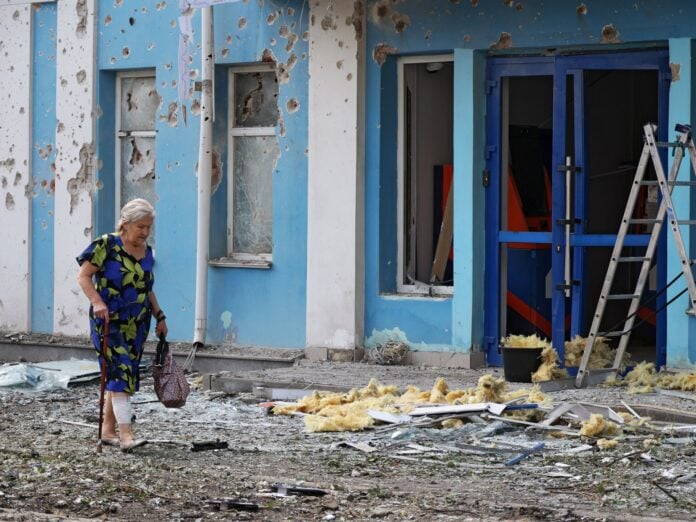
An AFP correspondent at the scene in Ghobeiry described people searching for survivors in the aftermath, panic spreading through an area along a commercial road that, until the aircraft arrived, had been going about its Sunday. The building’s structure was heavily damaged; debris filled the street. Whether the dead were residents, bystanders, or combatants is not yet established.
That uncertainty is part of what makes the Dahiyeh Doctrine so contested. Israel’s military doctrine holds that targeting infrastructure in areas where Hezbollah operates degrades the group’s capacity and signals deterrence. Critics, including UN agencies and the Lebanese government, argue the approach cannot be separated from its effects on civilians who live in the same streets. Lebanon’s army chief has repeatedly called for a cessation of strikes on populated areas. His appeals have not altered Israeli targeting decisions.
The timing of Sunday’s strike is itself a variable that no official statement has fully addressed. US and Iranian negotiators had been in preliminary contact over a framework that would, in Tehran’s formulation, require Israeli military operations in Lebanon to stop as a condition of any nuclear deal. That formulation had been rejected in earlier rounds, but had not been formally taken off the table. Ghalibaf’s statement on Sunday effectively takes it off the table – not because a deal was close, but because the political cost of continuing to negotiate while Dahiyeh burns has become too high for Tehran to absorb domestically.
Israel and Hezbollah have been in active conflict since March 2, when the Iran-backed group fired rockets at Israel following the killing of Iran’s supreme leader in earlier US-Israeli strikes. What started as a targeted retaliation cycle has since expanded into sustained operations across southern Lebanon, with Israel issuing forced displacement orders for dozens of towns. Earlier this week, Israel ordered all of Tyre to evacuate, then struck a housing block in the city, killing at least nine people.
Trump had warned Netanyahu that the United States could not indefinitely absorb the diplomatic costs of Israeli strikes on Lebanon’s capital. Earlier this month, he told Netanyahu he could be “on his own” if the Lebanese ceasefire collapsed entirely. After Sunday’s strike, Fortune reported that there was no immediate White House comment – a silence that carried its own message. Trump’s earlier warning to Netanyahu that Washington’s tolerance had limits now hangs over whatever comes next.
What Iran does next is the thing Ghalibaf’s statement did not specify. He declared talks pointless. He did not declare war. The space between those two positions is where three dead civilians in a Beirut shopping district now sit, waiting for an answer that nobody in the room – in Jerusalem, Tehran, or Washington – appears ready to give.