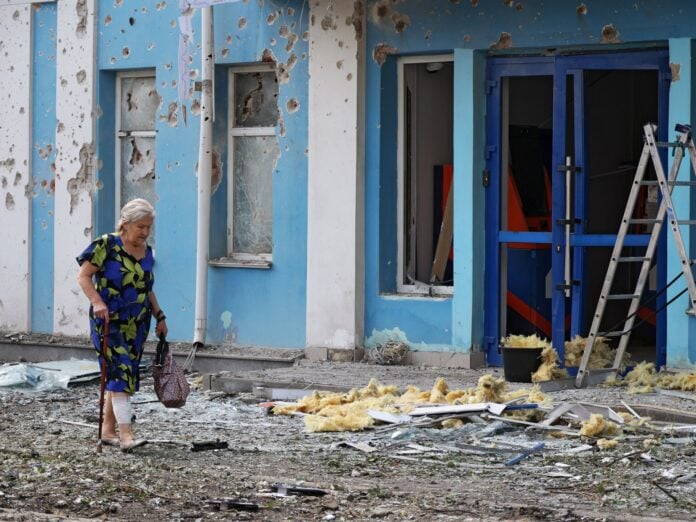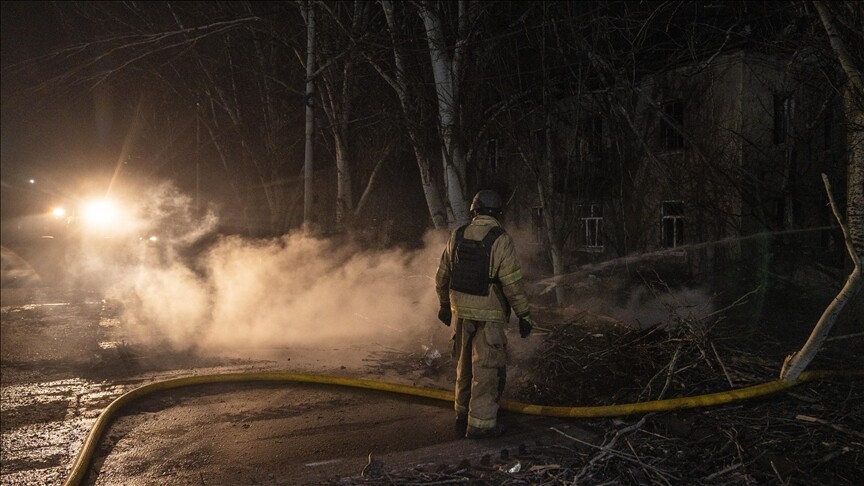

KYIV — In the village of Koloskovo, on the Russian side of the border with Ukraine, six people died overnight Sunday in what acting Belgorod Region Governor Alexander Shuvaev called a Ukrainian rocket strike. By Monday morning, Shuvaev had posted the toll on Telegram and moved on. Another four were wounded, including a 14-year-old who could not refuse hospitalization the way two of the adults did.
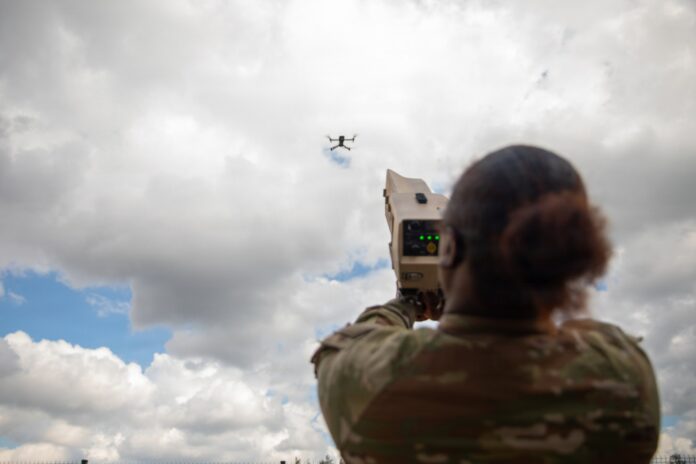
The exchange of fire that produced those deaths was not routine by any metric that has held for much of this war. Russia’s Defense Ministry said it intercepted 205 Ukrainian drones over Russian territory and Crimea during the same overnight window — a figure, if accurate, that would rank among the largest single-night drone campaigns Ukraine has launched since the conflict began.
Russia’s 205-interception claim carries its own set of caveats. Russian military announcements do not distinguish between drones destroyed in flight, those that were electronically jammed into the ground, and those that reached their targets. The number is a surveillance tool as much as a military one: projecting competence to a domestic audience while obscuring the precise damage any given night’s campaign inflicted. What is not disputed is the scale. Temporary flight restrictions were imposed at several southern Russian airports. A woman was killed in Astrakhan region when drones struck what officials described as an industrial facility.
Among the facilities hit overnight was at least one more belonging to Wildberries, Russia’s largest consumer e-commerce company. Since mid-July, Ukraine has conducted more than fifteen Wildberries drone strikes on logistics centers across multiple Russian regions — Moscow, Tambov, Leningrad, Crimea, and now Yekaterinburg and beyond. On August 7 alone, three drones penetrated air defenses to strike a Wildberries logistics center in Yekaterinburg, starting a roof fire and forcing an evacuation. “The facility was evacuated beforehand. Current deliveries are temporarily restricted and rerouted,” the company said afterward. Nobody was reported injured.
Kyiv’s official rationale for continuing to target a consumer retailer has not been formally stated. Ukrainian officials and commentators have asserted that Wildberries logistics infrastructure overlaps with the supply chains that feed Russia’s military procurement network — a claim Wildberries and the Kremlin deny. No Ukrainian government body has publicly specified which facilities it believes serve military purposes, on what evidence, and under what legal standard. The law of armed conflict requires that a civilian object be making an effective contribution to military action before it becomes a lawful target. Whether Wildberries logistics centers meet that threshold is a legal question Ukraine has declined to open to scrutiny.
The scale of Russia’s operations in Ukraine on the same night was orders of magnitude larger. Ivan Fedorov, Zaporizhzhia Region’s governor, reported that Russian forces had conducted 1,217 strikes on 60 settlements across his region in the preceding 24 hours. Two people were killed and three wounded. That ratio — 205 Ukrainian drones over Russia to more than 1,200 Russian strikes in one Ukrainian region alone — is among the most visible structural features of this war, and one of the least often named directly.
Russia’s response to both will be familiar. Moscow frames Ukrainian drone strikes on its territory as terrorism, the EU sanctions as illegal, and any civilian deaths on the Russian side as evidence of Western-backed aggression. None of those framings have been adjudicated before any tribunal that Russia has agreed to recognize.
Anadolu Agency reported, citing local authorities, that the Belgorod deaths could not be independently verified by international media — a standing caveat that applies to nearly all casualty figures in this conflict regardless of which side reports them.
What the overnight campaign’s scale signals about Ukraine’s operational production capacity is not publicly knowable. Ukraine’s domestic drone industry has expanded substantially since 2023, with local manufacturers partially compensating for Western delivery delays. Whether a 205-drone night represents a sustained tempo or a concentrated effort drawing down reserves is not something Kyiv has disclosed.
In Koloskovo, none of those strategic calculations mattered by Monday morning. The village is 24 kilometers from the Ukrainian border. It has been within range of Ukrainian fire throughout the conflict, as Belgorod residents have become accustomed to discovering. Shuvaev’s Telegram post ran three lines: the toll, the hospitalization status of the survivors, the damage to a structure and a vehicle. The remaining question — what the investigation will establish about the weapon, the trajectory, and the intent — had not been answered by Monday evening, and may not be answered at all in a way the public can see.