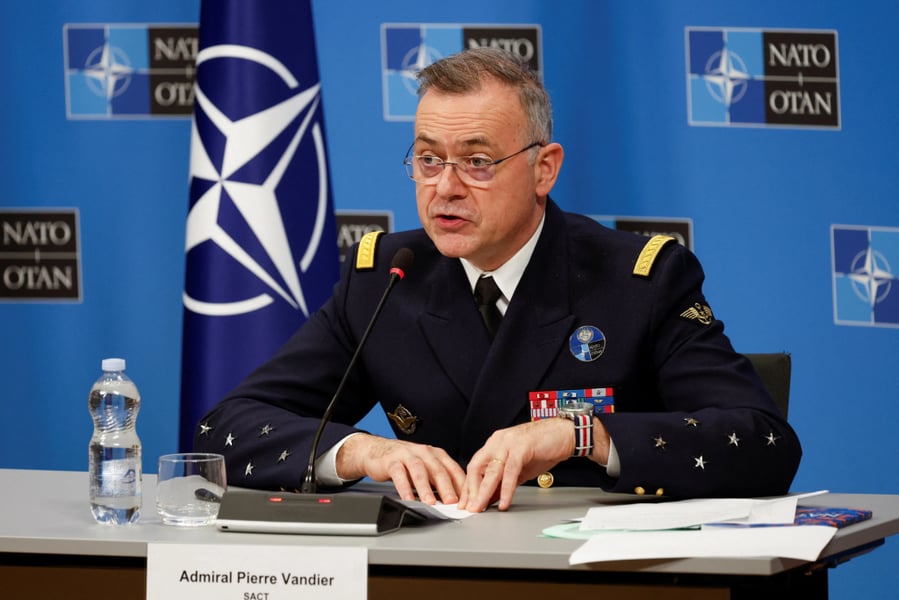

NATO’s top military transformation commander has publicly admitted that the Western alliance is falling behind in the race to adopt drones and artificial intelligence, exposing growing fears inside NATO that Russia’s rapid battlefield innovation is reshaping the future of modern warfare faster than Western militaries can respond.
Speaking after a NATO Military Committee meeting in Brussels on Tuesday, Admiral Pierre Vandier warned that alliance member states had reacted too slowly to the explosive growth of AI-powered warfare and drone warfare technologies that are now dominating conflicts from Ukraine to the Middle East.
“I think the nations are late in adopting some drones, adopting AI,” Vandier told reporters following the high-level meeting.
The unusually candid remarks from NATO’s Supreme Allied Commander Transformation reflect rising anxiety within the alliance over the speed at which modern warfare is evolving. Military strategists increasingly believe that the future battlefield will be defined less by traditional heavy weapons and more by autonomous drones, AI-assisted targeting systems, electronic warfare, satellite-linked intelligence networks, and low-cost precision strike capabilities.
The Ukraine conflict has accelerated this transformation dramatically.
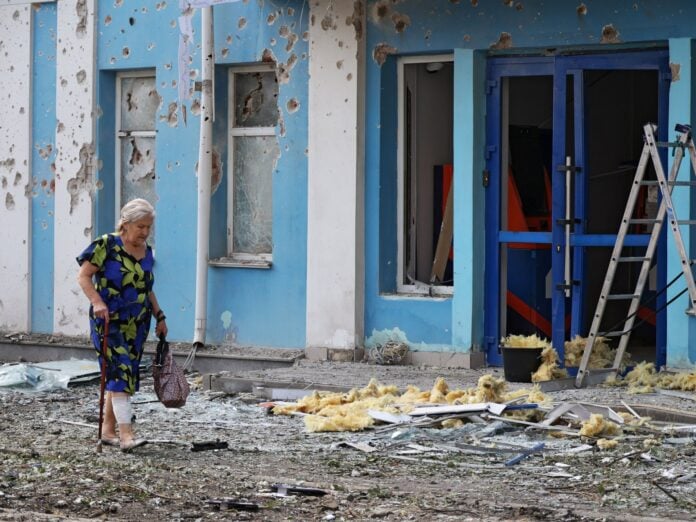
Russian and Ukrainian forces have both turned drone warfare into one of the central pillars of military operations. Thousands of unmanned aerial systems are now used daily for reconnaissance, artillery targeting, kamikaze strikes, logistics disruption, and electronic warfare missions. Military analysts say the conflict has effectively become a live laboratory for next-generation warfare.
Western defense officials are particularly concerned by Russia’s growing industrial-scale drone production and rapid adaptation cycles.
A report earlier this year citing Pentagon assessments suggested Russia may now be ahead of the United States in producing certain advanced drone systems, intensifying concerns across NATO capitals about the alliance’s technological preparedness.
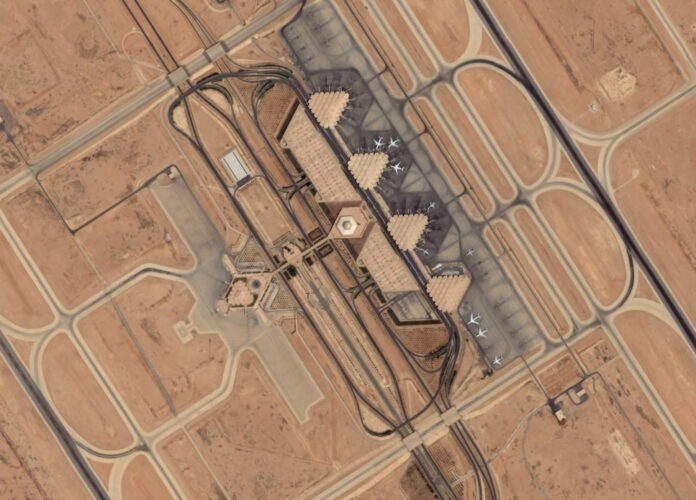
Vandier has repeatedly argued in recent months that NATO underestimated the strategic importance of drone warfare despite years of warning signs. He previously pointed to the 2019 attacks on Saudi Arabian oil facilities involving Iranian-designed Shahed drones as a major turning point that many Western governments failed to fully understand at the time.
Today, those same low-cost drone concepts have become central to modern battlefield operations.
According to NATO officials and defense experts, one of the alliance’s biggest problems is not necessarily access to technology itself but the inability of traditional procurement systems to adapt quickly enough.
Modern drone warfare evolves in months, sometimes weeks. By contrast, NATO defense acquisition programs often require years or even decades before systems become operational.
That gap has become increasingly dangerous as Russia accelerates drone production and battlefield innovation.
Recent intelligence assessments suggest Russia has dramatically expanded domestic drone manufacturing capabilities, producing large quantities of Shahed-type attack drones and rapidly integrating artificial intelligence into reconnaissance and targeting systems.
Russia has also moved toward institutionalizing drone warfare within its military structure.
Moscow recently established specialized Unmanned Systems Forces dedicated to drone warfare across air, land, and naval operations, signaling that the Kremlin now views autonomous systems as a permanent feature of future conflicts rather than a temporary wartime adaptation.
NATO officials fear the alliance risks falling into a dangerous cycle where expensive Western defense systems can be overwhelmed by large numbers of low-cost autonomous drones.
The economic imbalance has become one of the defining features of modern warfare.
In Ukraine, relatively cheap drones costing only a few thousand dollars have successfully destroyed armored vehicles and air defense systems worth millions. New interceptor drones developed by Ukrainian forces are even being used to shoot down incoming Russian attack drones at a fraction of the cost of traditional missile-based air defense systems.
That shift is forcing NATO to rethink long-standing military doctrines.
Military planners increasingly argue that future wars will not simply be won by possessing advanced technology, but by adapting faster than opponents on the battlefield.
Vandier has become one of NATO’s strongest advocates for adopting what he describes as Ukraine’s “adaptation DNA,” referring to the speed with which Ukrainian forces test, modify, and deploy new technologies under combat conditions.
“Deterring a Russian attack depends not just on NATO’s military forces, but on proof that alliance members can bring new technology to the fight as quickly as Moscow,” Vandier warned in earlier remarks this year in comments about how the alliance must speed up.
Inside NATO, the race to integrate artificial intelligence into military systems has now become a top strategic priority.
Alliance projects currently under development include AI-assisted surveillance networks, autonomous reconnaissance systems, counter-drone strategy platforms, and battlefield intelligence processing tools designed to reduce decision-making times during combat operations.
NATO’s Allied Command Transformation has also launched innovation programs focused on AI-driven bomb detection systems and autonomous drone swarms aimed at countering Russian glide bombs and mass drone attacks.
Still, defense experts warn that Europe remains heavily dependent on US technological infrastructure in artificial intelligence and advanced computing.
That dependency has sparked concerns among European NATO members that they could eventually fall behind both the United States and China in the global AI arms race.
Analysts say the challenge extends beyond drones alone.
Future conflicts are expected to involve AI-assisted cyber warfare, autonomous naval systems, satellite-linked combat networks, robotic battlefield logistics, and machine-learning-driven intelligence analysis.
Military modernization specialists increasingly believe that artificial intelligence will fundamentally transform command structures, battlefield communications, and targeting systems in ways comparable to the introduction of air power or nuclear weapons in previous eras.
For NATO, however, the biggest challenge may be institutional rather than technological.
The alliance was built around traditional military structures designed for slower-moving industrial warfare. Modern AI-driven conflict operates at software speed, where innovation cycles can change battlefield realities almost overnight.
That reality has created growing pressure inside NATO for faster experimentation, closer cooperation with private technology firms, and more flexible procurement systems linked to defense innovation.
Vandier acknowledged that the alliance now faces a race against time.
The NATO commander insisted member states understand the seriousness of the situation and are beginning to accelerate adoption of drone and AI technologies, though he admitted the alliance still has significant ground to cover.
As conflicts in Ukraine and the Middle East continue reshaping military doctrine worldwide, NATO’s public recognition that it has fallen behind in key areas of drone and artificial intelligence warfare represents one of the clearest signs yet that the global balance of military power is entering a new technological era.
—Inputs from Sputnik.