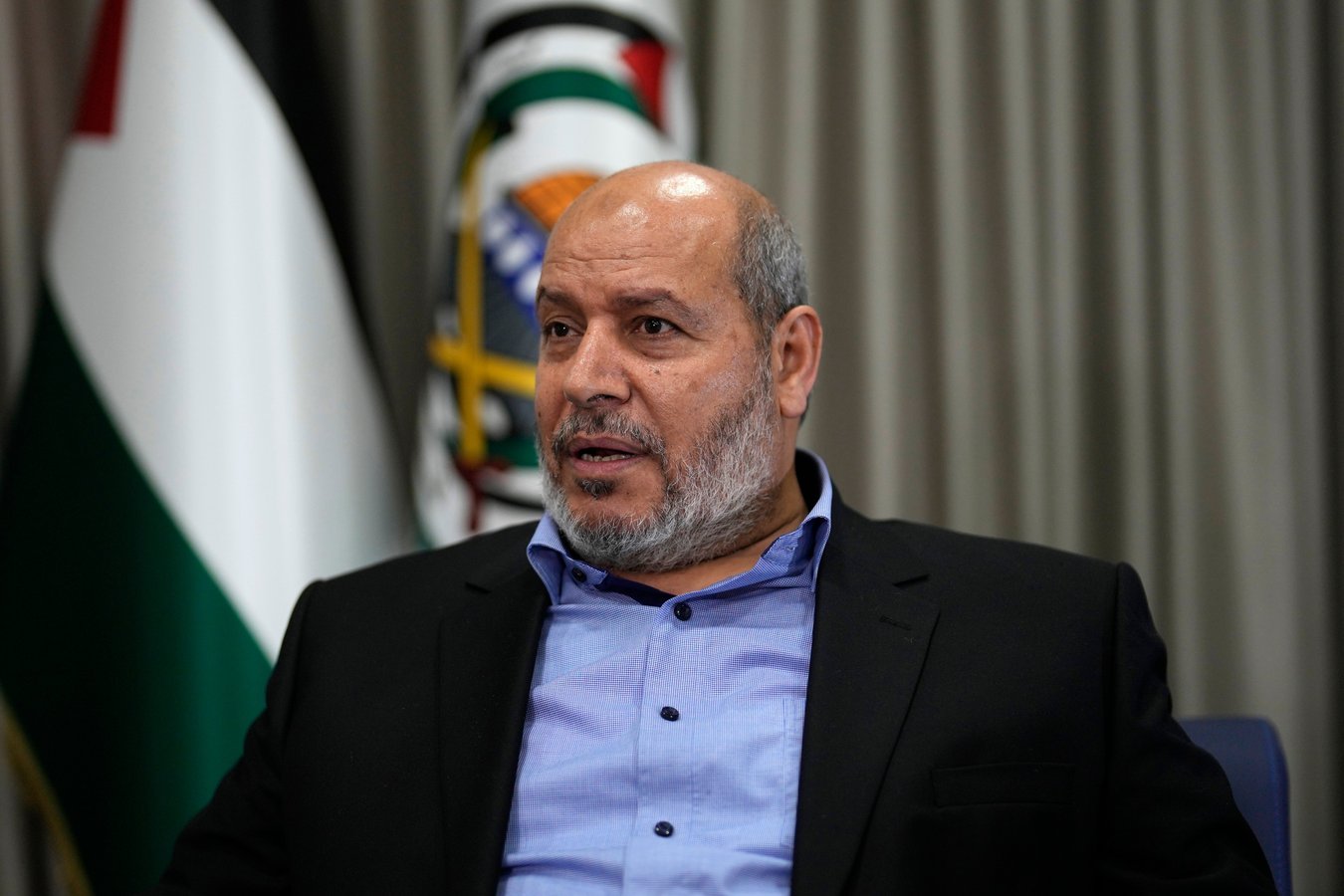

DOHA – By a single vote, a man who has buried four of his children became the leader of Hamas.
Khalil al-Hayya, the group’s Gaza-rooted chief negotiator and exiled deputy leader, was elected Hamas’s new overall political leader on Sunday, winning 35 of 69 votes cast in a secret session of the organization’s politburo. His rival, former political bureau chief Khaled Meshaal, received 34 votes. The margin, one vote, fills a vacancy left nine months ago by the killing of Yahya Sinwar, and says as much about the organization’s divisions as it does about its direction.
The vote took place from exile, with Hamas leaders scattered across Doha, Istanbul, and other regional capitals. It was, in that sense, a leadership selection conducted at a remove from the land it claims to govern. But the result was not: al-Hayya is a Gaza man, born in the al-Shati refugee camp, whose credibility within the movement rests on his proximity to the territory and its suffering, not on the financial networks and diaspora connections that Meshaal represents.
That distinction is the central thing about al-Hayya’s appointment. He is the continuity candidate: not a reformer, not a hard-liner seeking to bury the negotiations channel that kept Gaza from an earlier catastrophe, but a figure who has lived in the space between resistance and diplomacy long enough to be trusted by both.
His international profile is built primarily around the October 2024 talks, when he sat across the table from Jared Kushner and Steve Witkoff, the Trump administration’s senior envoys, negotiating over the bodies of the dead. Steve Witkoff acknowledged the personal dimension of those sessions publicly. “We expressed our condolences to him for the loss of his son,” Witkoff told reporters. “He mentioned it, and I told him that I had lost a son.” Two of al-Hayya’s children were killed before October 7, 2024. Two more have died since.
The detail is not incidental. Al-Hayya is the negotiating face of an organization that has lost everything individually while continuing to assert itself institutionally. His election as overall leader encodes that paradox into Hamas’s formal hierarchy.
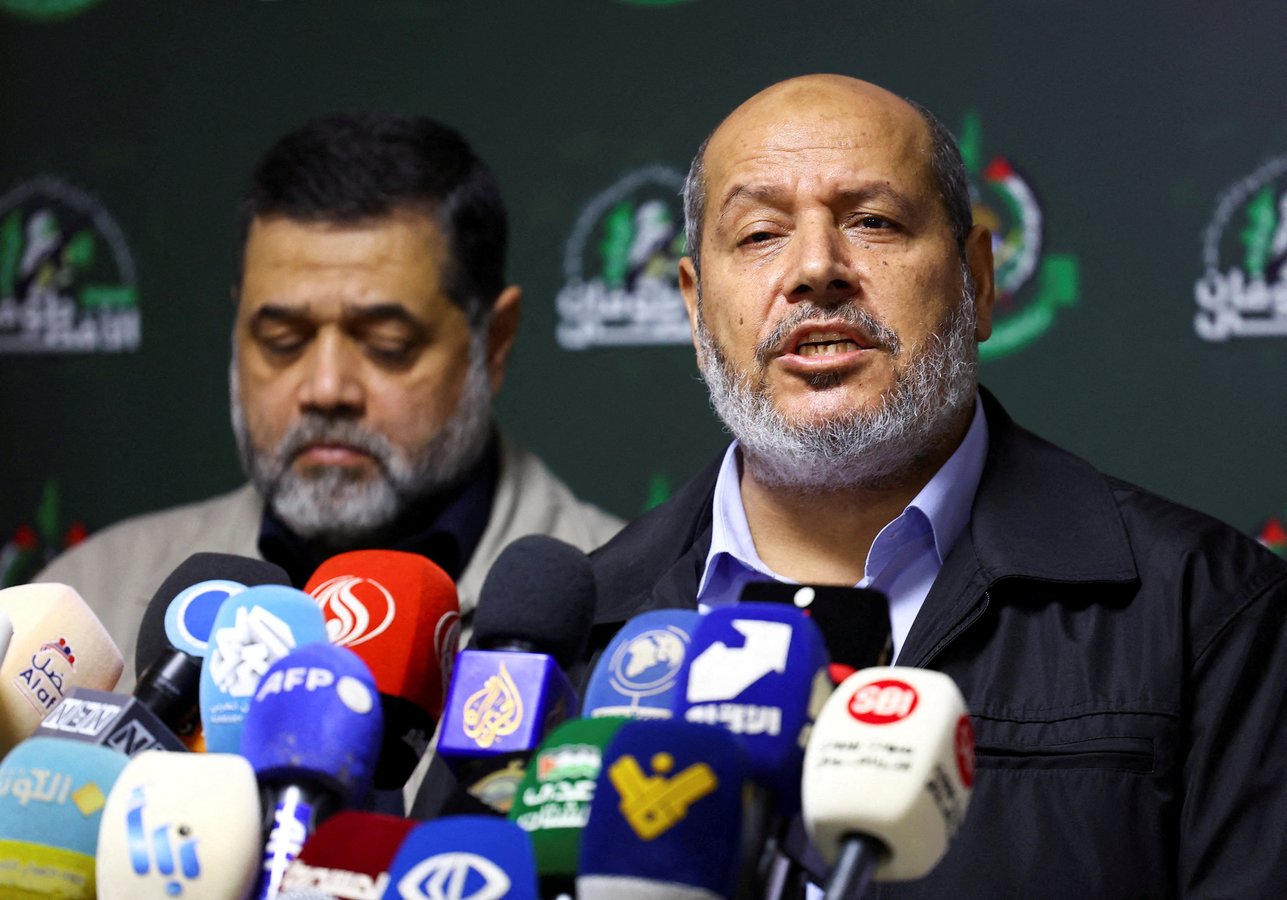
Muhammad Shehada, a researcher at the European Council on Foreign Relations, described al-Hayya’s dual positioning as the reason the politburo chose him over Meshaal. “He’s seen as a very organic part of the Iranian-styled Axis of Resistance,” Shehada told Al Jazeera, “but he’s equally comfortable pursuing negotiations.” That combination of resistance credibility and diplomatic fluency is what a movement navigating a ceasefire needs from its leader.
Khaled al-Hroub, a Palestinian political analyst, read the appointment as carrying two distinct messages. “One is that Hamas’s internal structure, its decision-making capacity, and its leadership processes are still intact despite the war and the assassinations.” The second message was geographic. “Gaza still enjoys the lion’s share in decision-making,” al-Hroub said, a notable claim given that Hamas’s Gaza leadership has been physically decimated by the Israeli campaign that began in October 2023.
Al-Hayya’s election does not resolve the fundamental political problem facing Gaza. The ceasefire, brokered with American involvement and holding since earlier in 2026, has not produced reconstruction. Nine months in, Gaza remains without a functioning government and without a plan for rebuilding, caught in a deadlock between competing international frameworks and Israel’s refusal to allow the Palestinian Authority full control of the territory. As this publication reported in July, the absence of a governance framework has left the ceasefire’s most basic promises unfulfilled.
Al-Hayya takes the leadership in an environment where Hamas’s relevance as a political actor is contested by the same parties it must negotiate with. Israel has repeatedly stated it will not engage with Hamas as a governing body. The United States position has fluctuated. And the broader regional context, in which Washington and Tehran have increasingly shaped Middle East diplomacy through bilateral channels, means that the specific political future of Gaza has been left behind as Washington and Tehran reshape the region around it.
He survived an Israeli assassination attempt in Doha in 2025. He survived the killing of Sinwar, Ismail Haniyeh, and Muhammad Deif, three figures who collectively built Hamas into its current form. He was the group’s principal ceasefire negotiator when the war was at its most intense. Now he is, by the thinnest possible margin, its leader.
Thirty-five to thirty-four is not a mandate. It is a choice made under duress, by an organization in exile selecting the man it trusts to keep the movement alive long enough for its political future to take shape. Whether al-Hayya’s comfort with both resistance and diplomacy gives him room to maneuver, or whether it leaves him distrusted by both camps, is the question his tenure will answer.
For now, the gap that no one has filled since Sinwar’s killing has a name. What that name means for Gaza, the ceasefire, and the long struggle over who speaks for the Palestinians is not something any single vote can decide. But a decision has been made, and it was the closest possible one. Al Jazeera’s analysis of the election examines what al-Hayya’s win means for the broader Palestinian political landscape.