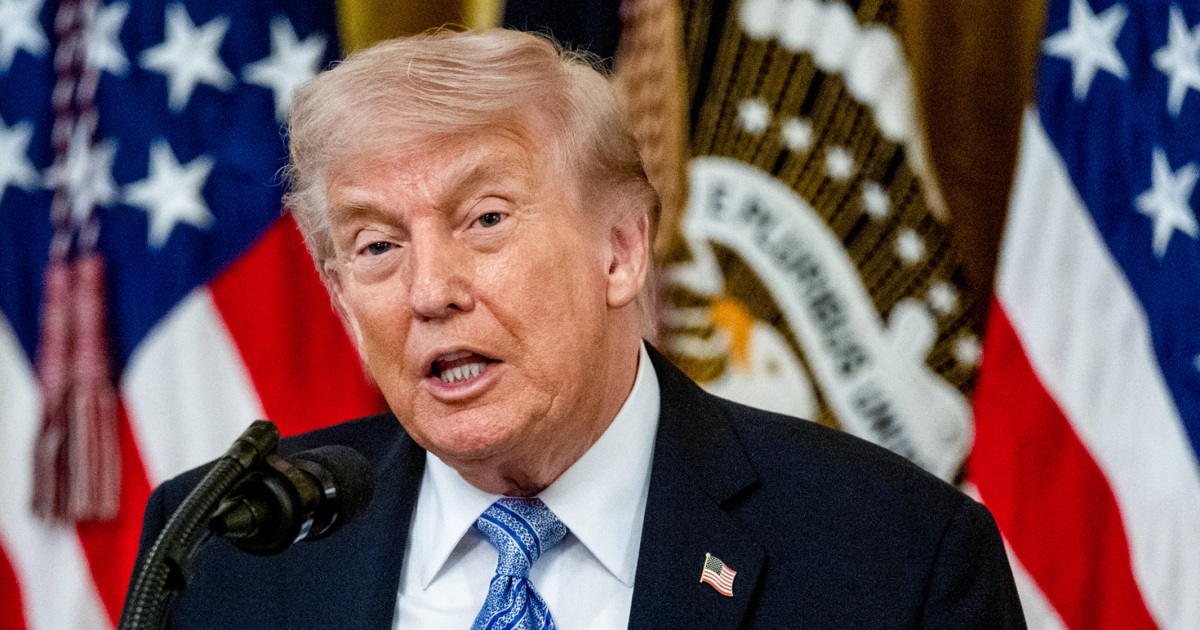

WASHINGTON — There is a word for what is happening in the United States, and it is not a complicated one. For seventy years, every president who occupied the Oval Office — Republican and Democrat alike — divested, disclosed, and erected walls between personal fortune and public power. They did not do this because the law required it in every particular. They did it because the presidency is not a business opportunity. Donald Trump has decided, across two terms and with mounting brazenness in the second, that the conventions of his predecessors were optional enhancements he could simply decline to adopt.
The evidence arrived in a 113-page filing with the U.S. Office of Government Ethics on May 12. Trump or his advisers executed 3,642 securities transactions in the first quarter of 2026 alone. That translates to roughly 58 trades for every trading day in the quarter, nine trades for every hour the markets were open. The companies involved read like a procurement registry for the executive branch: Nvidia, Microsoft, Amazon, Meta, Intel, Palantir, Boeing, Oracle. Many of these corporations either contract with the federal government or operate under regulatory frameworks that the president’s own administration controls.
The timing of specific transactions is where the conflict of interest stops being abstract. Democrats had already raised alarms when earlier figures emerged. The full scope became clear when disclosures reviewed by NOTUS and CNBC showed Trump’s accounts acquired between $500,000 and $1 million in Nvidia securities on January 6. Seven days later, the Commerce Department formalized a new framework authorizing the sale of Nvidia’s H200 artificial intelligence processors to Chinese buyers, the same chips that had been explicitly banned from export under prior export control rules. A second Nvidia purchase of between $1 million and $5 million followed on February 10. One week later, Nvidia announced a major computing deal with Meta. The White House said Trump’s assets are managed by a trust run by his children and that there are no conflicts of interest, as reported. The filing does not describe a blind trust in any conventional sense of that term.
“This is an insane amount of trades,” Matthew Tuttle, chief executive of Tuttle Capital Management, told CNBC. “The activity looks more like a hedge fund running automated trades than a personal account.” Don Fox, the former acting director of the Office of Government Ethics, told NBC News the volume and timing of the transactions were “completely unprecedented” in the history of the modern presidency.
The stock disclosures are striking, but they represent only one strand of a larger pattern. In January 2026, four days before Trump’s inauguration, a firm associated with Sheikh Tahnoon bin Zayed Al Nahyan, Abu Dhabi’s national security adviser and one of the world’s most powerful state investors, purchased a 49% stake in World Liberty Financial, the Trump family’s cryptocurrency venture. Eric Trump signed the agreement. According to The Wall Street Journal, which reviewed internal corporate documents, $187 million flowed to Trump family entities through the deal, with at least $31 million going to entities tied to Steve Witkoff, Trump’s own Middle East envoy. Months later, the Trump administration approved the sale of 500,000 advanced Nvidia AI chips to the UAE annually, with a fifth designated for Tahnoon’s own company, G42. Per news reports, congressional Democrats immediately characterized the arrangement as potential pay-for-play.
“A foreign power, in essence, has co-opted the foreign policy of the United States through backroom crypto deals that hand over access to sensitive U.S. technology while enriching the families of the President and senior officials,” Sen. Elizabeth Warren, the Massachusetts Democrat who serves as ranking member of the Senate Banking Committee, said in a statement. “To call this corruption does not do justice to the scale of harm that these deals will do to our national security.”
Warren is not alone in that assessment. Reporting on the family’s broader crypto empire has documented how Trump’s ventures attracted investment from foreign nationals and state-linked entities across the Gulf, with the family’s crypto profits estimated at roughly $3 billion between August 2025 and January 2026. In May, Warren told the Senate Banking Committee that the president and his family had raked in at least $1.4 billion from crypto deals in just one year in office, and that a bipartisan crypto market structure bill moving through the committee contained zero provisions to address it.
There is a structural reason for this silence, and it goes beyond partisanship. What the Trump presidency has exposed is that the American system’s ethical safeguards were built on norms rather than law. The blind trust, the divestiture, the financial firewall between a president’s portfolio and his policy decisions were conventions adopted by good-faith actors who believed the appearance of independence mattered as much as independence itself. They were not statutes with criminal penalties. The Emoluments Clause of the Constitution, which explicitly bars federal officeholders from receiving payments from foreign states, has been effectively rendered unenforceable after the Supreme Court ruled that Trump possessed broad immunity for actions taken as president. Related questions about the reach of that immunity have surfaced across multiple domains of the second term.
That immunity ruling reflects a dynamic that students of democratic backsliding have observed across multiple countries: autocracy and corruption are not separate phenomena. They advance together, each making the other more durable. The autocrat acquires the ability to shield his corruption from legal accountability. The corruption, in turn, generates the resources and loyalties that cement his grip on power. Viktor Orbán’s Hungary is the most cited recent example. Drone footage of the Orbán family’s country estate circulated widely before the Hungarian parliamentary elections in April 2026, in which the governing Fidesz party suffered a significant reversal. Orbánist corruption, it turned out, was not normalized. It became the instrument of his undoing.
Whether American institutions can produce a comparable reckoning is a question that honest observers approach with less confidence. Republicans, who spent four years denouncing what they called the Biden family’s financial dealings, have declined to call hearings or issue statements about the president trading in companies his administration regulates. The Democratic minority in both chambers can generate attention but not subpoenas. The Justice Department operates under an attorney general confirmed by the same majority that sees no conflict of interest in 3,600 trades by a sitting president. According to reports, even bipartisan legislation that would restrict presidential stock trading has struggled to find a path to the floor. And the Supreme Court has already answered, for now, the question of whether a president can be held accountable for official acts.
The danger is not merely that this specific conduct goes unpunished. It is that it becomes normalized, that citizens come to accept the presidency as a revenue stream for its occupant, and that foreign powers come to understand that investment in a president’s private ventures is a reliable mechanism for shaping American policy. The Q1 2026 disclosures do not merely reveal a conflict of interest. They reveal that under the Trump presidency, conflict of interest has become the operating system itself. Citizens cannot know whether a given tariff, a regulatory ruling, or a government investment decision reflects the national interest or the president’s portfolio.
The framers designed the Emoluments Clause precisely because they understood that a republic whose leader profits from his office is no longer, in any meaningful sense, a republic. They could not have anticipated cryptocurrency ventures co-owned by Gulf intelligence chiefs, or a president filing 113 pages of stock trades with a government ethics office that lacks the power to do anything about them. But they knew the principle. The question now before American democracy is whether anyone with the power to enforce it still does.