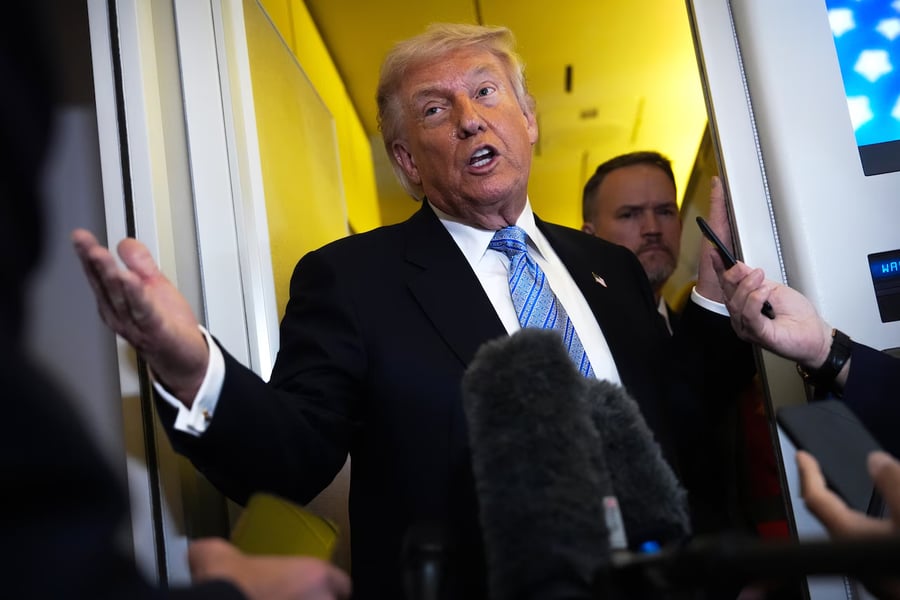

President Donald Trump’s extraordinary settlement with the Internal Revenue Service has triggered a political and legal firestorm across Washington after the Department of Justice inserted a controversial clause that could effectively block future audits into Trump, his family, and their sprawling business empire.
The unprecedented agreement, announced this week, stems from Trump’s IRS lawsuit against the IRS over the leaking of his confidential tax records during his first presidency. But what began as a legal dispute over privacy violations has rapidly evolved into one of the most controversial executive actions in modern US political history.
At the center of the outrage is a one-page DOJ addendum quietly released after the settlement was finalized. The document states that the United States government is “FOREVER BARRED AND PRECLUDED” from conducting audits, investigations, examinations, or enforcement actions tied to tax filings made before May 19, 2026 by Trump, his family members, trusts, companies, and subsidiaries.
Legal scholars, ethics watchdogs, and lawmakers from both parties say the provision could create an unprecedented shield around Trump’s financial affairs while undermining the independence of the IRS itself.
The Justice Department insists the agreement is lawful and merely part of a standard settlement process intended to fully resolve claims between both parties. Acting Attorney General Todd Blanche defended the arrangement, saying the administration was correcting years of political “weaponization” against Trump and his allies.
But critics argue the deal goes far beyond a normal legal settlement.
“This is one of the single most corrupt acts in American history,” Citizens for Responsibility and Ethics in Washington president Donald Sherman told The Washington Post, pointing to the extraordinary conflict of interest created by a sitting president negotiating with agencies under his own control.
The settlement also establishes a massive anti-weaponization fund, which the DOJ says will compensate individuals who believe they were unfairly targeted by federal investigations, prosecutions, or government agencies during previous administrations.
According to the Justice Department, the fund will operate until the end of Trump’s current term and will be administered by a five-member board appointed by the attorney general. Claimants can seek financial compensation or formal apologies from the federal government.
The amount itself, $1.776 billion, is viewed as a symbolic reference to the year 1776 and has become a rallying point for Trump supporters who claim conservative figures were systematically targeted by federal institutions during the Biden years.
Yet opponents describe the fund as a taxpayer-backed political slush fund designed to reward Trump allies and potentially benefit individuals connected to the January 6 Capitol riot.
The controversy has already fractured Republicans in Congress.
Senate Republicans reportedly held tense closed-door meetings with Blanche this week seeking explanations over the legality, oversight, and political implications of the fund. Senate Majority Leader John Thune publicly admitted that many Republican senators were uneasy with the arrangement.
The backlash became so severe that Senate leadership postponed movement on a major immigration enforcement package after lawmakers demanded answers regarding the Anti-Weaponization Fund and its connection to Trump’s IRS settlement.
Democrats have escalated their attacks, accusing the administration of using taxpayer money to protect Trump’s finances while rewarding loyalists.
Senate Finance Committee ranking member Ron Wyden argued the settlement may violate federal laws prohibiting executive branch interference in IRS audits. Other Democrats have warned that the agreement could establish dangerous constitutional concerns where future presidents use executive power to shield themselves from scrutiny.
Watchdog groups have also warned that IRS employees may now face legal uncertainty if they attempt to continue investigations covered by the settlement.
Under federal law, executive branch officials are generally prohibited from ordering the IRS to terminate audits or investigations. Critics argue Trump effectively circumvented that safeguard through a settlement negotiated by political appointees loyal to his administration.
The case itself emerged from the politically explosive leak of Trump’s tax returns in 2019 by former IRS contractor Charles Littlejohn, who later pleaded guilty to unlawfully disclosing tax information belonging to Trump and other wealthy Americans.
Trump and his sons, Donald Trump Jr. and Eric Trump, sued the IRS and Treasury Department earlier this year, claiming the leak caused massive reputational and financial harm.
Before the settlement was reached, a federal judge had ordered both parties to explain whether the lawsuit itself represented a legitimate legal dispute, given that Trump ultimately oversees the agencies involved.
That question disappeared after Trump voluntarily dismissed the lawsuit as part of the agreement announced by the DOJ.
Legal questions surrounding the structure of the deal could make it extremely difficult to challenge in court.
Because the lawsuit was dropped before judicial review of the settlement terms, critics may struggle to find legal standing to overturn the agreement or stop distributions from the compensation fund. Reuters reported that constitutional scholars and former IRS officials believe court challenges face major procedural hurdles.
Nevertheless, lawsuits have already begun.
Two police officers who defended the US Capitol during the January 6 riot filed a federal lawsuit arguing the fund is unconstitutional and could endanger their safety if individuals connected to political violence receive taxpayer-funded compensation.
At least one formal claim has already been submitted.
Former Trump adviser Michael Caputo reportedly requested $2.7 million in damages, arguing that government institutions had been “weaponized” against him and his family during investigations tied to Russian election interference allegations.
The settlement has also reignited broader debates about presidential immunity, executive power, and the future independence of federal law enforcement agencies.
Some constitutional experts warn that the agreement could normalize a system where presidents use the DOJ and Treasury Department to settle personal legal disputes while controlling the agencies involved.
Others argue the settlement reflects Trump’s broader effort to dismantle what he describes as politically weaponized federal institutions.
For Trump’s supporters, the deal represents long-awaited retaliation against agencies they believe unfairly targeted conservatives, business allies, and political outsiders over the past decade.
For critics, however, the settlement marks a historic escalation in the fusion of presidential power, personal financial interests, and federal law enforcement authority.
The growing corruption firestorm now threatens to deepen Trump’s legal and political troubles despite his ongoing political comeback.
Meanwhile, mounting legal hurdles and fears of a wider constitutional crisis are intensifying scrutiny inside Washington.
The political fallout is still growing, and with lawsuits mounting alongside bipartisan scrutiny in Congress, Trump’s IRS settlement may become one of the defining constitutional battles of his second presidency, pushing his administration into an even deeper crisis.