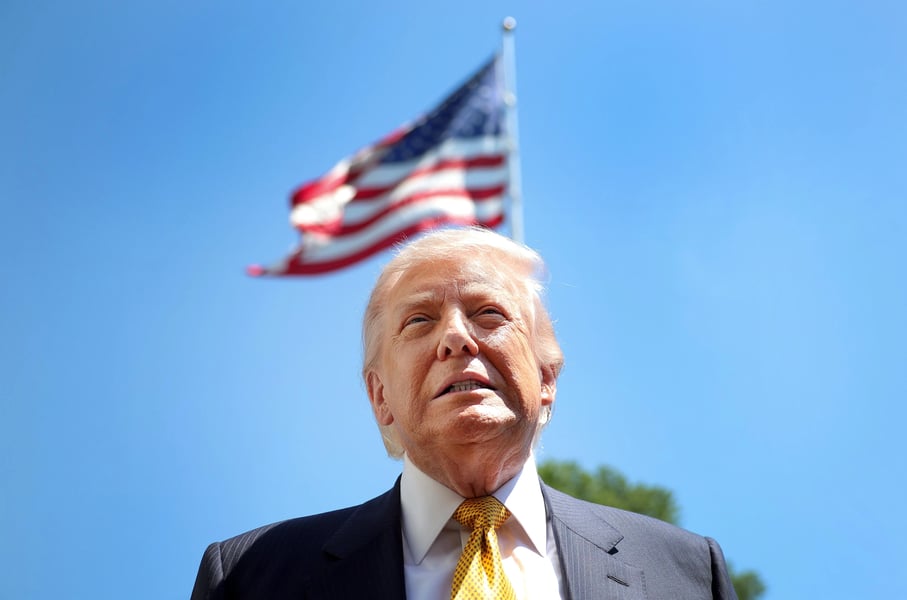

US President Donald Trump has agreed to drop his massive $10 billion lawsuit against the Internal Revenue Service in exchange for the creation of a controversial federal compensation program that critics say could redefine how presidential power is used in America. The agreement, announced Monday by the Justice Department, establishes what officials are calling the Anti-Weaponization Fund, a government-backed program worth roughly $1.7 billion intended to compensate people who claim they were unfairly targeted by federal investigations during the Biden administration.
The settlement immediately ignited outrage across Washington, with legal scholars, ethics watchdogs, and Democratic lawmakers warning that the arrangement blurs the line between the presidency and the federal justice system in ways the country has never seen before. Critics argue the deal effectively allows a sitting president to negotiate a politically favorable settlement with agencies that ultimately answer to his own administration.
The lawsuit itself centered on leaked Trump tax records, which became public years earlier after former IRS contractor Charles Littlejohn accessed and disclosed financial records connected to Trump and other wealthy Americans. Littlejohn was later sentenced to prison for the leak, but Trump continued to pursue legal action against the IRS and the Treasury Department, claiming the disclosures caused severe financial and reputational harm.
Under the terms of the settlement, Trump and members of his family will not directly receive financial compensation from the new fund, according to administration officials. Instead, the Justice Department says the program will establish a formal process through which Americans claiming political persecution or “government weaponization” can seek financial redress and public apologies.
The language surrounding the program reflects one of the defining narratives of Trump’s political movement: that federal agencies were used as political tools against conservatives, Trump allies, and opponents of the Biden administration. The administration insists the initiative is intended to restore public trust in government institutions after years of alleged abuse.
But opponents say the fund could become a mechanism for rewarding political loyalty while punishing critics of the White House. Several reports suggest individuals connected to investigations surrounding January 6, the Russia inquiry, or high-profile federal prosecutions could attempt to seek compensation through the program. The controversy has also revived broader debates over weaponize corruption against Trump narratives dominating American politics.
The controversy is especially intense because the deal bypasses Congress entirely. Normally, large federal compensation programs involving taxpayer money require legislative approval or lengthy judicial processes. In this case, the arrangement emerged through a settlement negotiated directly between Trump’s legal team and the Justice Department.
House Democrats quickly condemned the move. Representative Jamie Raskin described the initiative as a “slush fund” for Trump allies, while ethics groups warned the settlement may face constitutional challenges in federal court.
Legal analysts say the settlement may have also helped the administration avoid a politically dangerous courtroom battle over whether a sitting president can effectively sue his own government while controlling the agencies involved in the case. Reports noted that federal judges had already raised concerns about whether the lawsuit represented a legitimate legal dispute or a conflict-ridden proceeding lacking true adversarial independence.
The timing of the settlement is also politically significant. Trump has spent years arguing that federal law enforcement agencies, prosecutors, and intelligence officials were weaponized against him and his supporters. Since returning to power, the Trump administration has aggressively pursued investigations into what it calls politically motivated prosecutions and abuses of government authority during previous administrations.
Supporters of the initiative argue the fund represents overdue accountability after years of controversial investigations targeting conservatives, anti-establishment activists, and Trump associates. Conservative commentators have framed the agreement as symbolic proof that federal institutions mishandled Biden-era investigations tied to Trump and his allies.
Critics, however, see something far more dangerous developing. constitutional scholars warn the settlement could establish a precedent where future presidents use executive power to financially reward supporters under the banner of correcting political grievances. Some watchdog groups argue the arrangement risks transforming the Justice Department into an instrument for partisan compensation rather than neutral law enforcement.
The dispute also revives broader debates over transparency, tax privacy, and political accountability in America. Trump’s tax records became one of the most contentious political issues of the past decade, fueling investigations, congressional battles, and media scrutiny over his finances. The release of those records intensified pressure on Trump during earlier election cycles and became central to broader questions about presidential disclosure norms.
Critics say the settlement adds to growing Trump ethics controversies surrounding the expanding use of executive authority. Others argue the administration is increasingly shaping policy around political loyalty and grievance-based governance.
According to Justice Department statements, the fund will be overseen through a formal claims process managed by appointed commissioners. The administration says the structure is intended to prevent political bias and ensure applicants meet legal standards before compensation is approved.
Yet skepticism remains widespread, especially because the fund arrives amid an already polarized political climate where accusations of “lawfare,” political retaliation, and selective prosecution dominate public discourse. Analysts warn the controversy could deepen public distrust toward institutions already struggling with declining credibility.
The settlement may also create new legal complications for the White House itself. Advocacy groups and legal organizations are reportedly exploring challenges that could question whether executive branch officials have the authority to create such a fund without congressional authorization. Others argue the arrangement could violate constitutional protections designed to prevent presidents from benefiting politically or institutionally from federal power.
Despite the backlash, Trump supporters are portraying the agreement as one of the administration’s biggest victories in its broader campaign against what it describes as entrenched bureaucratic abuse. The episode has become part of a wider Trump’s political strategy centered on portraying federal agencies as hostile institutions targeting anti-establishment movements.
Meanwhile, some Republicans privately fear the controversy could trigger a larger Republican backlash if courts eventually rule that the compensation program exceeded executive authority.
The White House insists the program is not about revenge, but accountability. Officials argue the settlement acknowledges real institutional failures that damaged public trust and unfairly harmed Americans caught in politically charged investigations.
Still, critics maintain the administration faces mounting questions surrounding transparency and the politicization of federal power. Whether the program survives the inevitable legal and political challenges ahead may ultimately determine how future administrations interpret presidential authority, executive power, and the boundaries of political justice in the United States.