
OTTAWA — For workers on the assembly lines in Windsor, Ontario — where Ford and Stellantis plants sit a bridge-length from Detroit — the announcement that arrived Monday on Truth Social was not an abstraction. President Donald Trump has chosen to double down on Canada, threatening to idle factories on both sides of the border by imposing the kind of tariffs that no allied government in living memory has absorbed without a political rupture.
Trump announced he will impose 50 percent tariffs on Canadian automobiles and steel effective January 1, 2027, doubling existing levies after trade negotiations with Ottawa collapsed over the weekend. For the first time, he extended those tariffs to Canadian auto parts — a category that previously faced no levy and one that, industry executives warn, is the connective tissue holding North American vehicle production together. The announcement landed after a round of talks between US and Canadian trade representatives ended Saturday without agreement.
Auto stocks fell sharply. Stellantis dropped 4.7 percent, Ford Motor Company shed 3.2 percent, and General Motors fell 1.1 percent. Toyota and Honda, both of which operate Canadian plants supplying US dealerships, declined 1.5 and 2.1 percent respectively. The broader US stock market decline on Monday extended well beyond the auto sector as investors began repricing exposure to North American manufacturing supply chains.
“Build in the U.S. and there are ZERO TARIFFS,” Trump wrote on Truth Social. “Canada will be treated like a State no longer.” Treasury Secretary Scott Bessent told reporters that Trump “wants Canada to come to the table and negotiate in good faith” — without specifying what terms the White House considers acceptable or what Canadian concessions it is actually seeking. That absence of specificity is not a minor oversight. It is the central unknown in a dispute that will determine whether hundreds of thousands of jobs on both sides of the border are disrupted or destroyed.
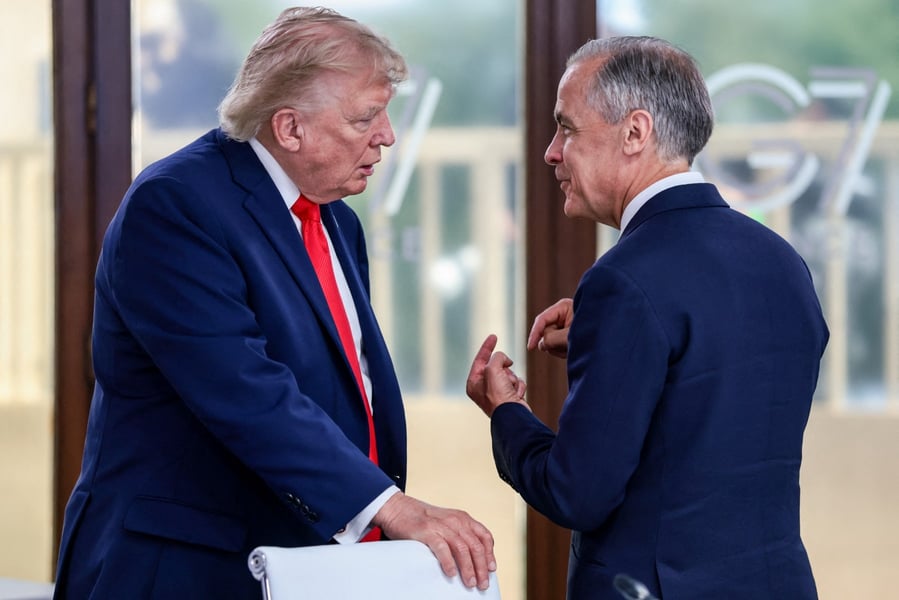
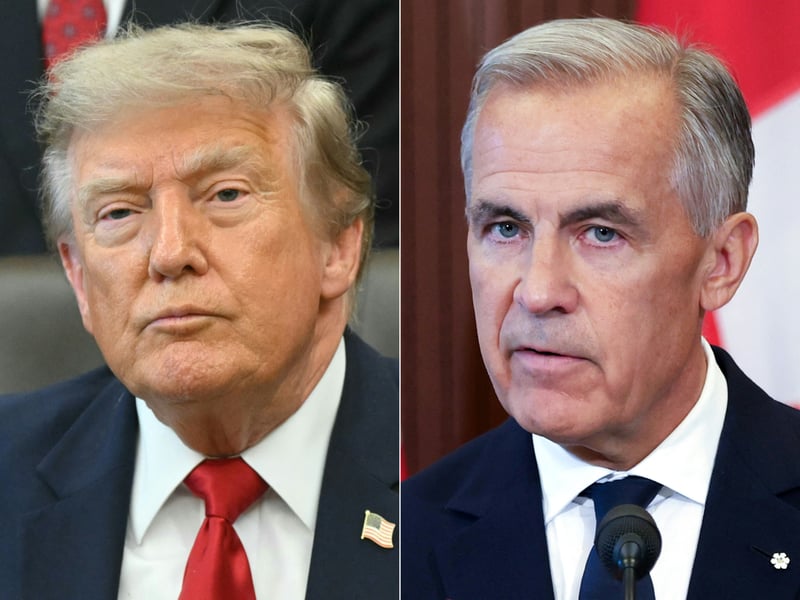
Prime Minister Mark Carney’s response was careful but unambiguous about where the obligation lies. “When the Americans go to the negotiating table first with the right attitude toward our industry and a true partnership, of course we’ll come to the negotiating table,” Carney said. Ottawa has announced retaliatory tariffs on US goods beginning September 8, adding a deadline of sorts to a crisis that has been building since Trump’s first weeks in office. As Al Jazeera reported, bilateral goods and services trade between the two countries fell 4.6 percent last year, reaching $872.3 billion — a drop that tells its own story about what Trump-era economics is already costing both economies.
The threat of supply chain collapse is not rhetorical. Flavio Volpe, president of Canada’s Automotive Parts Manufacturers’ Association, said auto assembly “throughout the US would halt” if Canadian parts were cut off. The US-Canada auto industry is not two separate industries operating under one tariff regime — it is one integrated manufacturing system that crosses the border hundreds of times before a vehicle reaches a showroom. Canadian-made components flow into American plants; American-assembled modules ship back into Canadian factories. Tariffs on parts do not merely raise costs. They threaten to make the underlying production system physically unworkable.
Ontario Premier Doug Ford, whose province hosts the majority of Canada’s auto sector, framed the announcement in terms that left little interpretive space. “You’re at war when you get attacked. We got attacked,” he said — invoking the language of economic conflict that the Trump administration has deployed freely against adversaries abroad but now applies equally to its northern neighbor. Ford threatened to cut off critical mineral exports and electricity that Ontario supplies to US states from New York to Michigan. “Everything’s on the table. I’ll do whatever it takes.”
The escalation fits a pattern that the Trump administration has applied with increasing consistency since January. As US economic sanctions targeting Iran mounted earlier this week under the banner of “Operation Economic Outcast,” Washington has returned again and again to the same instrument — economic pressure — in circumstances where its military and diplomatic tools have produced diminishing returns. The difference with Canada is the relationship being strained. Iran is an adversary. Canada is not. The two countries share the longest undefended border in the world and, as of twelve months ago, $872 billion in annual commerce.
Canada’s structural exposure to US economic pressure has long been the arithmetic that Ottawa could not escape. Three-quarters of Canada’s goods exports go to the United States. Import dependency on US goods runs at roughly 50 percent. Carney’s government has spoken at length about diversifying trade relationships — toward Asia, toward Europe, toward the newer corridors opened by the CPTPP agreement — but that diversification takes years and the threat from Washington has arrived in months.
What the White House actually wants from Canada — in specific, negotiable terms — remains the question Carney’s government cannot fully answer, because the answer depends on what Trump wants and nobody has said. “Build in the US” is a political slogan, not a trade position. Canada’s auto plants already build vehicles sold into the American market. Whether relocating final assembly, surrendering critical mineral export pricing, or abandoning buy-Canadian procurement clauses would satisfy Trump is unknown because no one in the administration has spelled it out publicly.
The September 8 date for Canada’s retaliatory tariffs is the next test. A deal in the intervening two weeks would require Washington to name its terms and Ottawa to accept them — or some version of them. Without that, the auto industry that crosses the Ambassador Bridge hundreds of times a day will begin reconfiguring around a border that no longer behaves like one.