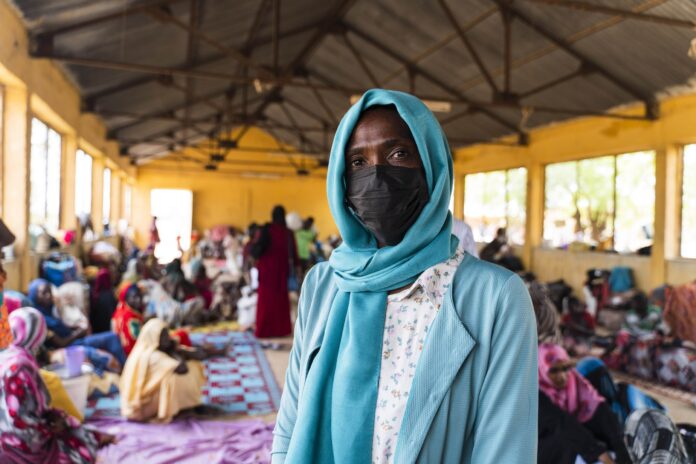
KYIV — The woman in the Kharkiv basement had stopped counting Russian strikes. She had been living that way, between descents and ascents, for more than four years. What she noticed, on the first day of June, was that the schedule had not changed. Drones, then sirens, then fire in a residential garage two streets over. The war was exactly as it had been.
That same day, according to Ukraine’s General Staff, Russian forces launched attacks across two districts of Kharkiv, killing and wounding civilians as garages and cars burned. The pattern had held since the May ceasefire collapsed in a cascade of mutual accusations — a brief pause that neither side honored in any sustained way. And now the deadline that the United States had set for ending this war entirely had arrived.
In February, Ukrainian President Volodymyr Zelenskyy disclosed that the Trump administration had given both Russia and Ukraine a June deadline to reach a settlement. “The Americans are proposing the parties end the war by the beginning of this summer and will probably put pressure on the parties precisely according to this schedule,” Zelenskyy told reporters, in comments that were embargoed until the following morning. Neither the White House nor the Kremlin publicly confirmed the timeframe, but negotiations proceeded on its shadow for the next three months.
That shadow has now arrived and there is no deal. There is no framework for a deal. There is no agreed ceasefire line, no security guarantee structure, no answer to the central dispute: Russia’s insistence that Ukrainian forces withdraw from the Donetsk region before talks can proceed, and Ukraine’s constitutionally embedded prohibition on ceding that territory to Moscow. The two positions have not shifted since Abu Dhabi in January. They did not shift in Geneva in February. They are not shifting now.
The Geneva talks in February — the third round of US-brokered trilateral negotiations, following sessions in Abu Dhabi and Istanbul — collapsed on their second day after just two hours of talks. Russia launched a barrage of nearly 30 missiles and almost 400 drones at Ukraine on the opening morning of the talks, striking 12 regions. Ukraine’s Foreign Minister Andriy Sybiga called it a demonstration of contempt. “The extent to which Russia disregards peace efforts: a massive missile and drone strike against Ukraine right before the next round of talks in Geneva,” he wrote. The Associated Press reported that U.S. special envoy Steve Witkoff and Jared Kushner led the American delegation at a horseshoe-shaped table in Switzerland, Ukrainian and Russian officials across from each other, Swiss and American flags behind them. The talks lasted less than half of their scheduled time on the second day.

A three-day ceasefire announced by President Trump for the May 9-11 Victory Day period — paired with a prisoner exchange of 1,000 soldiers on each side — produced the most cautious diplomatic optimism of the year. Both sides publicly accepted the terms. Both sides reported violations almost immediately. Russia’s Defense Ministry said Ukrainian forces made two attempts to breach the Kursk border during the pause. Ukraine counted 469 Russian violations, most of them drone attacks. By the time the ceasefire period formally ended, the fighting had resumed at what officials described as reduced but persistent intensity.
https://twitter.com/AJENews/status/2052325902491484172
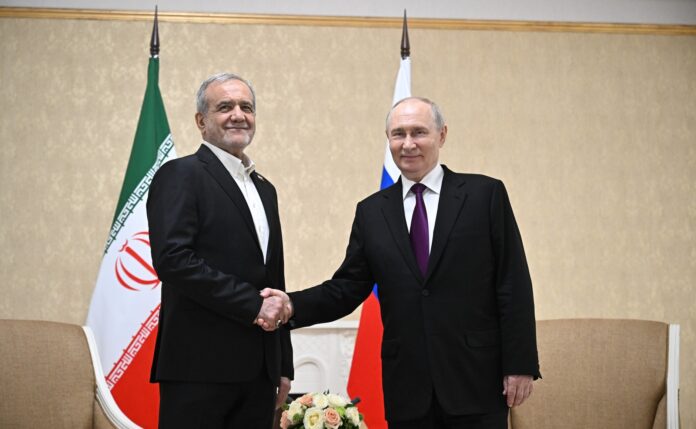
Putin, speaking to reporters after the Victory Day parade on Red Square, said the war was “coming to an end” while simultaneously framing it as a just cause against a NATO-backed aggressor. Al Jazeera reported he was willing to meet Zelenskyy in a third country if a long-term peace deal were first reached — a condition that reversed the customary order of negotiations. Zelenskyy had been proposing a leaders’ meeting as a mechanism to generate momentum; Moscow said the meeting should be the culmination, not the catalyst.
On the ground, what the six months of diplomacy have produced is a war that has spread northward. Russian forces captured settlements in the Kharkiv and Zaporizhzhia regions in May, and their push into Ukraine’s Sumy Oblast — the first sustained Russian foothold in that region since the early weeks of the 2022 invasion — has brought the front within striking range of the regional capital. The Institute for the Study of War assessed that Russia’s limited cross-border raids in Sumy and Kharkiv now function primarily as cognitive operations, designed to shape the negotiating environment rather than achieve decisive territorial gains. Whether that assessment is correct does not help the people living within drone range of the front.
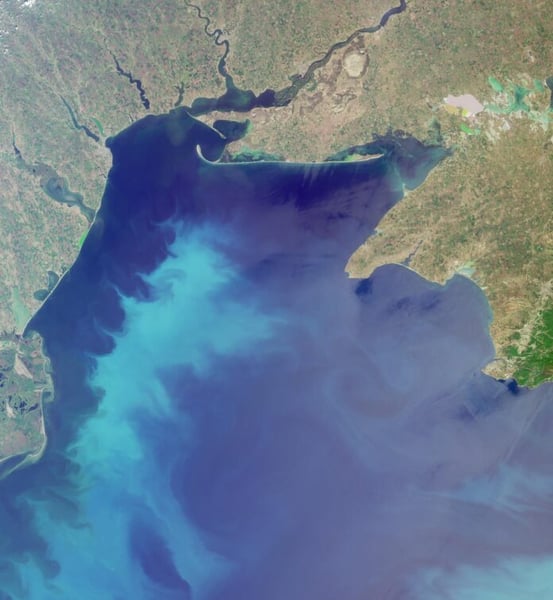
Ukraine has not been passive. Ukrainian drone strikes in late March and early April targeted all three of Russia’s major western oil export terminals — Novorossiysk on the Black Sea, and Primorsk and Ust-Luga on the Baltic. Reuters calculated at the time that roughly 40 percent of Russia’s oil export capacity was disrupted. In May, Ukraine’s Unmanned Systems Forces struck 18 oil facilities belonging to Russian forces or operating in occupied territories. Kyiv’s strategy of economic attrition through long-range drone warfare has become a fixture of the war’s current phase, with Ukrainian missiles reportedly now capable of reaching targets more than a thousand kilometers inside Russian territory.
The Ukrainian toll from four years of aerial assault has been severe in ways that resist quantification. According to data cited by the British Ministry of Defence, Russian casualties — killed and wounded combined — exceeded 1.1 million by late 2025, a figure the Kremlin disputes. Ukraine’s energy infrastructure, by multiple estimates, operates at roughly a third of its pre-invasion capacity. Some 90 percent of Ukraine’s thermal power generation was destroyed as of last May. The war, by any measure of industrial scale, is unlike anything in Europe since 1945.
What the Trump administration will do now that its June deadline has passed without a settlement is not publicly known. American officials declined throughout the negotiations to specify what consequences would follow if the timeline lapsed. Trump threatened 100 percent secondary tariffs on Russia in July 2025 if no deal was reached within 50 days. The 50 days passed. The tariffs were not imposed. The pattern since has been deadlines set, deadlines passed, and new frameworks proposed without a consequential response to non-compliance from either belligerent.
What Zelenskyy said in February remained accurate in June: the Americans wanted to do everything by now. What neither Kyiv nor Washington has said is what doing nothing by now means.
The broader diplomatic environment has also complicated the picture. US-brokered ceasefire talks were put on hold in March amid the growing escalation of the Middle East conflict, which drew American attention away from the European theater. Western officials and analysts have consistently described Putin as a leader who believes time favors Moscow — that Western support for Ukraine will fragment, and that Ukrainian resistance will eventually give way under sustained attrition. The battlefield reality has not yet disproved that theory.
Russia’s chief negotiator Vladimir Medinsky reiterated in February that Moscow’s demands had not changed: Ukrainian forces out of Donetsk, acknowledgment of Russia’s territorial claims on four Ukrainian oblasts, and security guarantees that preclude Ukrainian NATO membership. Ukraine’s chief delegate Rustem Umerov described the talks after Geneva as focused on “practical issues and the mechanics of possible solutions” — diplomatic language for a process that has produced no decisions on any core question.
The basement in Kharkiv has a functioning light. There is water. The woman has a phone. Whether a deal in some form eventually emerges, or whether the war simply continues at this frequency until something on the battlefield shifts, is a question that June has not answered.