
In a resounding repudiation of President Donald Trump’s first nine months back in power, American voters delivered a sweeping victory to the Democratic Party on Tuesday night, capturing control of key statewide offices and securing crucial ballot measures that will reshape the political landscape heading into the critical 2026 midterm elections. The results marked the first major electoral test of Trump’s second term and provided an unmistakable signal that voter dissatisfaction with his administration has solidified into concrete political consequences.
Democratic candidates triumphed across multiple battleground states and urban centers. Abigail Spanberger, a former Central Intelligence Agency officer and three-term congresswoman, secured the Virginia governorship by decisively defeating Republican Lieutenant Governor Winsome Earle-Sears, becoming the Commonwealth’s first female chief executive.
In neighboring New Jersey, Democratic Representative Mikie Sherrill, a former Navy helicopter pilot and federal prosecutor, overcame a competitive race to claim the governorship from Republican Jack Ciattarelli, who had counted on Trump’s last-minute endorsement and campaign rallies to boost his candidacy. And in New York City, where Trump had issued explicit threats to withhold federal funding, thirty-four-year-old state legislator Zohran Mamdani, a democratic socialist, defeated both former Governor Andrew Cuomo running as an independent and Republican activist Curtis Sliwa to become the nation’s largest city’s first Muslim mayor and its most progressive leader in generations.
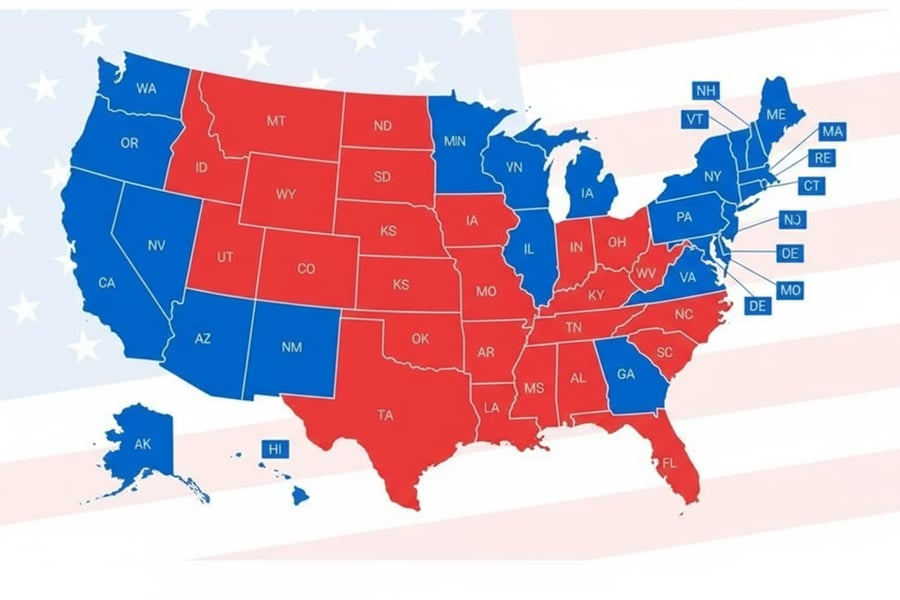
The scope of Democratic success extended far beyond these headline-grabbing races. In Virginia, Democrats achieved near-total dominance in statewide contests. State Senator Ghazala Hashmi became the nation’s first Muslim woman elected to any statewide office, winning the lieutenant governor’s race. Democrat Jay Jones captured the attorney general’s position despite a late-breaking controversy involving violent text messages, overcoming Republican incumbent Jason Miyares. Democrats substantially strengthened their existing majority in the state House of Delegates.
In Pennsylvania, voters decisively chose to retain three Democratic justices on the state Supreme Court, Christine Donohue, Kevin Dougherty, and David Wecht, in a retention election that attracted unprecedented spending of over fifteen million dollars and would have shifted judicial control to Republicans had the justices been defeated, confirming the importance of the Pennsylvania Supreme Court in safeguarding election administration and voting rights.
And in California, despite being among the most expensive ballot measures in state history, voters approved Proposition 50, authorizing mid-decade redistricting that could deliver up to five additional congressional seats to Democrats in the 2026 midterm elections.
The electoral message was unmistakable. Exit polls revealed that voter attitudes toward President Trump and his agenda dominated decision-making across these contests. In Virginia, thirty-seven percent of voters cited opposition to Trump as a motivation for their gubernatorial vote.
In New Jersey, the figure reached thirty-eight percent. In California, a striking fifty percent of Proposition 50 supporters explicitly identified opposition to Trump as their rationale. Voters expressed pervasive anxiety about inflation, healthcare costs, housing affordability, and what many characterized as chaotic governance from an administration that promised decisive leadership but delivered tumultuous division.
The Democratic victories assumed special significance because they shattered a fundamental Republican calculation heading into the 2026 midterms. The party that controls the White House typically experiences substantial seat losses in the first midterm election following a presidential victory, a pattern rooted in basic political science: when an incumbent president is absent from the ballot, the enthusiasm gap shifts decisively toward the opposition.
Trump’s narrow House majority, Republicans hold only 220 seats, just two more than the minimum required for control, makes them extraordinarily vulnerable to the historical dynamics that have governed American midterm elections since the 1930s. The Brookings Institution, analyzing these electoral patterns, calculated that Democrats currently possess an advantage of 3.9 points in generic congressional ballot polling, compared to their 2.6-point deficit in the actual 2024 House elections. This six-and-a-half-point swing, if maintained, would produce approximately a twelve-seat Democratic gain, more than sufficient to flip control of the chamber.
Zohran Mamdani’s victory in New York City warrants particular analysis because it crystallizes profound divisions within both major parties. Mamdani, born in Uganda to Indian parents and raised in Queens, campaigned on explicitly democratic socialist policies: rent freezes for stabilized tenants, expanded public housing, free public transportation, city-operated grocery stores in economically underserved neighborhoods, and a twenty-five-dollar-per-hour minimum wage by 2030.
His margin of victory exceeded one million votes, the highest total in the city’s mayoral history and the first time any mayoral candidate had surpassed that threshold. His campaign mobilized young voters and immigrant communities, including robust support from South Asian Americans. At his victory rally, Mamdani opened by quoting socialist Eugene Debs and declared, “Let tonight be the final time I utter his name as we turn the page on a politics that abandons the many and answers only to the few.”
Trump, recognizing the stakes, had intervened directly in the final days of the New York race, issuing a statement on Truth Social that attacked Mamdani as a “Communist” and endorsed Cuomo, the moderate Democrat-turned-independent whom Democratic primary voters had rejected. Trump explicitly threatened to “limit federal funds to New York City” should Mamdani prevail, but voters rejected this intimidation.
The result illuminated an emerging Democratic Party increasingly comfortable with leftist voices and policies, particularly in urban centers where progressive platforms resonate with economically stressed younger voters and communities of color who view traditional liberal centrism as having failed to address their material circumstances.
Mamdani’s victory also underscored the limits of Trump’s political influence outside his base. Despite Trump’s explicit endorsement of Ciattarelli in New Jersey, Sherrill won decisively. Trump’s last-minute support for Cuomo in New York failed to salvage the race. Exit polling demonstrated that Trump’s involvement frequently backfired, with candidates unable to distance themselves sufficiently from presidential unpopularity.
In Virginia, Spanberger had emphasized her independence from the Biden White House, her military background, and her willingness to challenge both parties’ orthodoxy when constituent interests required it. Yet she still won decisively, suggesting that voter dissatisfaction with Trump transcended any particular candidate’s positioning.
The economic dimension of these results proved decisive. Exit polling consistently identified inflation, healthcare costs, housing affordability, and living standards as paramount concerns. Voters reported that grocery bills, rent, and medical expenses had squeezed their households substantially over the past nine months, and many blamed Trump’s tariff regime, which economists warned would accelerate price increases and reduce consumer purchasing power.
Yale Budget Labs predicted that Trump’s tariffs alone would produce approximately one-point-eight-percent inflation, with average American family costs potentially increasing by thousands of dollars annually by year’s end as businesses passed increased import costs to consumers. Sherrill and Spanberger had both centered their campaigns on affordability, proposing state-level interventions on housing, utilities, and healthcare that Democrats argued offered relief where the Trump administration had exacerbated pressure on household budgets.
The Pennsylvania Supreme Court results carried particular significance for democratic institutions and voting access. The three Democratic justices won retention despite a well-funded Republican and corporate-backed campaign to defeat them. Since flipping to Democratic control in 2015, the Pennsylvania Supreme Court had issued a series of consequential rulings: striking down an egregious Republican gerrymander in 2018, upholding no-excuse mail-in voting in 2022, protecting approximately eight-point-seven million registered voters’ ballot access, and blocking multiple Trump attempts to overturn his 2020 election losses through the Pennsylvania courts. Losing this majority would have handed Republicans an opportunity to flip the court to Republican control in 2027, timing that could have profound implications for election administration and voting rights heading into the 2028 presidential contest.
The million-plus-dollar spending campaign Democrats mounted to retain these justices reflected the stakes: preservation of voting access and protection against partisan manipulation of electoral rules.
California’s Prop 50 results similarly bore implications extending far beyond the state’s borders. Governor Gavin Newsom had framed mid-decade redistricting not as a Democratic power grab but as a necessary response to Republican gerrymandering orchestrated by Trump in Texas and other GOP-controlled states. Texas Republicans had rediscovered mid-decade redistricting after 2020, a practice historically rare but resurrected to amplify their already existing partisan advantages.
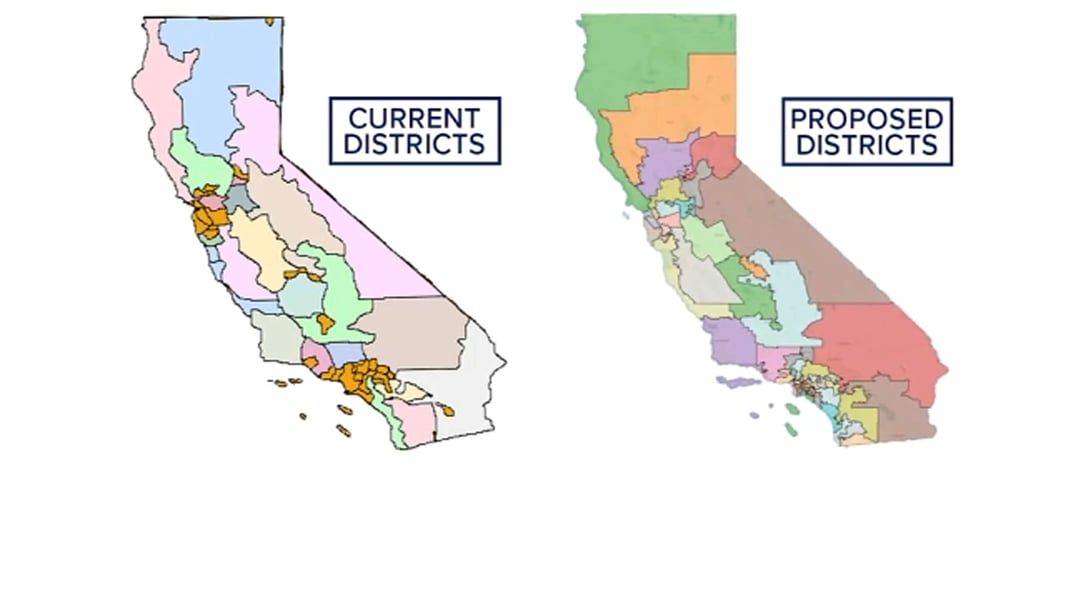
Newsom’s gambit involved asking voters to empower the Democratic legislature to redraw maps temporarily, circumventing the independent citizens’ redistricting commission that had been established through voter approval in 2008. The vote represented a calculation that one generation of Democratic mapmaking could offset several decades of Republican gerrymandering, potentially capturing five additional House seats statewide, seats that might prove decisive in close chamber control scenarios in 2026 and 2027.
The Democratic establishment, while celebrating, struck a somewhat cautious note. Former President Barack Obama released a statement congratulating the winners but cautiously noting, “We’ve still got plenty of work to do, but the future looks a little bit brighter.” Senate Minority Leader Chuck Schumer declared the results a “repudiation of the Trump agenda” but Democratic leaders recognized that off-year elections, while suggestive, do not necessarily predict midterm outcomes.
History offered some reason for optimism: following the 2017 off-year elections during Trump’s first term, Democrats had expanded their 2018 midterm gains into a forty-one-seat House majority, the largest Democratic gain since 1974. But history also offered warnings: political momentum sometimes dissipates, Trump supporters’ determination to defend their president might intensify, and the narrow Republican House majority meant that even modest Democratic underperformance could preserve Republican control.
Nevertheless, the political implications seemed unmistakable. For the first time since Trump had returned to the White House in January 2025, Democrats possessed tangible evidence that electoral consequences awaited Republican politicians who aligned too closely with an unpopular president. Candidates who emphasized distance from Trump, Spanberger and Sherrill, in particular, had performed well. Candidates who embraced Trump or failed to adequately criticize his policies had performed poorly.
The results suggested that the Democratic Party, despite its internal divisions between progressive and moderate wings, retained sufficient cohesion and voter enthusiasm to mount effective electoral challenges to Republican control of key statewide offices and potentially to lay groundwork for a midterm surge that could recapture the House.