
EAGLE MOUNTAIN, Utah — The $300 million beef processing plant that Tyson Foods Inc. opened here in 2021, billed as a long-term anchor for one of Utah’s fastest-growing counties, will close. The company confirmed Friday that 723 positions at the Eagle Mountain facility are being eliminated, the single largest worker impact in a network restructuring that reflects just how severely the national cattle shortage has reshaped the economics of large-scale beef production.
The closure, disclosed in a WARN notice filed with the Utah Department of Workforce Services, flows from an August 13 announcement in which Tyson said it would concentrate its beef processing capacity around three facilities — Dakota City, Nebraska; Holcomb, Kansas; and Amarillo, Texas — and shed plants that lack proximity to the shrinking supply of fed cattle. Eagle Mountain, a case-ready operation that processes pre-packaged beef and pork cuts for retail chains, was not among those the company chose to anchor its future around.
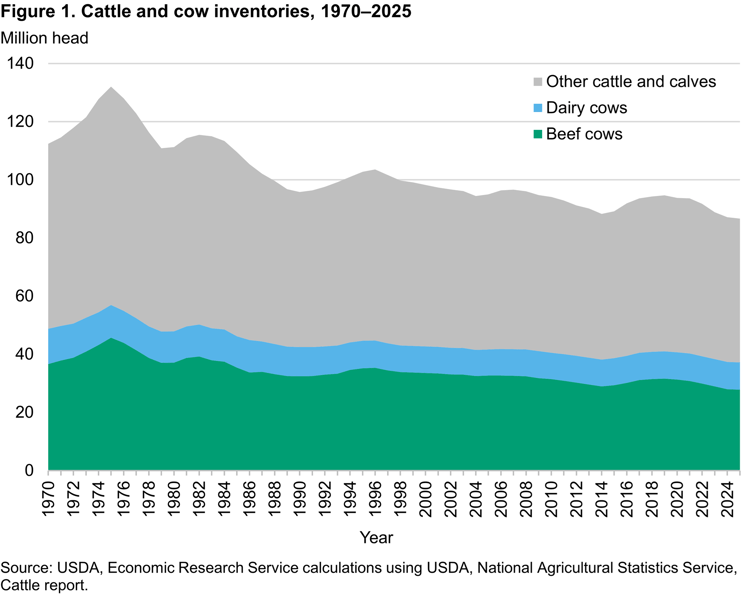
“We are facing one of the most historic cattle shortages the country has ever experienced,” Tyson said in a statement accompanying the restructuring plan, citing USDA data showing limited heifer retention and persistent supply constraints that have driven the national beef cattle herd to its lowest level in roughly 70 years.
The logic of the closure is geographic. Case-ready operations depend on a steady flow of pre-processed beef trim and boxed cuts from upstream slaughter facilities, and those cuts become costlier to ship as they travel farther from the cattle-producing heartland. Eagle Mountain sits roughly 1,500 miles from the Kansas feedlot belt; Holcomb and Dakota City are in the middle of it. When cattle supplies are abundant, that distance is manageable. When the herd is at a 70-year low and every head counts, the arithmetic turns against intermountain plants quickly.
Tyson said it plans to bring a second shift online at its Amarillo facility as cattle supply becomes available, a move designed to let the company maintain comparable harvesting volumes through a leaner network. The company has committed to helping affected workers apply for open positions at other facilities, though it did not specify what relocation assistance or severance packages would be offered.
Eagle Mountain is not the only community absorbing the blow. Tyson is also closing its Joslin, Illinois beef facility and exploring a sale of its Pasco, Washington plant as part of the same restructuring. The cumulative worker impact across those sites adds substantially to the 723 Utah layoffs, though the company has not released employee counts for the Illinois and Washington locations.
For Eagle Mountain — a city of roughly 75,000 that has grown rapidly as a bedroom community along the Wasatch Front — the plant has represented an unusual concentration of blue-collar manufacturing employment. Its $44 million annual local payroll and more than 700 positions make it among the largest single industrial employers in Utah County. A community whose economic profile otherwise skews toward logistics, tech-corridor commuters, and retail will find that footprint difficult to replace.
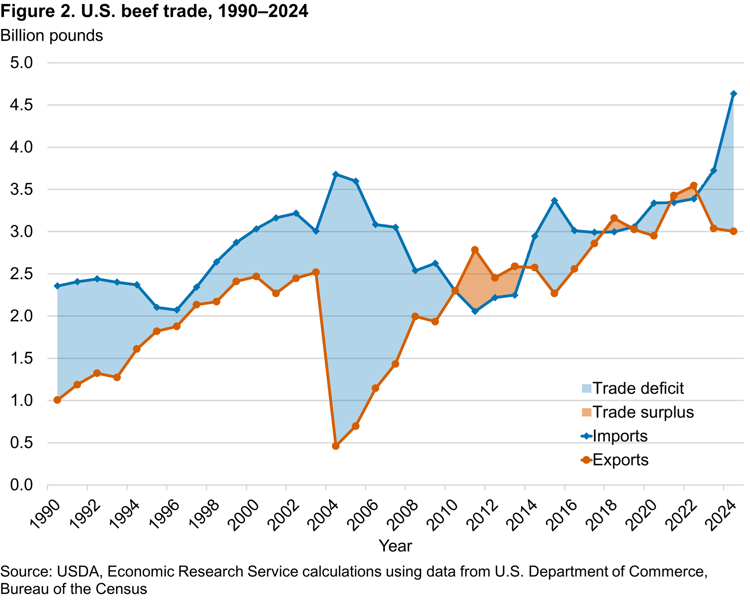
The closure accelerates the pressure on an already strained US beef supply crisis that has been building since Tyson’s Kansas consolidations began in late 2025. The national cattle and calf inventory has been declining steadily since 2019, pushed lower by prolonged drought across key ranching states, rising feed costs, and producer reluctance to rebuild herds as margins compressed. According to the USDA Economic Research Service, the U.S. beef cattle sector remains in one of its longest sustained contraction cycles since modern records began.
Processing capacity consolidation is both a symptom and a cause of that dynamic. When large-scale processors close regional facilities, they reduce the number of buyers available to local and regional cattle producers, which can depress feeder cattle prices and discourage herd rebuilding. The mechanism is self-reinforcing: fewer buyers mean lower prices for ranchers, lower prices mean smaller herds, and smaller herds mean processors have less to work with even as they concentrate.
Tyson Foods’ announcement framed the moves as a long-term investment in efficiency, not a retreat from the beef category. The three remaining anchor plants — Dakota City, Holcomb, and Amarillo — represent what Tyson described as a “more efficient and modern network” capable of absorbing the ramp-up of supply when the herd eventually recovers.
The cattle cycle suggests that recovery is possible. Heifer retention — the leading indicator of herd rebuilding — has historically turned upward within two to three years of peak cattle prices, as ranchers respond to favorable economics by holding back breeding stock. Prices for fed cattle have traded at elevated levels for much of 2025 and 2026, the conditions that historically precede retention.
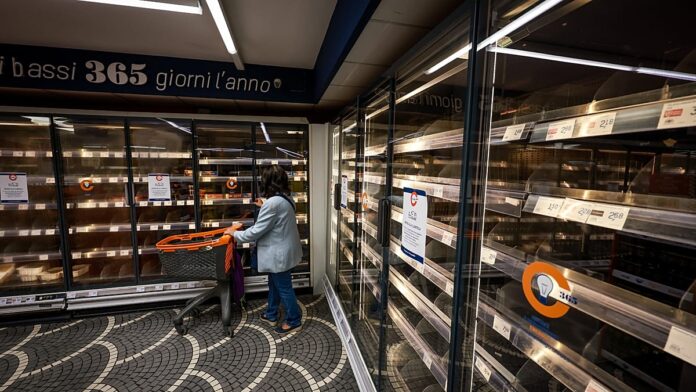
The broader effect on consumers was visible across retail shelves: global food price inflation has hit protein categories particularly hard this year, with ground beef and steaks among the items showing persistent price increases at grocery chains nationwide.
What Tyson cannot predict is when that herd rebuild will produce enough cattle to justify a larger footprint again. Until then, the Eagle Mountain plant — and the 723 workers who kept it running — will carry the cost of an industry betting that smaller and more central is the path through.