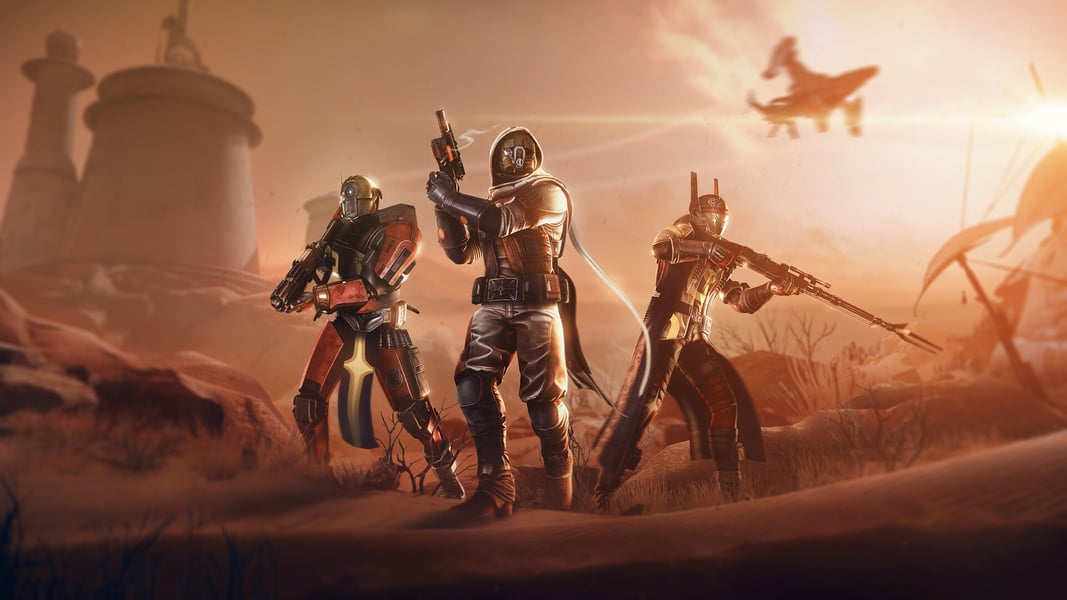

BELLEVUE — Three months ago, Bungie closed the door on Destiny 2. The studio shipped Monuments of Triumph, the final major content update, on June 9, and within weeks had laid off roughly 400 of its 800 employees, most of them the people who had kept the game alive for nine years. The statement of intent seemed unambiguous. Sunday’s post suggests it was not.
In a blog post and accompanying video titled “The Next Chapter for Bungie,” published to the studio’s website on September 21, studio head Poria Torkan and head of product Josh Deane announced that work has begun on restoring the game’s vaulted campaigns, destinations, and raids, with all of them eventually available to all players at no additional cost. “We are not done with Destiny,” Torkan wrote. “Destiny is foundational to our future.” The same post confirmed plans for new Destiny stories and games — the first time Bungie has stated that the franchise has a life beyond Destiny 2.
Bungie’s planned restoration would bring back Destiny 2 content removed through its “vaulting” policy, which began in 2020. The first removals included the original Red War campaign and the patrol destinations Io, Titan, Mercury, Mars, and the Leviathan; later expansions followed. Players who had purchased that content lost access without refunds or an archival alternative.
Why restoration is difficult
Bungie says the material cannot simply be switched back on. Returning campaigns, destinations, and raids requires:
- Updated lighting.
- Reworked combat encounters.
- Renovated environments.
- Rebuilt enemy AI behavior.
- Extensive testing against the game’s substantially changed systems.
The studio has acknowledged the scale of the work but has not provided a release timetable. Thus, while the restoration reverses a policy players criticized for years, it does not yet establish when the recovered content will actually return.
The announcement opens with a direct apology, acknowledging that recent years cost the studio its players’ trust, its colleagues, and its own ambitions. What it does not acknowledge is the commercial sequence that made Sunday’s reversal possible.

Torkan and Deane also announced that Marathon itself will change. The extraction shooter will evolve into what they call “a deeper survival experience,” with expanded PvE and PvP options beyond the original format. What this means in practice — which modes, which mechanics, which timeline — was not detailed. The announcement is a commitment to a direction, not a roadmap.
“This restoration is the first step,” the blog post reads, “to lay the foundation for how we reforge into new stories and games that you all deserve.” The line acknowledges a sequel or successor title without committing to one. No new Destiny game has been named or dated, and Bungie’s post explicitly stops short of announcing Destiny 3. As Engadget reported, the studio’s language was deliberately kept open-ended.
The vaulted content question has been one of the more persistent pressure points in the Destiny 2 community’s recent history. When Monuments of Triumph was announced as the game’s final update — itself a reversal of earlier promises about expansions — the player reaction was, in Bungie’s own words, forceful enough to register. “You responded in force,” Torkan and Deane wrote, in the nearest the post comes to explaining why June’s conclusion became September’s pivot.
PlayStation’s broader live-service ambitions across 2026 have faced ongoing scrutiny, with several Sony-published titles missing their intended audiences. The course correction at Bungie fits a year of recalibrations across the portfolio. Whether Sunday’s announcement reflects a coordinated Sony strategy or a Bungie-driven response to its own product performance, neither Torkan nor Deane said.
The studio that produced this announcement is a smaller one. The June layoffs cut deeply into the Destiny team. What remains is now committed to two projects, each in a state of significant revision, both without public timelines. In a year when other studios in similar positions — including Quantic Dream, whose own reorganization extended Star Wars: Eclipse’s timeline indefinitely — found that restructurings rarely compress production schedules, what Bungie is committing to is not small.
Sunday’s post establishes that Destiny is not done. When it continues, and in what form, are questions the studio has chosen, for now, to leave open.