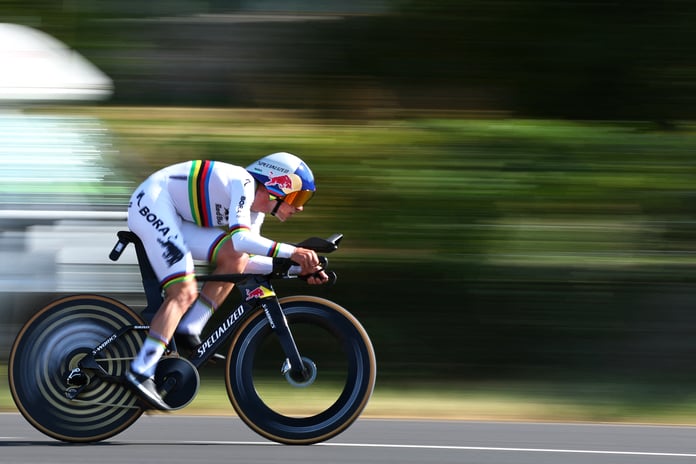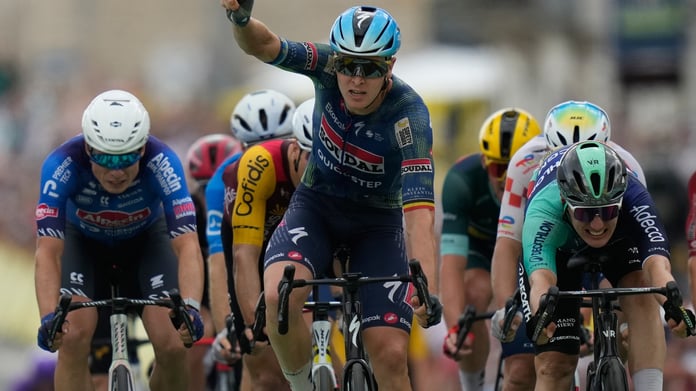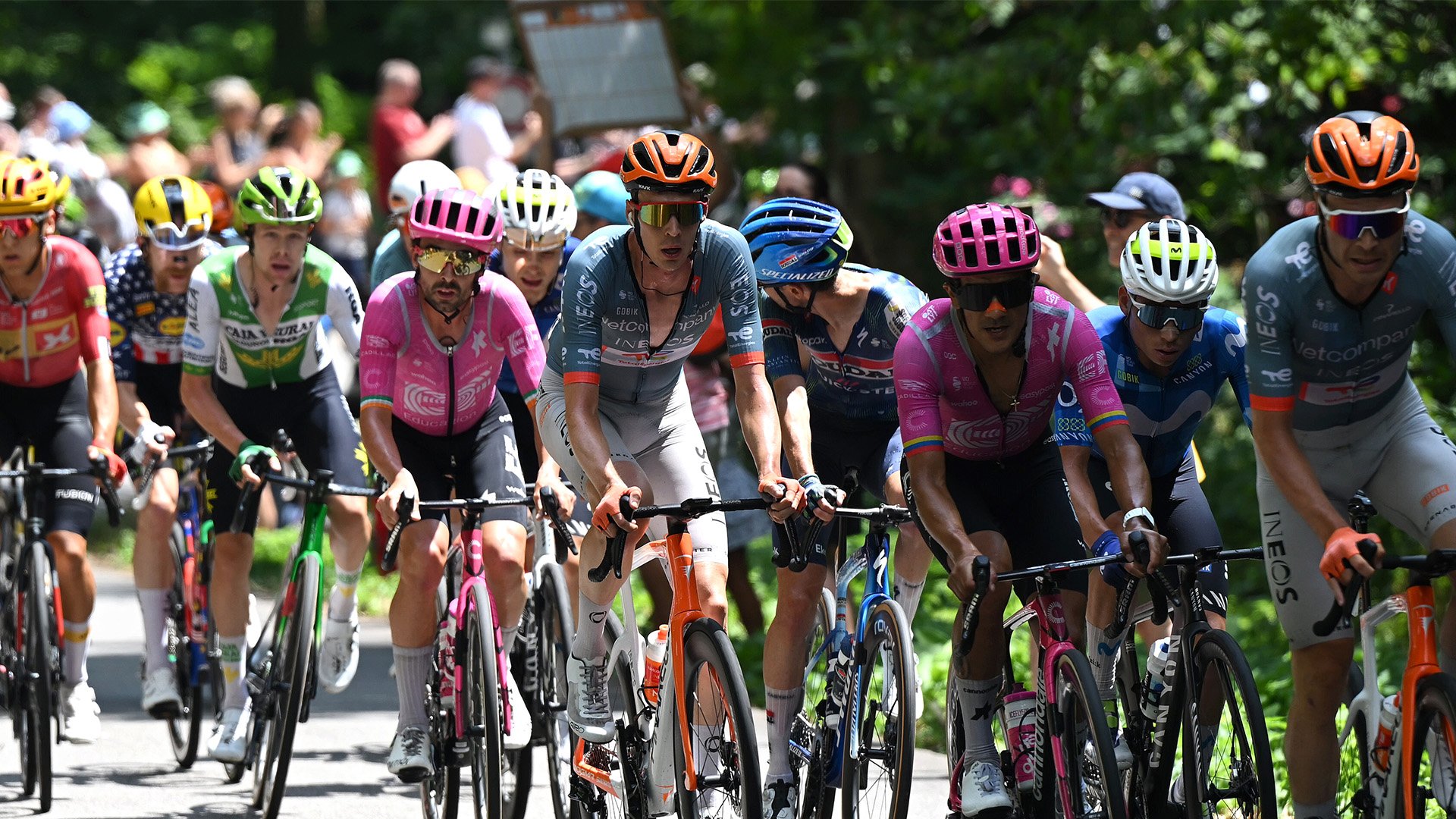

MULHOUSE – With 1.6 kilometres remaining on the Col du Haag and three riders still together, Tadej Pogačar pressed into his pedals in the way that is becoming the defining image of this Tour de France: a brief, controlled acceleration that Jonas Vingegaard simply could not match. The Dane fell back almost immediately, watching the Slovenian pull clear into the afternoon light over the Vosges, and with him went whatever remained of the narrative that this race is genuinely competitive.
Stage 14 covered 155.3 kilometres from Mulhouse through the Vosges mountains, taking the field over three Category 1 climbs – the Grand Ballon, the Ballon d’Alsace, and finally the Col du Haag. Pogačar crossed the finish at Le Markstein alone, with UAE Team Emirates teammate Isaac del Toro taking second place and nineteen-year-old French rider Paul Seixas finishing third. Vingegaard came in fourth. According to NBC Sports, the decisive move came with just 1.6 kilometres left on the final ascent.
When Vingegaard told reporters afterward that it had been “certainly not a bad day,” the remark landed somewhere between strategic understatement and honest reckoning. He has not panicked at any point in this race, has ridden conservatively through the mountain finishes, and has watched the gap stabilize rather than collapse. What he has not done is meaningfully close it. Based on the pattern of this Tour through Stage 12, patience has been his approach. Thursday showed its limitation.
The General Classification heading into Stage 15 makes the position plain. Pogačar holds the yellow jersey with a 4 minutes 30 second advantage over Vingegaard. Remco Evenepoel sits third at 5 minutes 4 seconds, while Seixas is fourth at 5 minutes 19 seconds, holding the white jersey as the race’s best young rider. At nineteen years of age, the Frenchman has built a Tour into something few anticipated – a steady, composed presence inside the top five that has not buckled under the weight of the mountains.
Richard Carapaz, who had been active on the earlier slopes, was caught by the lead group before the final climb and faded as the Col du Haag stripped the field back to its essential shape. Three riders remained at the front as the steepest pitches began: Pogačar, Vingegaard, del Toro. Seixas then found a second effort when Pogačar attacked, accelerating past Vingegaard in the final 1.6 kilometres – which said something both about the Frenchman’s strength and about the ceiling Vingegaard was riding against.
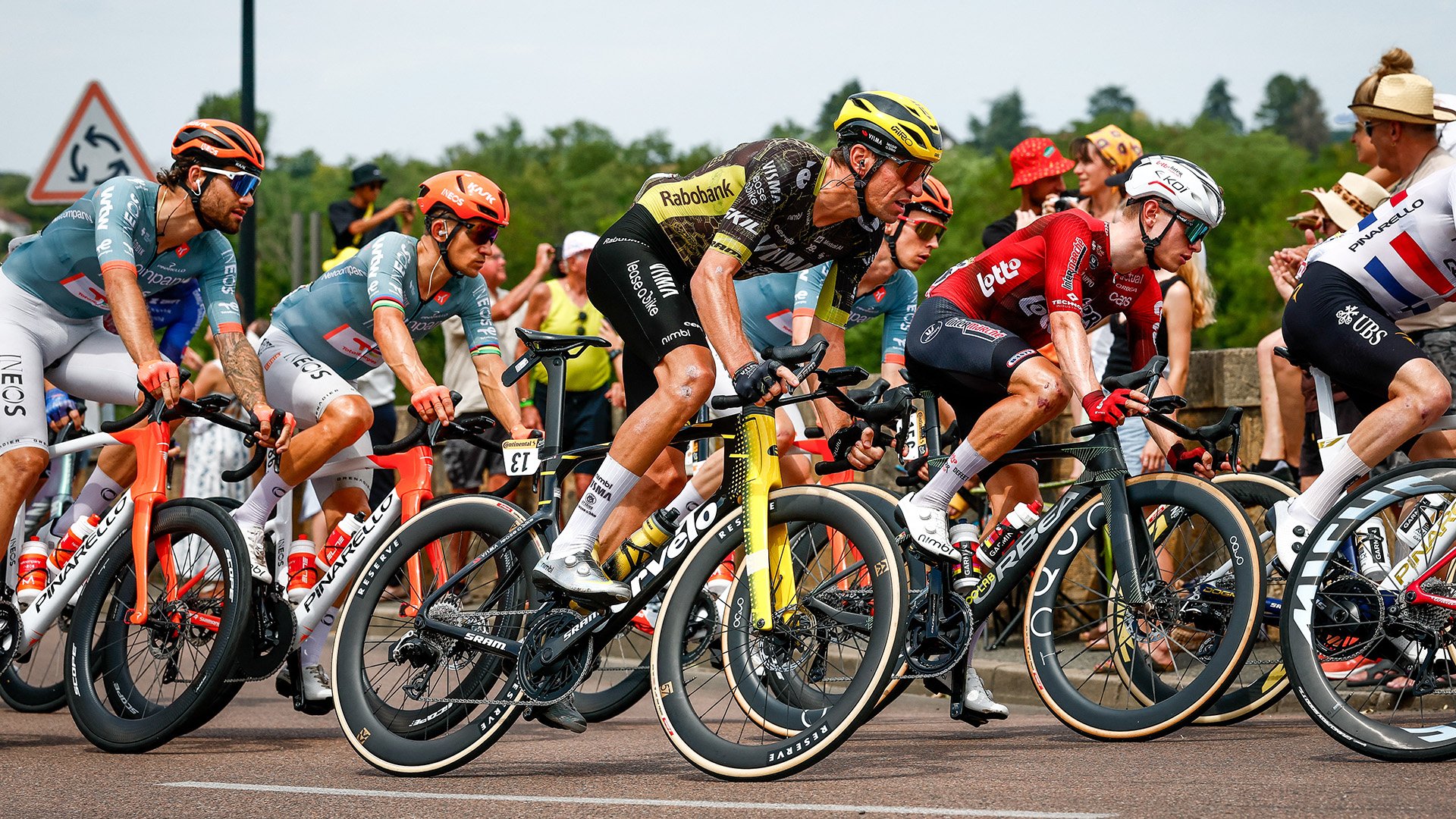
Del Toro’s second place deserves attention beyond the stage result. The 22-year-old Mexican climber has ridden this Tour as Pogačar’s most reliable high-mountain foil, and the UAE One-Two on Stage 14 made visible something the race has been showing for two weeks: that UAE Team Emirates arrived in France with a structural advantage over every other team in the peloton. Whether del Toro eventually becomes a Tour contender in his own right is a question that belongs to future editions. What Thursday answered is that he belongs in the final-climb conversation now.
Pogačar’s fourth stage win of this edition gives him 25 career Tour de France stage victories. He is pursuing his fifth title overall, a number that would place him alongside Eddy Merckx, Bernard Hinault, Jacques Anquetil, and Miguel Indurain – the only riders in the history of the race to reach that threshold. The comparison is inherently statistical; the eras and competition are not equivalent. But the proximity of what he is doing to what those riders did is increasingly difficult to set aside. His Bastille Day stage win on Stage 10 was a solo effort in similar circumstances; Stage 14 confirms the pattern rather than marking a new one.
Stage 15 takes the peloton from the Vosges into the French Alps, with an HC-category climb to the Plateau de Solaison serving as the finish. For Vingegaard, it represents the most direct remaining opportunity to force a meaningful difference before the race reaches Paris. The hardest category on the Tour’s classification system, an HC climb is where defining time gaps are typically established. The question is not whether Vingegaard can attack – his record over years of racing suggests he can. The question is whether Pogačar has any ceiling on these climbs, and Stage 14 offered nothing to suggest he does.
What this Tour de France leaves genuinely unresolved is not the yellow jersey but the shape of the final week. If Vingegaard closes ground on the Plateau de Solaison, the remaining Alpine stages carry a different weight. If he cannot, this edition joins the short list of Tours decided before the race reached its closing mountain roads. What Stage 14 added to that picture was a brief, controlled acceleration 1.6 kilometres from the finish line at Le Markstein – and in the Vosges on Thursday, no one could do a thing about it.