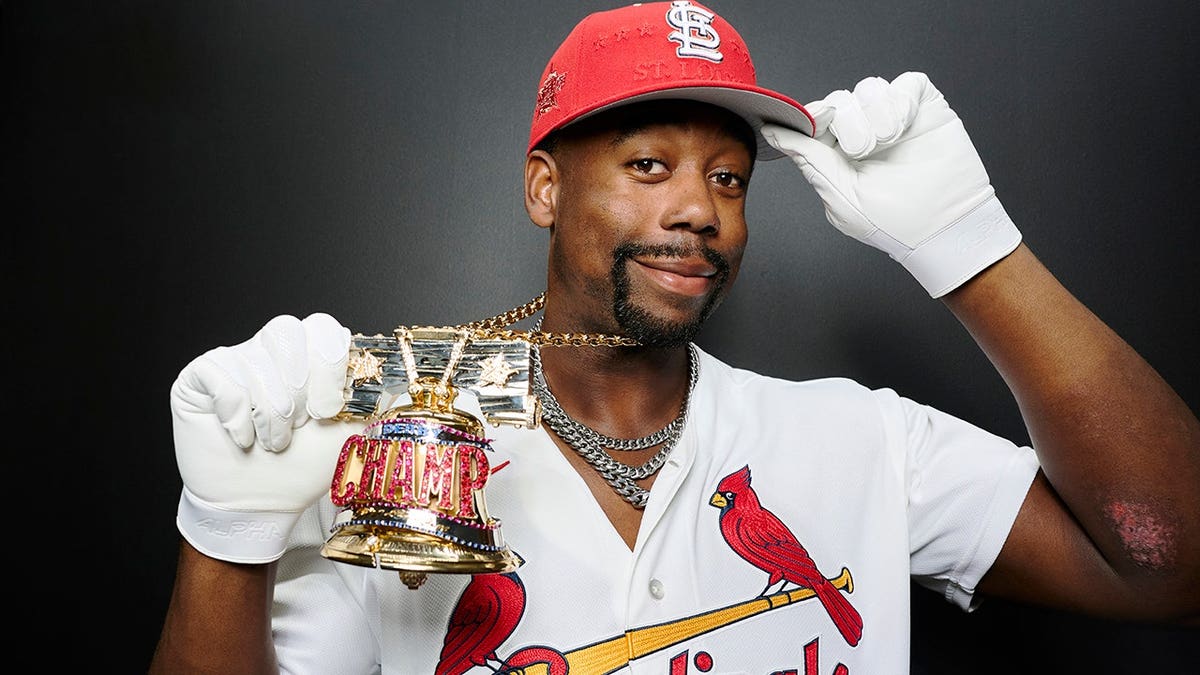

PHILADELPHIA – The scoreboard showed 10-10 in the championship round with one swing remaining. Jordan Walker stepped in, connected on a moonshot to left field, and kept going. Two more home runs followed before he recorded an out, finishing at 12. Kyle Schwarber had hit 11. The 2026 MLB Home Run Derby was over.
The St. Louis Cardinals outfielder took the $1 million prize Monday night at Citizens Bank Park, defeating the hometown Phillies favorite in front of a crowd that had opened the evening expecting a different ending. Schwarber, who leads the major leagues in home runs this season and plays 81 home games in this stadium, had been listed at +310 to win the competition. Walker had entered at +650, placing him sixth in an eight-player field.
Walker is 24, batting .294 on the season with 22 home runs and 74 RBIs. He was one of the longer-odds entries in a Derby field built around Schwarber and Harper, the kind of player whose bracket presence adds depth to a competition without being expected to define it. The crowd at Citizens Bank Park, which had reserved its loudest responses for the two Phillies, treated Walker’s progress through the early rounds as incidental to the story it was preparing to celebrate.
The final reordered those expectations. Schwarber batted first in the championship round and reached 11 home runs on 15 swings, setting a target that seemed durable given the stadium’s atmosphere and his first-half production. Walker began his response steadily, reaching 10 homers with one swing left. The Derby’s swing-continuation rule allows any player whose final allocated swing produces a home run to continue until recording an out. Walker connected. He hit the walk-off, added two more, and finished at 12.
The margin was one home run, the narrowest possible result in a competition decided by integer counts. The swing that separated them was the last regulated swing Walker possessed before the continuation rule applied. That convergence of procedural specificity and competitive drama is what the new format was designed to produce, and it produced it against a crowd that had spent two hours forming an expectation it did not get.
Walker’s path to the final had begun in the first round, where he posted 13 home runs on 20 swings, tying Willson Contreras of the Boston Red Sox for the first-round lead. Schwarber managed 10 in his first-round turn, advancing as fourth in the group. Junior Caminero of the Tampa Bay Rays finished with 12, and Bryce Harper, the other Phillies representative in the field, hit 8 and exited before the semifinals.
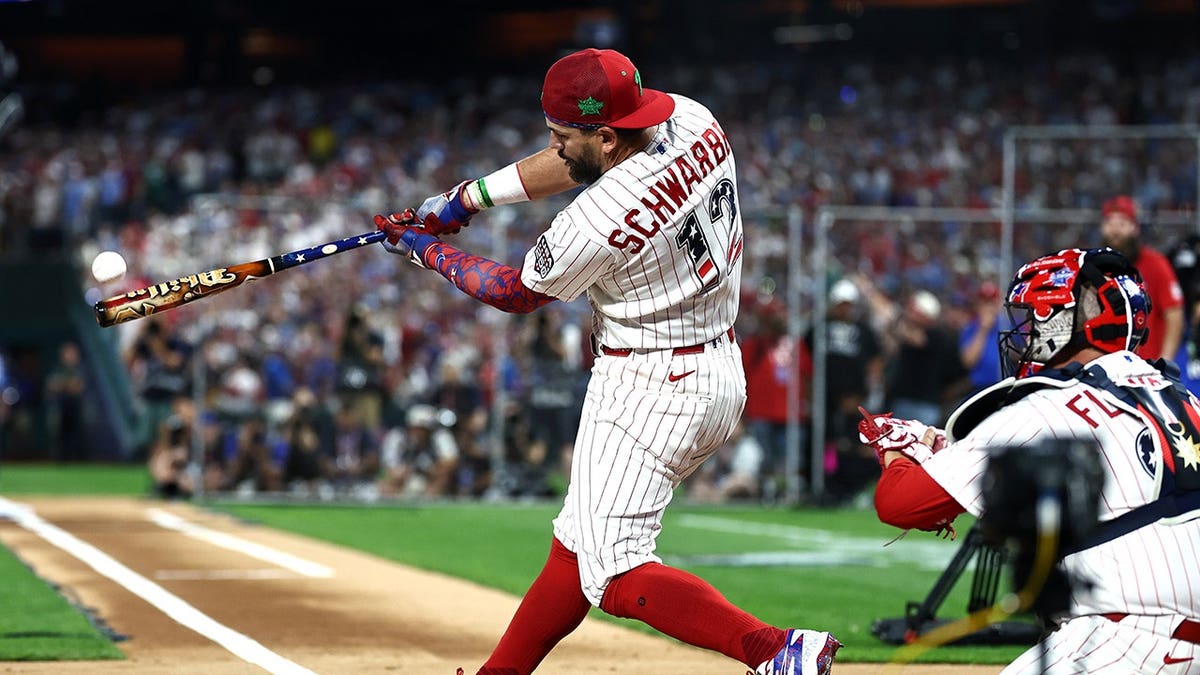
Walker drew Caminero in the semifinals and prevailed 6-5, a closer outcome than the first round might have predicted. Schwarber eliminated Contreras 9-8 in the other bracket match. The final bracket was the one Philadelphia had been hoping for: the city’s established star against the visiting Cardinal. The visitor won.
The rest of the opening-round field included Munetaka Murakami of the Chicago White Sox, who holds Japan’s Central League single-season home run record and had been one of the more watched international competitors in the event. Jac Caglianone of the Kansas City Royals and Ben Rice of the New York Yankees rounded out the eight. None reached the final two rounds.
The Derby’s format had been rebuilt for this edition. The timed shot-clock system was replaced with a swing-based structure: a fixed number of swings per round, with the continuation rule applying to home runs hit on the final swing. The change reduced idle time and created the statistical variance that produced Walker’s championship sequence. The event was also carried live by Netflix for the first time, part of Major League Baseball’s strategy to reach streaming audiences that don’t navigate cable sports packages. The platform’s North American subscriber base skews younger than the median MLB television viewer, and the Derby’s single-venue spectacle made it the league’s natural entry point for that experiment.
The All-Star Game follows Tuesday night at Citizens Bank Park, with Cristóbal Sánchez starting for the National League after Zack Wheeler’s refusal of the selection and without Shohei Ohtani, Aaron Judge, and Vladimir Guerrero Jr. Walker’s Monday performance precedes that event as the All-Star Weekend’s opening statement. As Fox News reported, Walker required a dramatic finish, reaching 10 homers with just one swing remaining before tying and ultimately winning with the walk-off moonshot.
Walker takes the $1 million prize and a specific competitive credential into a second half that will determine whether 22 home runs at the break becomes something structurally significant. He is in his arbitration years. The Cardinals’ offensive construction heading into the stretch depends on what he produces in August and September. The Home Run Derby answers a question about what Walker can do when the swing count reaches zero and one ball has to go over the wall. The next question is what his September looks like when Cardinals wins depend on the same thing.
Related Posts