
SAN ANTONIO — The question that will actually decide this series is not whether Jalen Brunson is good enough. He has spent eleven playoff games proving he is. The question is whether Brunson can be good enough against a man who has turned the paint into restricted airspace.
Victor Wembanyama is allowing 86.0 points per 100 half-court possessions this postseason. That figure, drawn from The Ringer’s Finals preview, belongs in a different sentence than anything written about any other defender in this era. It means the San Antonio Spurs do not need a gameplan to stop Brunson. They need Brunson to try and enter the paint and then let Wembanyama do the rest.
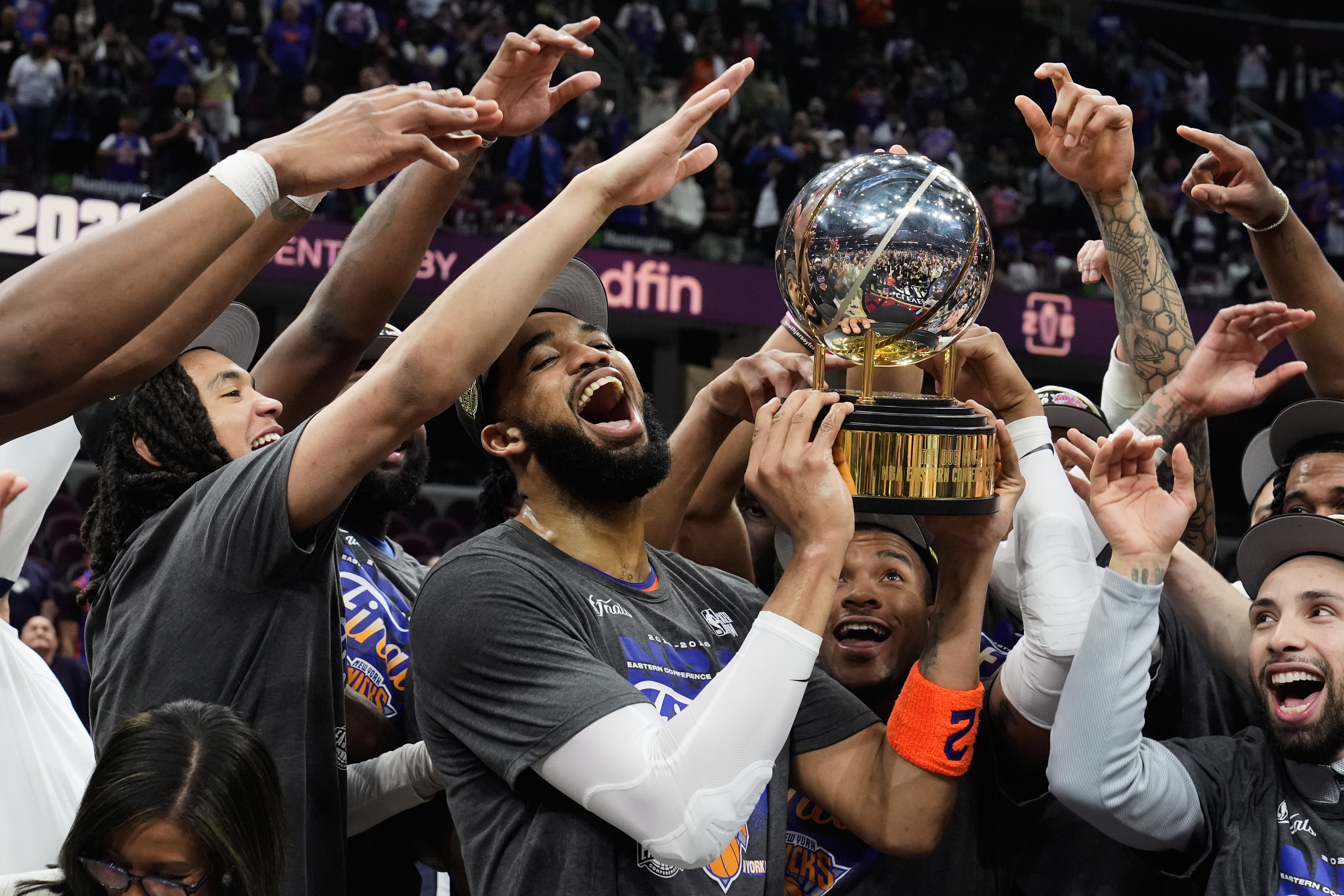
Game 1 of the 2026 NBA Finals tips off Wednesday night at the Frost Bank Center in San Antonio, 8:30 p.m. ET on ABC. The Spurs enter as favorites, carrying a 62-20 regular season record and the freshest legs of the two franchises. The Knicks have not played in nine days. They swept the Cleveland Cavaliers in the Eastern Conference Finals and then waited. A long rest can mean rust. Or it can mean a team that arrives hungry.
What makes this series genuinely different from the preview coverage is the structural mismatch it contains. The Knicks outscored their opponents this postseason by a margin that would be the highest in NBA playoff history, a number built on Brunson’s pick-and-roll chemistry with Mitchell Robinson and a half-court offense that runs through the point guard’s ability to get wherever he wants. Against Wembanyama, getting wherever he wants is no longer the operating assumption.
Brunson’s pull-up three-pointer is shooting 29.8 percent this postseason. His elite zone sits between 8 and 16 feet, the mid-range corridor that most defenses cannot contest without sacrificing something else. Wembanyama has a 7-foot-5 wingspan and reflexes that make that corridor smaller than Brunson has ever experienced. The statistical and analytical case for San Antonio’s edge is not that Brunson is bad. It is that Brunson is entering a room where the ceiling has been lowered specifically to fit him.
Stephon Castle will guard Brunson on most possessions. He is longer and stronger than anything the Knicks guard faced in the Eastern Conference, and Bleacher Report noted that assistant coaches around the league flagged the cross-match problem specifically: Castle and Dylan Harper are significantly bigger than Brunson, creating defensive leverage the Cavaliers and 76ers simply could not manufacture. The Spurs were content during their regular-season meetings to let Hart shoot from the corners, which is what brings the series to its actual hinge.
Josh Hart set 18 picks in the teams’ March meeting, per GeniusIQ data cited by ESPN’s analysis of the series matchups. Most of them were designed to force Wembanyama into a binary: either protect the rim or close out on a corner shooter. He cannot do both simultaneously, and the moment he has to choose is the moment Karl-Anthony Towns becomes relevant. A 7-footer who can stretch to the arc and punish defensive glass collapses, Towns is the player the Spurs least want guarding Wembanyama and yet, if Wembanyama chases Hart’s screen actions, that is precisely what happens.
San Antonio’s coaching staff has a counter. The Spurs deployed what analysts called a “Wemby Zone” against Oklahoma City in the Western Conference Finals, dropping Wembanyama into a roaming safety role that clogged driving lanes while letting the perimeter defenders funnel ball-handlers baseline. The Thunder made only 34 percent of their threes against it. The Knicks are a different problem — New York ranked third in three-point percentage during the regular season and has seven rotation players capable of punishing an open corner look.
“To beat San Antonio, you have to have shooting. The Knicks have that,” a Western Conference executive told ESPN’s Tim Bontemps in the days before Game 1. The Spurs were a superior team in the regular season, posting that 62-20 record against a Knicks team that finished 53-29. But the Knicks went 2-1 against San Antonio in their regular-season meetings and the NBA Cup Championship game, outscoring the Spurs by 12.2 points per game against the spread across those matchups. In the one San Antonio win, Mitchell Robinson and Josh Hart were absent.
The history sitting underneath all of this is almost too neat. The 2026 Finals is a rematch of 1999, when the Spurs dispatched the Knicks in five games behind a 22-year-old Tim Duncan playing in his first Finals. This time, the Spurs have a 22-year-old playing in his first Finals. The parallel is not incidental. Duncan scored 33 points and pulled 16 rebounds in Game 1 of the 1999 series. Wembanyama averaged 41 points and 24 rebounds in his Game 1 against Oklahoma City in the Western Conference Finals. The franchise has a template. The man filling it is more physically unusual than anyone who came before him.
What 1999 did not have was a Knicks team on a winning streak of this magnitude. New York has won 11 consecutive playoff games by an average of 23.8 points. No team in NBA history has outscored postseason opponents by 262 points across an equivalent run, Al Jazeera reported after the Eastern Conference Finals sweep. The Cavaliers, the 76ers, and the Hawks were not the Oklahoma City Thunder — but they were not nothing, either, and Brunson averaged 26.9 points and 6.6 assists across the run, numbers that put him in the company of Kobe Bryant in 2001 and Stephen Curry in 2017.
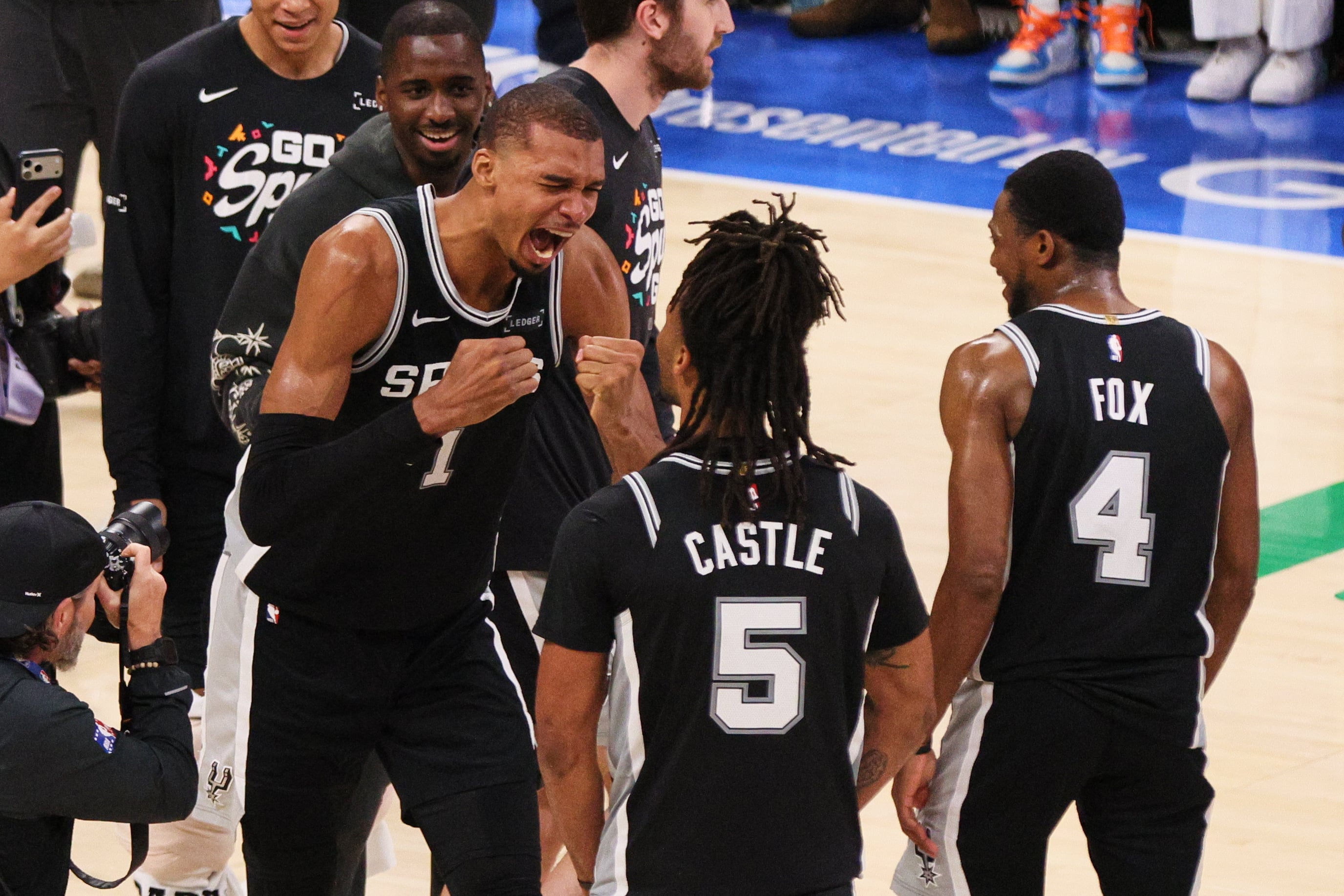
The Spurs carry their own complications into Wednesday night. De’Aaron Fox, who averaged career playoff numbers before suffering a high ankle sprain in the Western Conference Finals, is listed as uncertain. His availability against Brunson changes how much defensive responsibility Castle must absorb. Without Fox healthy, the Spurs ask a first-year playoff starter to take the most difficult defensive assignment in the series while also running a significant offensive share. That is a great deal to ask.
Most of the analysts with picks on record are backing San Antonio. ESPN surveyed thirteen experts; nine chose the Spurs, with Wembanyama as their Finals MVP pick. The two dissenters chose the Knicks in seven with Brunson. Futures markets opened with San Antonio at roughly minus-205. None of that settles what Wednesday night will demonstrate — which is whether Brunson has found a way to score in a room where the ceiling has been lowered, or whether Wembanyama makes Game 1 look like a prelude to a brief series.
What nobody knows, because there is no precedent for it, is how Brunson responds to a defender this singular over a full seven games. He faced Shai Gilgeous-Alexander and survived. Gilgeous-Alexander is 6-foot-6 and elite. Wembanyama is 7-foot-4, weighs 230 pounds, shut down the Thunder through four dominant games in the conference finals, and held Brunson to one of the least efficient shooting performances of his playoff run in their March meeting. That meeting was before the postseason sharpened both players further.
The floor belongs to Wembanyama. It always has, in every game he has played this postseason. Game 1 will begin to answer whether Brunson — clever, relentless, and unimpressed by physical disadvantage — can find the exceptions.