
BRADENTON, Florida — The number that defined Tommy John’s career was not 288, though those wins placed him among the most successful left-handers of his generation. It was not the 26 years he spent on major league mounds, a span that bridged two American presidencies and six franchises. The number that mattered was the one Dr. Frank Jobe gave him in the summer of 1974: 100-to-1 odds against ever pitching again.
John died Saturday night at his home in Bradenton, Florida. He was 83 years old and had been receiving hospice care.
He had issued his farewell eight days earlier. In his final social media post, written on August 8, he addressed the fans and the franchise he loved most: “I will never forget you. Thanks to Dr. Jobe, who saved my arm and made it possible for me to continue pitching.” He had declined to attend the Yankees’ Old-Timers’ Day that same week, too ill to travel.
The line that preceded that farewell by fifty years became one of baseball’s enduring sentences. Standing in a Los Angeles hospital in 1974, told that the odds against pitching again were overwhelming, John turned to Dr. Frank Jobe and said: “Dr. Jobe, if you do your job, I’ll do mine.”
Jobe harvested a tendon from John’s right forearm and threaded it through the deteriorated ulnar collateral ligament in his throwing arm — a reconstruction procedure no pitcher had ever survived intact. John returned fourteen months later, won 20 games the following season, and pitched professionally until he was 46.
What followed over the next fifty years changed baseball more than any rule adjustment or free-agent revolution. The Tommy John surgery, performed on more than 1,000 major league pitchers in the decades after his recovery, became the dominant medical intervention in the sport. Entire pitching rotations have been rebuilt around rehabilitation timelines measured in Tommy John terms. A generation of young arms learned to distinguish between ordinary soreness and the specific kind of pain that might require the procedure.
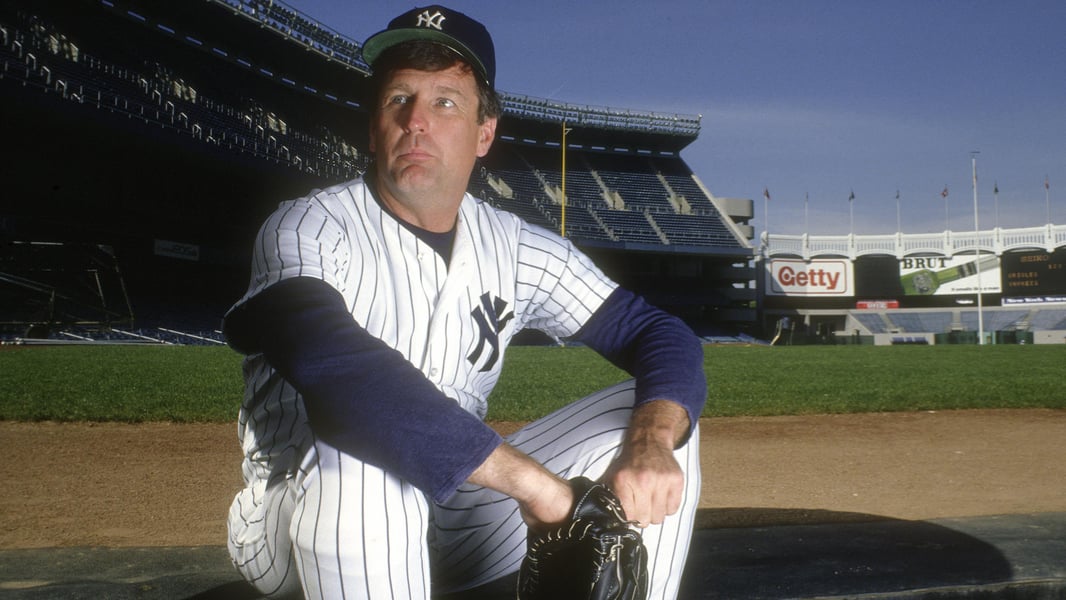
The surgery became so commonplace that the name attached to it began to obscure the man who came first. He called himself “Baseball’s Bionic Man,” with the dry self-awareness that takes decades to develop. When Gerrit Cole and Chris Sale stood on the mound at this year’s Old-Timers’ Day — both survivors of the procedure that carries his name — John was in hospice care in Florida, unable to attend.
He was born September 22, 1943, in Terre Haute, Indiana. By the time he reached the American League as a Cleveland Indian in 1963, he had established himself as a sinkerball pitcher who survived on location rather than velocity. His fastball never overwhelmed anyone. What he threw moved down and away, induced ground balls, and preserved pitch counts, making him the kind of starter managers trusted in the late innings of close games.
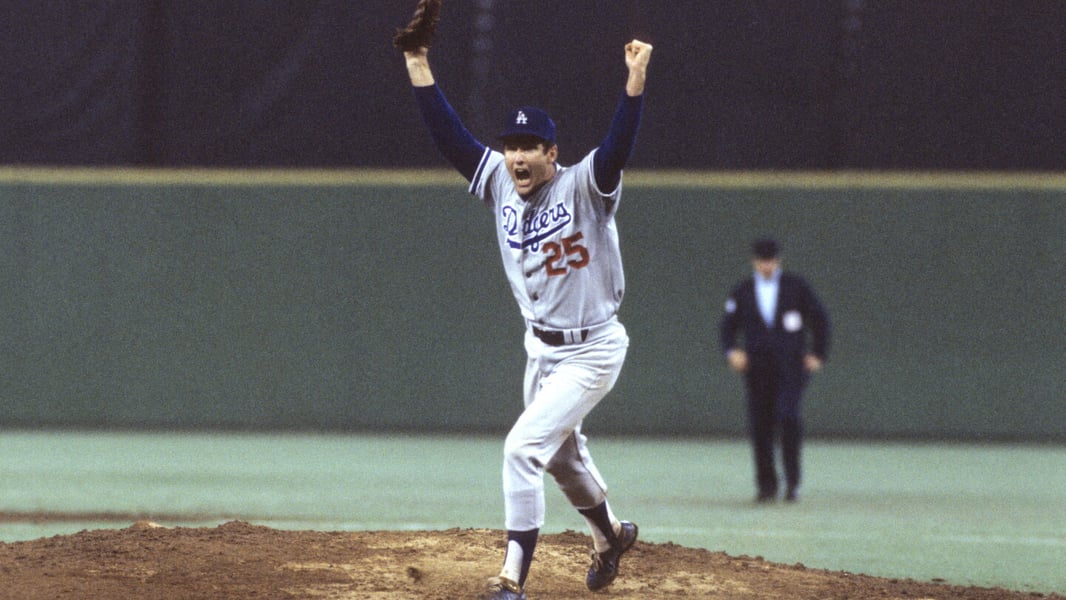
By 1974, John was a cornerstone of a Los Angeles Dodgers rotation that would reach the World Series that October. His elbow gave out in July, mid-delivery, the kind of abrupt mechanical failure that ends careers. Jobe, who died in 2014, described the odds against success as overwhelming. There was no roadmap because there had never been a patient.
John’s post-surgery career lasted fourteen years. He signed with the New York Yankees after leaving Los Angeles, winning 21 games in 1979 and 22 in 1980, appearing in four World Series across two franchises. The career extended long enough that he faced hitters young enough to be his children. When he finally retired in 1989 after stints with the California Angels and Oakland Athletics, the first surgery bearing his name had already been performed on dozens of subsequent pitchers, some of whom he had faced on the mound.
As NBC Sports reported, the procedure has since spread beyond professional baseball into collegiate and high school athletics, with young pitchers facing the same decision John faced at increasingly younger ages. The full science of why the reconstructed ligament functions as effectively as the original, and why some pitchers return throwing harder than before the injury, is still being researched fifty years later.
He was a four-time All-Star. His career record was 288-231 with a 3.34 ERA across 26 seasons.
The statistical case for Cooperstown remained unresolved in the years after his retirement. John received Hall of Fame votes for fifteen years without approaching the required threshold. He won more games than several inductees, compiled an ERA that held up through a pitching career nearly three decades long, and his post-surgery record alone — 164 wins across fourteen seasons — exceeded what most healthy pitchers managed in complete careers. Whether that case is revisited is now a question that will be answered without him.
Tommy John is survived by his wife Sally, son Travis, son Taylor, and daughter Tami.