
LAS VEGAS – He lost in 69 seconds, and the statement that followed said more about what comes next than anything McGregor offered before the fight. On Sunday, Conor McGregor posted to Instagram: “Surgery. Prehab. Return to martial arts practice. Go again. Final fight of the contract. Praise God!” No surgery type was specified. No recovery timeline. No opponent name.
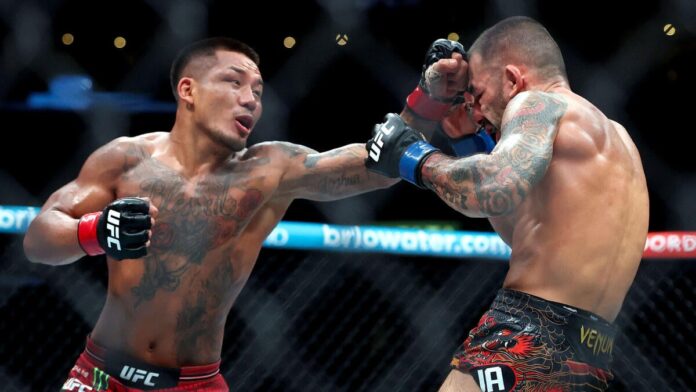
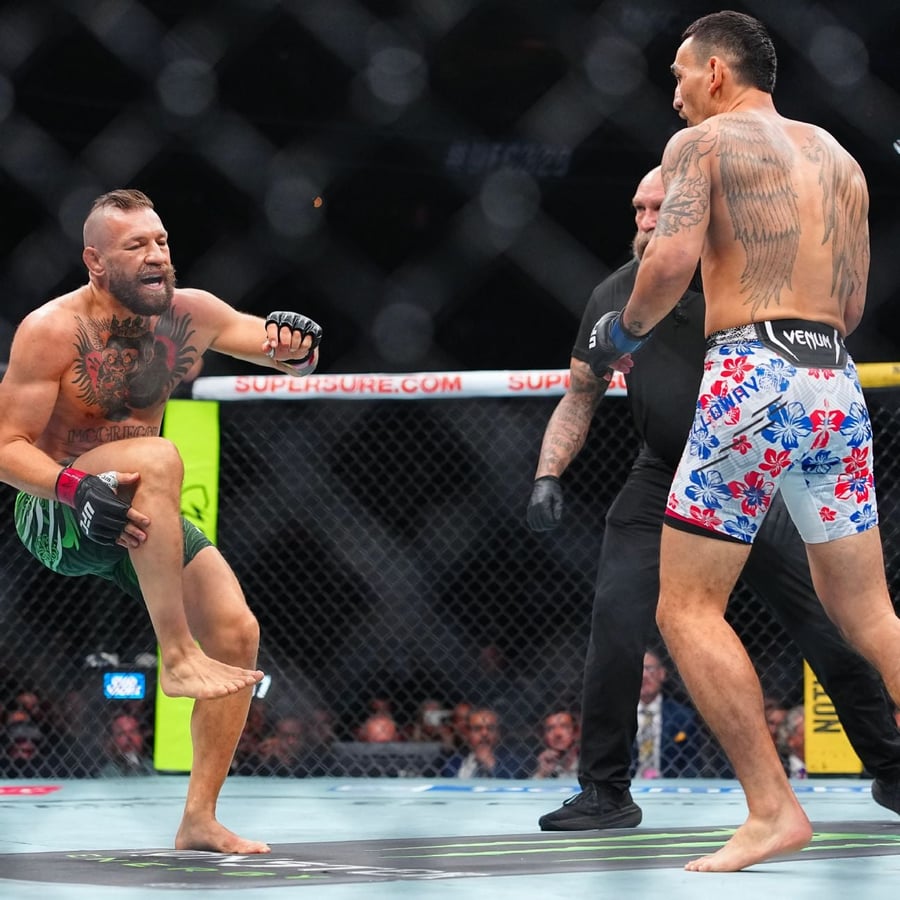
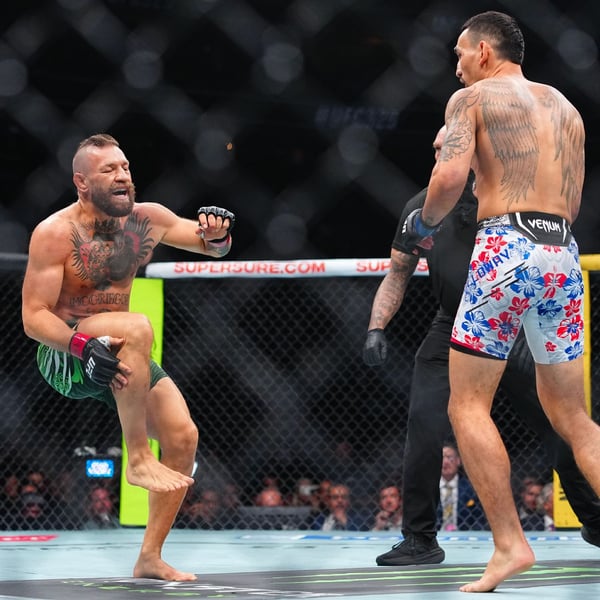
The injury happened 69 seconds into the main event of UFC 329 at T-Mobile Arena in Las Vegas on Saturday night. McGregor’s right knee buckled on a kick attempt, and referee Mike Beltran stopped the contest. Max Holloway won by TKO. ESPN reported that Holloway immediately called for a third fight between the two fighters after the stoppage.
McGregor had not competed in the UFC since July 2021, a five-year layoff that transformed his return into an unusually prolonged commercial event. The UFC built a pay-per-view main event around his comeback. McGregor’s UFC 329 return lasted less than a round, and the conversation shifted immediately from the outcome of the bout to his medical situation.
This is the fifth significant injury to interrupt McGregor’s fighting career. He tore his anterior cruciate ligament in 2013, then partially re-tore it in 2015. In July 2021, he suffered a compound fracture of the left tibia and fibula during a third-round stoppage loss to Dustin Poirier at UFC 264, which ended the fight and his competitive activity for the next five years. A broken toe disrupted his planned return in 2024. Each injury came with an announced path back. The paths extended further than anticipated each time.
McGregor has not specified the nature of Saturday’s knee injury or what the surgery will involve. Knee procedures span a wide range: arthroscopic work to address loose cartilage or tissue damage can require weeks of recovery; ligament reconstruction typically demands nine to twelve months before a fighter can return to full contact training. Without medical disclosure from McGregor’s camp, the recovery window is unknown. The phrase “final fight of the contract” in his Instagram post indicates that at least one more UFC appearance is obligated under his current deal, but when that fight happens depends on what the surgery reveals.
UFC president Dana White, according to ESPN, had assembled a list of five potential opponents for McGregor entering Saturday’s event, with different matchups planned depending on the outcome. A TKO loss at 69 seconds was not among the scenarios that required detailed planning. White has not specified which of those options remains viable for a final contracted fight following Saturday’s result, and no timeline for a return bout has been announced.
Holloway’s call for a third fight gives the situation one clear narrative shape. The two fighters split their previous meetings: McGregor won at featherweight in 2014, when both were younger and less established; Holloway won Saturday by TKO. A trilogy has commercial logic. Whether the UFC structures McGregor’s remaining contract fight as a Holloway rematch or pursues a different opponent will depend on McGregor’s recovery timeline and whatever internal negotiations follow.
McGregor’s right knee failed before significant striking was exchanged Saturday night. Whether that reflects a structural vulnerability carried into the fight or a mechanical event specific to that moment is not yet clear. The surgery will answer that question, and the answer matters for what follows. The type of procedure, the recovery timeline, and the version of McGregor who returns to training are all variables that flow from what the procedure finds.
The only fixed coordinates in an otherwise open situation are the ones McGregor set in his Sunday post. Surgery is confirmed. A final contracted fight is coming. Everything else – the opponent, the date, the weight class, the outcome of the recovery – remains unannounced.